



EGYM | Fit Tech promotion
features

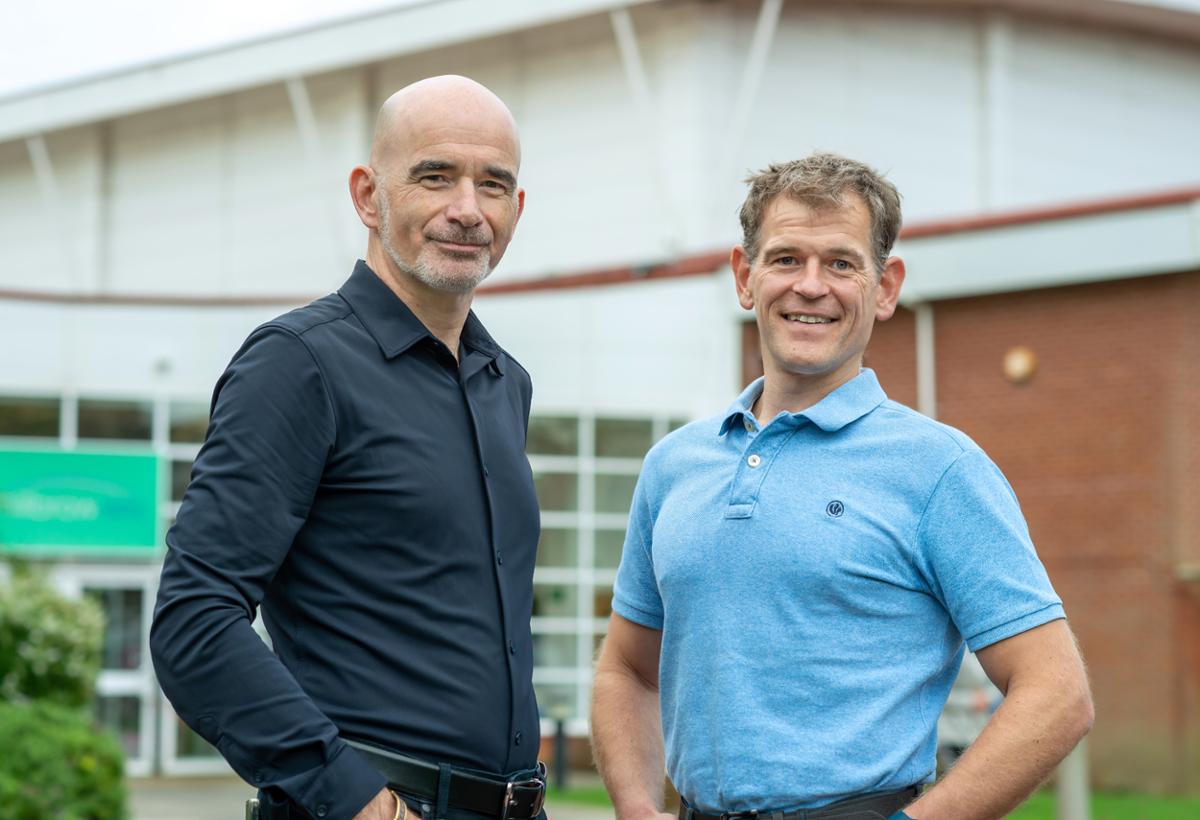
Interview: Duncan Kerr & Nick Harvey

There’s a health and wellbeing revolution underway in Sussex, UK, where Wave Active and South Downs Health and Care own and operate the integrated Hillbrow Health and Wellbeing centre, as Kate Cracknell reports

Published in Health Club Management 2025 issue 2

How did your paths cross?
NH: I’m a doctor in Eastbourne and set up the GP Federation, South Downs Health and Care Ltd to provide healthcare at scale. It’s a social enterprise owned by the practices in Eastbourne and surrounding areas.

We deliver things such as weekend appointments, specialist services and – during the pandemic – COVID vaccinations. This is how Duncan and Wave Active came onto my radar, as we used some of their centres to deliver COVID jabs.

But in fact, our spheres had already been getting closer over the years. The Federation has increasingly embraced the concept of multidisciplinary teams in primary care – looking at ways to help people without just seeing a GP – and Wave Active had been doing some really valuable work in Seaford, particularly in the area of hypertension.

DK: In previous roles, I’ve tried to work more closely with primary healthcare – by and large unsuccessfully. The terminology, the business models, the mindsets… There were so many barriers to partnership.

It wasn’t until I became CEO of Wave Active – with 17 sites, including Downs Leisure Centre in Seaford – that I saw a genuine commitment and drive to do more in the wellbeing space. We were having an impact, which was a much stronger story with which to approach potential partners: local GP surgeries, Primary Care Networks and, ultimately, Nick at the Federation.

Tell us about the work in Seaford
DK: Seaford is where we deliver the vast majority of our health and wellbeing interventions, including stroke rehab, cancer rehab and so on – all the programmes you’d expect from a larger trust. But the bigger step for us was partnering with the local Primary Care Network to deliver a preventative hypertension course that covers both activity and education and is supported by the University of Sussex from a research perspective.

The reason it was a bigger step was that we changed the way we worked with the Primary Care Network, partnering to drive higher uptake and sustained participation. The most impactful change, although it sounds very simple, was in the initial contact.

The way exercise referral normally works is that a doctor signs up a patient on the system and sends them away with a telephone number, with the individual left to contact us to take part in our exercise referral programme. We know that, by using this approach, we lose about a third of people.

In our hypertension programme, we do things differently and the initial contact is made by the doctor’s surgery, with the doctor, the Primary Care Network manager and health coach all involved in the process to improve outcomes.

Those at risk of hypertension are identified and contacted by phone, with the conversation ending by explaining how – if they’re keen to take part – Wave Active will be in touch. It’s made a huge difference, giving great credibility to our programme as well as a boost to doctors, as patients appreciate the proactive approach.

Seaford Primary Care Network has been very engaged and is keen to build on this relationship. It isn’t just us driving it; with all the pressures on it today, the Primary Care Network also wants to see it grow and develop.

Tell us more about these pressures
NH: We’ve been seeing exponential rises in NHS spending, yet life expectancy has plateaued and a lot of people suffer with multiple comorbidities in later life.

Meanwhile, one in six premature deaths are attributable to inactivity, with around a quarter of the population inactive: one in three men, one in two women and four out of five adolescents.

If everyone achieved the recommended 150 minutes’ activity a week, around 30 per cent of dementia cases and even some cancers might be reduced and 70 per cent of hip fractures prevented, not to mention the positive impact on all the classics, such as diabetes, heart disease and stroke.


However, it’s a really steep curve, with huge benefits for morbidity and mortality – and knock-on savings for the NHS and care sector – just from becoming a little bit more active.

And so we see collaboration with Wave Active as a very progressive way forward, all actively supported by Eastbourne Borough Council.

What was the starting point?
NH: I’d always wanted to do some form of community outreach involving physical activity, so when Brighton University announced it was leaving Eastbourne and giving up its Hillbrow sports centre, it seemed too good an opportunity to miss. I approached Duncan just as he was approaching me with the same idea: to come together and create an integrated health and wellbeing service. That’s how we ended up pitching together to take over ownership of the site.

DK: We had to go through a competitive process, but we were selected as the preferred buyer and our new partnership – Hillbrow Health and Wellbeing Ltd – now owns the freehold to the site.

NH: Set against the political landscape and the country’s health and economic needs, it felt as though the stars were aligning. We’ve created an organisation that can work across sectors and disciplines to support prevention in its broadest sense.

We want to normalise activity as part of everybody’s lives – and throughout the whole pathway of an individual – with the expertise to reassure them that it’s OK to exercise. It’s about being person-centred, meeting everyone where they’re at, to enable them to have the best possible health and wellbeing.

What’s the model at Hillbrow?
DK: Wave Active and South Downs Health and Care co-own Hillbrow Health and Wellbeing Ltd – an organisation limited by guarantee that’s currently with the Charities Commission waiting to be registered. Each of us has a 50 per cent ownership of this entity, which in turn owns the site at Hillbrow.

NH: We believe strongly in our preventative healthcare vision, so we’ve gone off on our own to do this.

This is a mission- and purpose-driven concept that’s fully funded by us. As a GP Federation, we rely heavily on NHS contracts. However, these aren’t entirely predictable – we have no guaranteed income – so we started looking at how else we might continue to improve the lives of the people in our community. That has included identifying other revenue streams, of which Hillbrow Health and Wellbeing is one.

We just tipped over 1,000 members and will be revenue-producing with 2,000–2,500 members, which should certainly be achievable by year three. We aim to reinvest those revenues into our vision, as well as seeking other funding from NHS contracts, grant or Lottery funding.

We’ve also started delivering some private services for those who can afford them and want to pay. And we have some space at the centre that we’ll be letting out to services such as musculoskeletal diagnostics and physiotherapy – creating additional pathways on-site – as well as GP training and CPD in our lecture theatre.

How integrated is Hillbrow?
NH: Integration is in our very DNA. We aren’t just co-locating. We are one Hillbrow: one entity that has clinical governance embedded into its foundations. We’ve taken the very deliberate step of forming an organisation that’s 50/50. We’re ready to learn together.

DK: We’re looking to cover all five strands – sport, physical activity, active health, clinical active health and clinical – under one roof.

Active Health is already in place at Wave Active, with 30 different behavioural change interventions for people with health conditions, injury or illness. The programme includes cardiac rehab, stroke rehab and hypertension, chair-based activities and falls prevention, but also support for menopause and pregnancy. It’s a broad offering and something we’ll now be introducing at Hillbrow, along with all the sport and physical activity services and facilities you’d expect from us.

NH: From a clinical perspective, we’re converting the old canteen into around 20 clinical rooms. This will mean GPs on-site and actively involved in the integrated pathways.

DK: We’re currently working on and looking to launch a membership that will include a number of private GP appointments. It may even be that these can be donated to family members or those in need; we’re still working through the details but are keen to embed a sense of charity throughout.

We’re also exploring opportunities for the Wave Active team to support South Downs Health and Care in much the same way as pharmacies take pressure off GP surgeries. Of course, there’s lots of core clinical stuff we can’t do, but things such as finger-prick blood samples to test for cholesterol? Why couldn’t we do that?

We only opened on 1 August 2024, so we’re doing a lot of thinking and talking at the moment. This is a long-term project and we’re not yet implementing everything; it will be a phased approach. But the good thing is we’re set up, ready to go and having those conversations.

NH: We’re even planning to have a single check-in; we’re just working out the Care Quality Commission zoning requirements to enable that. We’re also looking to provide a space for Intermediate Care Teams to work – the Integrated Community Teams that span the breadth of health and social care, from adult social care to Primary Care Networks, hospital trusts to the third sector – to enhance collaboration and partnership.

DK: While we want to run a lot of the things ourselves, we realise it’s a complex area with lots of partnership, so we want to facilitate that.

Tell us more about the phased approach
DK: From winning the bid to taking over the site, it all happened very quickly. The current focus is, therefore, on mobilisation, transferring existing members and implementing procedures and processes. Activities are also happening and we’re out there pushing for new members. We’re moving in the right direction.

We’re also introducing an Active Health and Wellbeing programme, starting with the first few activities – including falls prevention.

Our clinical rooms are now up and running. We’re also hoping to have MSK and physiotherapy services in place soon, as well as reformer Pilates.

NH: Our integrated GP and leisure membership will go live soon. It will take a couple of years for the clinical side to reach full capacity, as we need to undertake some building work, but we’re about to launch our GP presence so things are coming together.

Has the team needed specialist training?
DK: The Wave Active Health team already includes three part-time Primary Care Network managers, a nurse, a health coach and three health improvement practitioners. We’ve reached out into primary healthcare to bring in staff who can pull the two different worlds together; the head of Wave Active Health was previously at the Royal College of General Practitioners and now works part-time for us and for Oxford University. It is this team that leads on our broad programme of Active Health interventions.

We also have experience of working in partnership with clinical experts, not only through our hypertension programme, but also through initiatives such as Escape Pain, where clinical staff – therapists and physios – are on-site in our centres to support our leisure staff.

NH: Meanwhile, GPs are now more awake to the challenges of inactivity – but it’s also the case that one in eight people we advise on physical activity will actually become active. I believe having a truly integrated centre will be transformative, not least with GPs on-site to have those conversations and provide reassurance. In turn, I think our GPs will be encouraged to recommend activity more and more.

What are your goals for Hillbrow?
NH: We want to reduce the incidence of comorbidities in the community. This is something we’ll be able to measure, but our impact will only really be seen years down the line.

In the meantime, engagement in physical activity will be a key measure, moving people from inactivity to activity. Loneliness is also something we will be very focused on, as well as self-reported quality of life.

DK: We also want to establish Hillbrow as an exemplar of how two very different models and mindsets can come together and work seamlessly as one entity, achieving the highest standards in all quality measures across the board. We’re embarking on a journey of discovery in terms of how we do this.

What will be your greatest challenges?
DK: Getting the community to understand the full range of services being offered will undoubtedly be one of our greatest challenges.

In our Wave Active centres, people attending our Active Health programmes love them – not just the activities but the peer support and social element. However, communicating just how impactful these activities can be – the positive effect they can have on people’s lives – is a challenge. There are even health commissioners who don’t fully understand what we do.

At Hillbrow, we’re also going from a standing start under a new brand; we won’t be talking as Wave Active or South Downs Health and Care. We need to communicate a new combined entity, a blending of two sets of strengths, so language is going to be vitally important.

NH: And of course there’s a financial risk. We have a dynamic, proactive board of trustees and a strong, knowledgeable, insightful group of individuals coming together to support us on this journey. But there are no guarantees, no commissioned service that’s been dangled in front of us. It’s our mission. Equally, that’s pretty liberating. There are definitely pros and cons to that.

Is this a scalable model?
DK: The availability of the building was what brought the urgency to this project, but there’s no reason why we couldn’t do the same or similar elsewhere.

The important point is that – although 20 years of thinking sit behind this project – at the moment it’s still an unknown.

Hillbrow will create a blueprint of what works, speeding up the learning and reducing friction for others who have the desire to do something similar.

NH: I think it will take some change in the way services are commissioned to see huge change, though. We’re not incentivised as GPs to put a lot of energy into prevention. We’re certainly seeing the NHS and UK government waking up to the prevention agenda, including the government’s stated aim of moving from sickness to prevention, but the UK will never really tackle its problems without pushing investment upstream.

If commissioning could support GP practices’ longer-term visions, rather than always being short-term or short-sighted contracts, I actually think there are swathes of GPs who would be very keen to work in this way.

DK: The call to action has to be this. We really can have an impact and make an impression and we have the support of our local politicians. There is certainly synergy with government policy, too. However, it would really help if we could attract some funding support for this innovative, in-the-community, prevention-focused healthcare model.

More: www.hillbrowhealthandwellbeing.org

Sign up here to get Fit Tech's weekly ezine and every issue of Fit Tech magazine free on digital.
Gallery
More features
Editor's letter

Into the fitaverse

Fitness is already among the top three markets in the metaverse, with new technology and partnerships driving real growth and consumer engagement that looks likely to spill over into health clubs, gyms and studios
Fit Tech people

Ali Jawad

Paralympic powerlifter and founder, Accessercise
Users can easily identify which facilities in the UK are accessible to the disabled community
Fit Tech people

Hannes Sjöblad

MD, DSruptive
We want to give our users an implantable tool that allows them to collect their health data at any time and in any setting
Fit Tech people

Jamie Buck

Co-founder, Active in Time
We created a solution called AiT Voice, which turns digital data into a spoken audio timetable that connects to phone systems
Profile

Fahad Alhagbani: reinventing fitness

Alexa can help you book classes, check trainers’ bios and schedules, find out opening times, and a host of other information
Opinion

Building on the blockchain

For small sports teams looking to compete with giants, blockchain can be a secret weapon explains Lars Rensing, CEO of Protokol
Innovation

Bold move

Our results showed a greater than 60 per cent reduction in falls for individuals who actively participated in Bold’s programme
App analysis

Check your form

Sency’s motion analysis technology is allowing users to check their technique as they exercise. Co-founder and CEO Gal Rotman explains how
Profile

New reality

Sam Cole, CEO of FitXR, talks to Fit Tech about taking digital workouts to the next level, with an immersive, virtual reality fitness club
Profile

Sohail Rashid

35 million people a week participate in strength training. We want Brawn to help this audience achieve their goals
Ageing

Reverse Ageing

Many apps help people track their health, but Humanity founders Peter Ward and Michael Geer have put the focus on ageing, to help users to see the direct repercussions of their habits. They talk to Steph Eaves
App analysis

Going hybrid

Workout Anytime created its app in partnership with Virtuagym. Workout Anytime’s Greg Maurer and Virtuagym’s Hugo Braam explain the process behind its creation
Research

Physical activity monitors boost activity levels

Researchers at the University of Copenhagen have conducted a meta analysis of all relevant research and found that the body of evidence shows an impact
Editor's letter

Two-way coaching

Content providers have been hugely active in the fit tech market since the start of the pandemic. We expect the industry to move on from delivering these services on a ‘broadcast-only’ basis as two-way coaching becomes the new USP
Fit Tech People

Laurent Petit

Co-founder, Active Giving
The future of sports and fitness are dependent on the climate. Our goal is to positively influence the future of our planet by instilling a global vision of wellbeing and a sense of collective action
Fit Tech People

Adam Zeitsiff

CEO, Intelivideo
We don’t just create the technology and bail – we support our clients’ ongoing hybridisation efforts
Fit Tech People

Anantharaman Pattabiraman

CEO and co-founder, Auro
When you’re undertaking fitness activities, unless you’re on a stationary bike, in most cases it’s not safe or necessary to be tied to a screen, especially a small screen
Fit Tech People

Mike Hansen

Managing partner, Endorphinz
We noticed a big gap in the market – customers needed better insights but also recommendations on what to do, whether that be customer acquisition, content creation, marketing and more
More features
EGYM partners with companies to improve employee health by providing access to fitness and health ...
Founded nearly 50 years ago, Balanced Body works with the highest quality materials, and pride ...
22-23 Sep 2026
Four Seasons Hotel Bangkok at Chao Phraya River, Bangkok , Thailand
EGYM partners with companies to improve employee health by providing access to fitness and health ...
Founded nearly 50 years ago, Balanced Body works with the highest quality materials, and pride ...
Get Fit Tech
Sign up for the free Fit Tech ezine and breaking news alerts
Sign up
22-23 Sep 2026
Four Seasons Hotel Bangkok at Chao Phraya River, Bangkok , Thailand

latest fit tech news

PureGym is encouraging people to step away from their screens and go for a walk, in a new initiative timed ...
news • 29 May 2026
Active people app, Strava, has overhauled its strength training experience, allowing gym-goers to automatically log and share their lifts from ...
news • 27 May 2026

Fitness First UK is embracing digital wellness technology by installing Kip’s tap-to-activate phone controls across its UK estate. Kip tags ...
news • 22 May 2026
The world’s first awareness ring has been launched. Designed to promote presence, focus and calm via gentle haptic vibrations, the ...
news • 13 May 2026
Center Parcs’ Aqua Sana Forest Spa, Woburn Forest, UK, has transformed an unused space into a touchless wellness area called ...
news • 12 May 2026
Gharieni Group has launched a new company, Cobotics Innovations, to create automated wellness experiences. The first solution is a robotic ...
product innovation • 07 May 2026

US-based robotics wellness company Aescape Inc has entered insolvency proceedings following the sale of substantially all of its ...

news • 06 May 2026
Fitness platform, Zing Coach, has teamed up with Les Mills, in a partnership that gives its users access to group ...
news • 23 Apr 2026

TMActive is launching a new Active Wellbeing Studio next month in Tonbridge, UK, specifically aimed at people who face higher ...
news • 13 Apr 2026

Indian billionaire, Deepinder Goyal, is working on a device called Temple that aims to track blood flow to the brain ...
news • 10 Apr 2026
More fit tech news
features

Interview: Duncan Kerr & Nick Harvey

There’s a health and wellbeing revolution underway in Sussex, UK, where Wave Active and South Downs Health and Care own and operate the integrated Hillbrow Health and Wellbeing centre, as Kate Cracknell reports

Published in Health Club Management 2025 issue 2

How did your paths cross?
NH: I’m a doctor in Eastbourne and set up the GP Federation, South Downs Health and Care Ltd to provide healthcare at scale. It’s a social enterprise owned by the practices in Eastbourne and surrounding areas.

We deliver things such as weekend appointments, specialist services and – during the pandemic – COVID vaccinations. This is how Duncan and Wave Active came onto my radar, as we used some of their centres to deliver COVID jabs.

But in fact, our spheres had already been getting closer over the years. The Federation has increasingly embraced the concept of multidisciplinary teams in primary care – looking at ways to help people without just seeing a GP – and Wave Active had been doing some really valuable work in Seaford, particularly in the area of hypertension.

DK: In previous roles, I’ve tried to work more closely with primary healthcare – by and large unsuccessfully. The terminology, the business models, the mindsets… There were so many barriers to partnership.

It wasn’t until I became CEO of Wave Active – with 17 sites, including Downs Leisure Centre in Seaford – that I saw a genuine commitment and drive to do more in the wellbeing space. We were having an impact, which was a much stronger story with which to approach potential partners: local GP surgeries, Primary Care Networks and, ultimately, Nick at the Federation.

Tell us about the work in Seaford
DK: Seaford is where we deliver the vast majority of our health and wellbeing interventions, including stroke rehab, cancer rehab and so on – all the programmes you’d expect from a larger trust. But the bigger step for us was partnering with the local Primary Care Network to deliver a preventative hypertension course that covers both activity and education and is supported by the University of Sussex from a research perspective.

The reason it was a bigger step was that we changed the way we worked with the Primary Care Network, partnering to drive higher uptake and sustained participation. The most impactful change, although it sounds very simple, was in the initial contact.

The way exercise referral normally works is that a doctor signs up a patient on the system and sends them away with a telephone number, with the individual left to contact us to take part in our exercise referral programme. We know that, by using this approach, we lose about a third of people.

In our hypertension programme, we do things differently and the initial contact is made by the doctor’s surgery, with the doctor, the Primary Care Network manager and health coach all involved in the process to improve outcomes.

Those at risk of hypertension are identified and contacted by phone, with the conversation ending by explaining how – if they’re keen to take part – Wave Active will be in touch. It’s made a huge difference, giving great credibility to our programme as well as a boost to doctors, as patients appreciate the proactive approach.

Seaford Primary Care Network has been very engaged and is keen to build on this relationship. It isn’t just us driving it; with all the pressures on it today, the Primary Care Network also wants to see it grow and develop.

Tell us more about these pressures
NH: We’ve been seeing exponential rises in NHS spending, yet life expectancy has plateaued and a lot of people suffer with multiple comorbidities in later life.

Meanwhile, one in six premature deaths are attributable to inactivity, with around a quarter of the population inactive: one in three men, one in two women and four out of five adolescents.

If everyone achieved the recommended 150 minutes’ activity a week, around 30 per cent of dementia cases and even some cancers might be reduced and 70 per cent of hip fractures prevented, not to mention the positive impact on all the classics, such as diabetes, heart disease and stroke.


However, it’s a really steep curve, with huge benefits for morbidity and mortality – and knock-on savings for the NHS and care sector – just from becoming a little bit more active.

And so we see collaboration with Wave Active as a very progressive way forward, all actively supported by Eastbourne Borough Council.

What was the starting point?
NH: I’d always wanted to do some form of community outreach involving physical activity, so when Brighton University announced it was leaving Eastbourne and giving up its Hillbrow sports centre, it seemed too good an opportunity to miss. I approached Duncan just as he was approaching me with the same idea: to come together and create an integrated health and wellbeing service. That’s how we ended up pitching together to take over ownership of the site.

DK: We had to go through a competitive process, but we were selected as the preferred buyer and our new partnership – Hillbrow Health and Wellbeing Ltd – now owns the freehold to the site.

NH: Set against the political landscape and the country’s health and economic needs, it felt as though the stars were aligning. We’ve created an organisation that can work across sectors and disciplines to support prevention in its broadest sense.

We want to normalise activity as part of everybody’s lives – and throughout the whole pathway of an individual – with the expertise to reassure them that it’s OK to exercise. It’s about being person-centred, meeting everyone where they’re at, to enable them to have the best possible health and wellbeing.

What’s the model at Hillbrow?
DK: Wave Active and South Downs Health and Care co-own Hillbrow Health and Wellbeing Ltd – an organisation limited by guarantee that’s currently with the Charities Commission waiting to be registered. Each of us has a 50 per cent ownership of this entity, which in turn owns the site at Hillbrow.

NH: We believe strongly in our preventative healthcare vision, so we’ve gone off on our own to do this.

This is a mission- and purpose-driven concept that’s fully funded by us. As a GP Federation, we rely heavily on NHS contracts. However, these aren’t entirely predictable – we have no guaranteed income – so we started looking at how else we might continue to improve the lives of the people in our community. That has included identifying other revenue streams, of which Hillbrow Health and Wellbeing is one.

We just tipped over 1,000 members and will be revenue-producing with 2,000–2,500 members, which should certainly be achievable by year three. We aim to reinvest those revenues into our vision, as well as seeking other funding from NHS contracts, grant or Lottery funding.

We’ve also started delivering some private services for those who can afford them and want to pay. And we have some space at the centre that we’ll be letting out to services such as musculoskeletal diagnostics and physiotherapy – creating additional pathways on-site – as well as GP training and CPD in our lecture theatre.

How integrated is Hillbrow?
NH: Integration is in our very DNA. We aren’t just co-locating. We are one Hillbrow: one entity that has clinical governance embedded into its foundations. We’ve taken the very deliberate step of forming an organisation that’s 50/50. We’re ready to learn together.

DK: We’re looking to cover all five strands – sport, physical activity, active health, clinical active health and clinical – under one roof.

Active Health is already in place at Wave Active, with 30 different behavioural change interventions for people with health conditions, injury or illness. The programme includes cardiac rehab, stroke rehab and hypertension, chair-based activities and falls prevention, but also support for menopause and pregnancy. It’s a broad offering and something we’ll now be introducing at Hillbrow, along with all the sport and physical activity services and facilities you’d expect from us.

NH: From a clinical perspective, we’re converting the old canteen into around 20 clinical rooms. This will mean GPs on-site and actively involved in the integrated pathways.

DK: We’re currently working on and looking to launch a membership that will include a number of private GP appointments. It may even be that these can be donated to family members or those in need; we’re still working through the details but are keen to embed a sense of charity throughout.

We’re also exploring opportunities for the Wave Active team to support South Downs Health and Care in much the same way as pharmacies take pressure off GP surgeries. Of course, there’s lots of core clinical stuff we can’t do, but things such as finger-prick blood samples to test for cholesterol? Why couldn’t we do that?

We only opened on 1 August 2024, so we’re doing a lot of thinking and talking at the moment. This is a long-term project and we’re not yet implementing everything; it will be a phased approach. But the good thing is we’re set up, ready to go and having those conversations.

NH: We’re even planning to have a single check-in; we’re just working out the Care Quality Commission zoning requirements to enable that. We’re also looking to provide a space for Intermediate Care Teams to work – the Integrated Community Teams that span the breadth of health and social care, from adult social care to Primary Care Networks, hospital trusts to the third sector – to enhance collaboration and partnership.

DK: While we want to run a lot of the things ourselves, we realise it’s a complex area with lots of partnership, so we want to facilitate that.

Tell us more about the phased approach
DK: From winning the bid to taking over the site, it all happened very quickly. The current focus is, therefore, on mobilisation, transferring existing members and implementing procedures and processes. Activities are also happening and we’re out there pushing for new members. We’re moving in the right direction.

We’re also introducing an Active Health and Wellbeing programme, starting with the first few activities – including falls prevention.

Our clinical rooms are now up and running. We’re also hoping to have MSK and physiotherapy services in place soon, as well as reformer Pilates.

NH: Our integrated GP and leisure membership will go live soon. It will take a couple of years for the clinical side to reach full capacity, as we need to undertake some building work, but we’re about to launch our GP presence so things are coming together.

Has the team needed specialist training?
DK: The Wave Active Health team already includes three part-time Primary Care Network managers, a nurse, a health coach and three health improvement practitioners. We’ve reached out into primary healthcare to bring in staff who can pull the two different worlds together; the head of Wave Active Health was previously at the Royal College of General Practitioners and now works part-time for us and for Oxford University. It is this team that leads on our broad programme of Active Health interventions.

We also have experience of working in partnership with clinical experts, not only through our hypertension programme, but also through initiatives such as Escape Pain, where clinical staff – therapists and physios – are on-site in our centres to support our leisure staff.

NH: Meanwhile, GPs are now more awake to the challenges of inactivity – but it’s also the case that one in eight people we advise on physical activity will actually become active. I believe having a truly integrated centre will be transformative, not least with GPs on-site to have those conversations and provide reassurance. In turn, I think our GPs will be encouraged to recommend activity more and more.

What are your goals for Hillbrow?
NH: We want to reduce the incidence of comorbidities in the community. This is something we’ll be able to measure, but our impact will only really be seen years down the line.

In the meantime, engagement in physical activity will be a key measure, moving people from inactivity to activity. Loneliness is also something we will be very focused on, as well as self-reported quality of life.

DK: We also want to establish Hillbrow as an exemplar of how two very different models and mindsets can come together and work seamlessly as one entity, achieving the highest standards in all quality measures across the board. We’re embarking on a journey of discovery in terms of how we do this.

What will be your greatest challenges?
DK: Getting the community to understand the full range of services being offered will undoubtedly be one of our greatest challenges.

In our Wave Active centres, people attending our Active Health programmes love them – not just the activities but the peer support and social element. However, communicating just how impactful these activities can be – the positive effect they can have on people’s lives – is a challenge. There are even health commissioners who don’t fully understand what we do.

At Hillbrow, we’re also going from a standing start under a new brand; we won’t be talking as Wave Active or South Downs Health and Care. We need to communicate a new combined entity, a blending of two sets of strengths, so language is going to be vitally important.

NH: And of course there’s a financial risk. We have a dynamic, proactive board of trustees and a strong, knowledgeable, insightful group of individuals coming together to support us on this journey. But there are no guarantees, no commissioned service that’s been dangled in front of us. It’s our mission. Equally, that’s pretty liberating. There are definitely pros and cons to that.

Is this a scalable model?
DK: The availability of the building was what brought the urgency to this project, but there’s no reason why we couldn’t do the same or similar elsewhere.

The important point is that – although 20 years of thinking sit behind this project – at the moment it’s still an unknown.

Hillbrow will create a blueprint of what works, speeding up the learning and reducing friction for others who have the desire to do something similar.

NH: I think it will take some change in the way services are commissioned to see huge change, though. We’re not incentivised as GPs to put a lot of energy into prevention. We’re certainly seeing the NHS and UK government waking up to the prevention agenda, including the government’s stated aim of moving from sickness to prevention, but the UK will never really tackle its problems without pushing investment upstream.

If commissioning could support GP practices’ longer-term visions, rather than always being short-term or short-sighted contracts, I actually think there are swathes of GPs who would be very keen to work in this way.

DK: The call to action has to be this. We really can have an impact and make an impression and we have the support of our local politicians. There is certainly synergy with government policy, too. However, it would really help if we could attract some funding support for this innovative, in-the-community, prevention-focused healthcare model.

More: www.hillbrowhealthandwellbeing.org

Sign up here to get Fit Tech's weekly ezine and every issue of Fit Tech magazine free on digital.

Gallery
More features
Editor's letter

Into the fitaverse

Fitness is already among the top three markets in the metaverse, with new technology and partnerships driving real growth and consumer engagement that looks likely to spill over into health clubs, gyms and studios
Fit Tech people

Ali Jawad

Paralympic powerlifter and founder, Accessercise
Users can easily identify which facilities in the UK are accessible to the disabled community
Fit Tech people

Hannes Sjöblad

MD, DSruptive
We want to give our users an implantable tool that allows them to collect their health data at any time and in any setting
Fit Tech people

Jamie Buck

Co-founder, Active in Time
We created a solution called AiT Voice, which turns digital data into a spoken audio timetable that connects to phone systems
Profile

Fahad Alhagbani: reinventing fitness

Alexa can help you book classes, check trainers’ bios and schedules, find out opening times, and a host of other information
Opinion

Building on the blockchain

For small sports teams looking to compete with giants, blockchain can be a secret weapon explains Lars Rensing, CEO of Protokol
Innovation

Bold move

Our results showed a greater than 60 per cent reduction in falls for individuals who actively participated in Bold’s programme
App analysis

Check your form

Sency’s motion analysis technology is allowing users to check their technique as they exercise. Co-founder and CEO Gal Rotman explains how

Profile

New reality

Sam Cole, CEO of FitXR, talks to Fit Tech about taking digital workouts to the next level, with an immersive, virtual reality fitness club
Profile

Sohail Rashid

35 million people a week participate in strength training. We want Brawn to help this audience achieve their goals
Ageing

Reverse Ageing

Many apps help people track their health, but Humanity founders Peter Ward and Michael Geer have put the focus on ageing, to help users to see the direct repercussions of their habits. They talk to Steph Eaves
App analysis

Going hybrid

Workout Anytime created its app in partnership with Virtuagym. Workout Anytime’s Greg Maurer and Virtuagym’s Hugo Braam explain the process behind its creation
Research

Physical activity monitors boost activity levels

Researchers at the University of Copenhagen have conducted a meta analysis of all relevant research and found that the body of evidence shows an impact
Editor's letter

Two-way coaching

Content providers have been hugely active in the fit tech market since the start of the pandemic. We expect the industry to move on from delivering these services on a ‘broadcast-only’ basis as two-way coaching becomes the new USP
Fit Tech People

Laurent Petit

Co-founder, Active Giving
The future of sports and fitness are dependent on the climate. Our goal is to positively influence the future of our planet by instilling a global vision of wellbeing and a sense of collective action
Fit Tech People

Adam Zeitsiff

CEO, Intelivideo
We don’t just create the technology and bail – we support our clients’ ongoing hybridisation efforts
Fit Tech People

Anantharaman Pattabiraman

CEO and co-founder, Auro
When you’re undertaking fitness activities, unless you’re on a stationary bike, in most cases it’s not safe or necessary to be tied to a screen, especially a small screen
Fit Tech People

Mike Hansen

Managing partner, Endorphinz
We noticed a big gap in the market – customers needed better insights but also recommendations on what to do, whether that be customer acquisition, content creation, marketing and more
More features