



The Leisure Media Company Ltd | Fit Tech promotion
features

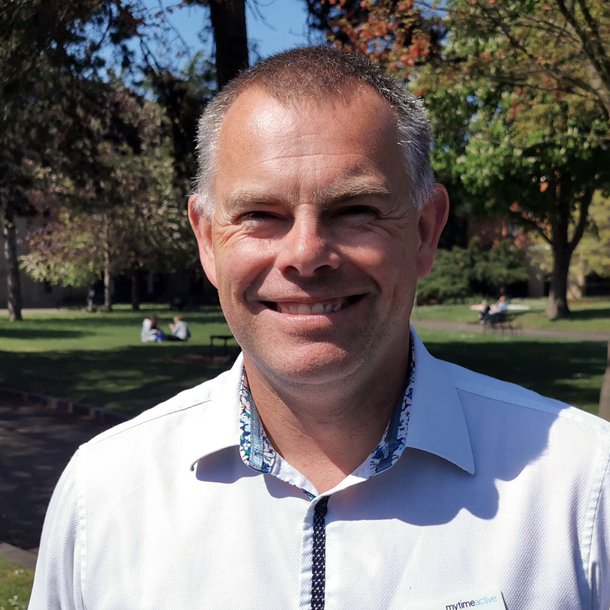
Profile: Steve May

When it comes to health delivery, Mytime Active is knocking on new doors and tearing up the funding rulebook. Its new CEO speaks to Kate Cracknell

Published in Health Club Management 2025 issue 6

What’s your history with Mytime Active?
I started my career at Mytime Active 27 years ago – as a lifeguard and then GM – before moving to Freedom Leisure and then Woking Borough Council. But I was born and bred in Bromley. I learned to swim at Walnuts Leisure Centre in Orpington and spent a lot of my youth there. So Mytime Active has been an important part of my development, not only professionally but also personally.

By 2024, I had done over four years at Woking Borough Council and had learned so much about the public sector. However, I was missing that direct link into leisure and the community. I saw a return to Mytime as a great opportunity to get back to what I truly loved doing. I joined as operations director last May, becoming CEO in April of this year.

Where does Mytime Active operate?
Mytime Active is a social enterprise that operates 19 sites across the UK, primarily in Bromley, but also through contracts with Birmingham City Council and New Forest District Council.

We run a diverse range of services across the UK – including 11 golf courses, some with leisure provision – with a vision of improving wellbeing across our communities.

How important is fitness in your portfolio?
In total, we have six sites with gyms, but fitness is very important to our overall offering. Within the Bromley area, it remains the focus of what we do.

We especially target the communities who find traditional fitness less accessible. For example, we have a programme called Primetime for members aged over 60. It started with 79 members back in 2007. We now have over 3,500 Primetime members.

What makes Primetime so different is that it isn’t just a membership product for people over a certain age. That isn’t how we run it. It’s for over 60s, but we try to make it different. There’s Pilates, Zumba Gold, golf, line dancing, table tennis, tenpin bowling … but the real key is the social element, with coffee meet-ups, lunches and soirees where we get singers in and 150+ Primetime members in attendance.

We introduce all new Primetime members to a buddy – volunteers who’ve had dementia-friendly training and who are there to offer peer-to-peer support. They’ll attend activities with the new members and stay afterwards for teas, coffees and biscuits. They’re absolutely integral to our business and making people feel part of a community, not just a member of a local gym.

Some of our younger team will often be around, too, and they’ll get involved, having cups of tea with the Primetime members. It creates a wonderful inter-generational approach across our facilities. We know the huge toll of loneliness on society and individuals. This is one of the ways we can help tackle it.

What other outreach work do you do?
We do a huge amount of work in health. I know the sector as a whole is working towards this, but I’d say Mytime was an early adopter. For years now, we’ve engaged in a number of tendered health programmes, from managing a Wellbeing Hub on behalf of public health to our Active Lifestyles programme. We also run Vital Five, offering health checks for things such as blood pressure.

All three programmes are paid for either by public health agencies or by integrated care boards. We work with our big local hospitals, too, delivering cardiac rehab programmes or pulmonary rehabilitation.

What’s next on your health agenda?
Where possible, I’d like us to be less reliant on tendered services. We spend a lot of time preparing, tendering and trying to gain financial support for a programme, creating something that’s really good but that only runs for a short time before funding runs out.

I feel we need to be a true partner to health and this requires building things with longevity and a long-term impact. Instead of Public Health England saying ‘we want someone to deliver this’, let’s identify the problems at source and work collaboratively with our public health teams and our health partners to come up with solutions.

Of course, the problem in leisure is that we often don’t have the right access to the right people, which makes it hard to get anything off the ground. My experience at Woking has been invaluable in this respect. Our CEO was really innovative in his focus on health and he opened a lot of doors for me to run health programmes the likes of which I’d never have been able to run previously, as a leisure operator. Back then, I couldn’t even get a seat at the table to have the conversation.

During my time at Woking Borough Council, I learned how to get to places I couldn’t previously reach as a charity or a corporation. For example, I did some work with the North West Surrey Alliance, delivering physiotherapy in leisure centres: Ashford and St Peter’s Hospitals moved a large proportion of its physiotherapy team out of the hospital environment and into Woking Leisure Centre – and the outcomes, both for the NHS and for leisure, were very positive.

People were getting better quicker. We taught them their rehab exercises in a gym setting and gave them free gym access for the duration of their physio appointments, followed by a discounted health membership at the end to keep their rehabilitation going. This also meant a huge increase in the number of people coming to the leisure centre, many of whom then stayed as members. It was a real win-win.

We rolled out lots of other sessions, too, including cardiac rehabilitation and surgical prehabilitation.

These are the sorts of programme I would love to see Mytime Active deliver in partnership with our local integrated care boards.

What progress have you made so far?
It’s early days, but we’re starting to have conversations around how we can work together. We’re increasingly being recognised as part of a whole system approach, delivering health and wellbeing for our local communities, which is so important.

We’re also making good progress with our council partners. Before I went to Woking, I didn’t really appreciate that councils had specific teams working on reducing antisocial behaviour in the borough, for example. I do now, so I can approach the council and ask to speak to the head of community safety. I can ask about their problems and how we can help.

As a result, we’re looking at replicating in Bromley something we did in Surrey: The Friday Night Project. I don’t want to do it independently of our partners; one of the things that made The Friday Night Project so successful in Woking and wider Surrey was the collaboration with partners. But crucially, I now know who those partners are and can work with the council to engage them – be that the head of police or local fire service. Having them come to the sessions really broadens the impact.

I also chair Pro-Active Bromley, where a lot of third sector organisations get together alongside public health. We’ve begun to discuss opportunities for collaboration. For example, public health might share data around areas of concern – issues of antisocial behaviour in certain parts of the borough or disproportionate numbers of children with obesity, for example – and collectively, we’ll discuss what we can do to help.

Public health might not have the money available to commission a new scheme, but between us we might already be running something that’s doing 70 per cent of what’s really needed. We just might not be getting to the people public health needs us to. So, it’s over to public health agencies to open the doors and get us talking to the right people, so we can have the desired impact.

How will you fund your health work?
There are a few programmes we currently receive funding for, including our Active Lifestyles referrals scheme and Aqua Active, which allows Bromley families that have children with complex needs to come and use our pools.

However, we all know the NHS is under huge pressure and that public health budgets are being cut left, right and centre. We have to look at how we can work collaboratively, taking pressure off the health service without needing it to fund us.

If you look at the Woking physiotherapy initiative, for example, there was no cost to the leisure provider. It simply opened up space for the hospital team to deliver in the leisure centre. At most, there was an opportunity cost, giving up some space to the NHS – but that space hadn’t been used effectively for a long time and the benefit to the community was enormous.

Mytime Active’s MyClub is another great example. A programme for adults with special educational needs, it started off as a funded scheme. However, we very quickly realised we could deliver a lot of it without funding.

The fact that it initially came through a funding channel gave us a really good foundation – showing us who we should to talk to, who to outreach with, who the carers were, who the different charities, groups and social services were that we needed to work with. It opened a lot of doors – and once those doors were open, we found that it was easy to carry on.

We now run a really successful club every week where the participants use a range of our leisure facilities, from group exercise classes to golf to tenpin bowling.

The cost to us is low when considering the outcomes that the programme achieves, meaning that we can deliver it over the long term without the need for external funding. And in the end, this is part of our vision.


It’s part of who we are as a social enterprise and an absolute no-brainer in terms of it being the right thing for us to do.

Tell us about your wellbeing hubs.
The physical wellbeing hub opened in June 2024, in a shopping centre in Bromley. On-site are lots of different healthcare professionals, as well as services such as a Citizens Advice Bureau. We run Vital Five from this hub, as well as programmes such as smoking cessation, healthy weight classes, drug and alcohol rehab and mental health support.

We also have virtual wellbeing hubs for Bromley and also for Birmingham. When people make contact with us, we triage them to identify the best access route into our facilities and services. For some that will be a traditional route into fitness, starting with a gym induction with health and nutrition advice; in Birmingham, it might be golf or wellbeing walks. However, if people have health concerns, we have a whole raft of programmes to support them, from healthy weight management to cardiac rehab, Escape Pain to Primetime and more.

Do you have ambitions to grow?
We’re not trying to grow significantly and don’t have plans to start tendering against other operators for new contracts, however, we’re exploring ways to offer more within our existing geographies to even better support our existing local authority partners.

In Bromley, for example, we’re already looking at how we can help schools develop their health and wellbeing programmes. We see a big opportunity there and we’d love to partner with them to do that.

We’re passionate about Bromley, Birmingham and the New Forest and believe we can have a big impact in these areas, helping people live longer, happier, healthier lives. We’re working hard to make what we already have work really well.

Fortunately, we won’t be significantly impacted by upcoming local government reorganisation. Bromley is already a unitary authority – as all London boroughs are. Birmingham City Council, as a city council, won’t go through any reorganisation. So it’s only New Forest District Council that will be impacted. We’ll work with the teams there to ensure that whatever happens, we’re a strong partner.

What changes do you hope for in the sector?
For me, the headline word is collaboration. For a long time, this was a really competitive market. No-one was working together. Now, it really feels as though we’re starting to collaborate.

Mytime Active already speaks with the likes of Places Leisure, Everyone Active and a number of other trusts: Trafford Leisure, for example, recently asked for advice on launching a volunteer scheme which we were delighted to support. We’d be really happy to work alongside private operators too.

We don’t see this as a competitive market and we’re happy to share: the more of us there are helping people become healthier, happier and living longer, the better. If we can help, we absolutely will.
Removing obstacles
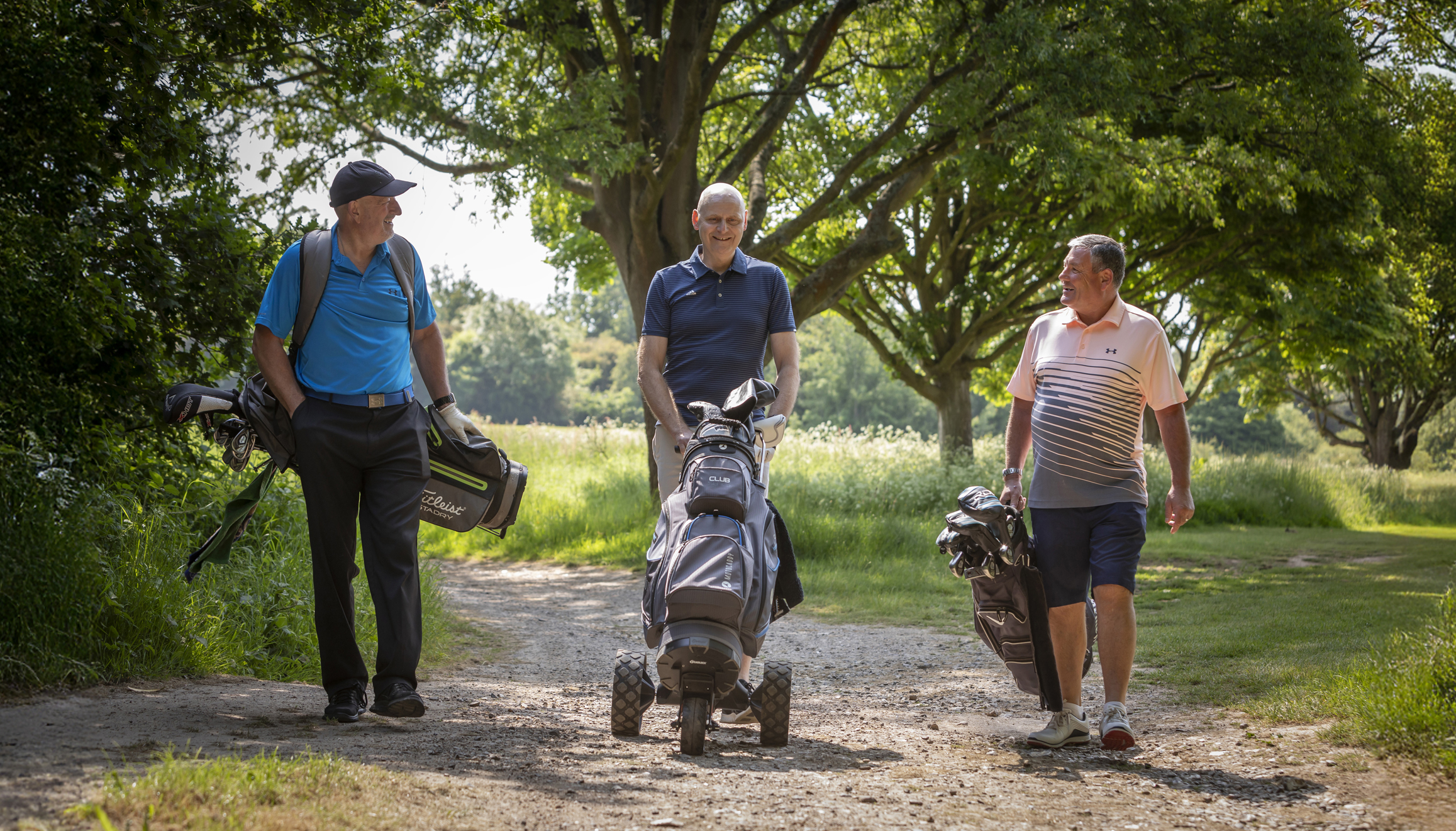
Mytime Active has a thriving golf model which supports more people to get into nature and physical activity, as Steve May explains
Steve May / Photo: MyTime Active

There’s a misconception that golf is only for a certain type of person and a certain level of wealth. We’ve really tried to challenge that at Mytime Active, because golf has amazing benefits no matter who you are – what gender, ethnic minority or socioeconomic background.

We want as many people playing golf as possible. It’s outdoors. It’s in nature. It’s simply another form of exercise. Remove the traditional obstacles of high fees, dress code and strict rules and you remove the barriers to entry.

Also on offer is ‘pay and play’ from as little as £5.00 for a round of golf. We’ll lend people clubs. They can wear whatever they like.

We run a programme – Get Active in Golf – that’s a bit like an induction in the gym, getting people comfortable, showing them how to hold a club, giving them the basics around the rules without ever insisting they’re rigidly adhered to. We just want people to get out there and have fun.

We also run great events to make golf even more inclusive. For example, we recently ran a Muslim Society day in Birmingham and we’re doing lots of work with older black men who feel golf isn’t for them; when they try it, they love it.

It’s important to work hard to get young people into golf, too, so we offer discounted memberships to make it accessible. As a result, we’re seeing the most significant growth in participation among members aged 16–30 years.

We bring health into our golf clubs, too, with wellbeing walks at four of our 11 golf courses; we have nearly 4,000 people signed up to this programme so far. We also offer golf on GP referral. The individuals referred to us often have mental health concerns, but sometimes it might be physical – diabetes or weight issues, for example.

So often we hear people say: ‘The gym isn’t for me.’ Well, let’s find something that is for you. Golf is one of those things – and with the investments we’re making in gamification and driving ranges, we’re making it less weather-dependent and once people start exercising and feeling fitter, a new world of exercise opens up to them.

Golf is now being offered on GP referral / photo: MyTime Active
Sign up here to get Fit Tech's weekly ezine and every issue of Fit Tech magazine free on digital.
Gallery
More features
Editor's letter

Into the fitaverse

Fitness is already among the top three markets in the metaverse, with new technology and partnerships driving real growth and consumer engagement that looks likely to spill over into health clubs, gyms and studios
Fit Tech people

Ali Jawad

Paralympic powerlifter and founder, Accessercise
Users can easily identify which facilities in the UK are accessible to the disabled community
Fit Tech people

Hannes Sjöblad

MD, DSruptive
We want to give our users an implantable tool that allows them to collect their health data at any time and in any setting
Fit Tech people

Jamie Buck

Co-founder, Active in Time
We created a solution called AiT Voice, which turns digital data into a spoken audio timetable that connects to phone systems
Profile

Fahad Alhagbani: reinventing fitness

Alexa can help you book classes, check trainers’ bios and schedules, find out opening times, and a host of other information
Opinion

Building on the blockchain

For small sports teams looking to compete with giants, blockchain can be a secret weapon explains Lars Rensing, CEO of Protokol
Innovation

Bold move

We ended up raising US$7m in venture capital from incredible investors, including Andreessen Horowitz, Khosla Ventures, Primetime Partners, and GingerBread Capital
App analysis

Check your form

Sency’s motion analysis technology is allowing users to check their technique as they exercise. Co-founder and CEO Gal Rotman explains how
Profile

New reality

Sam Cole, CEO of FitXR, talks to Fit Tech about taking digital workouts to the next level, with an immersive, virtual reality fitness club
Profile

Sohail Rashid

My vision was to create a platform that could improve the sport for lifters at all levels and attract more people, similar to how Strava, Peloton and Zwift have in other sports
Ageing

Reverse Ageing

Many apps help people track their health, but Humanity founders Peter Ward and Michael Geer have put the focus on ageing, to help users to see the direct repercussions of their habits. They talk to Steph Eaves
App analysis

Going hybrid

Workout Anytime created its app in partnership with Virtuagym. Workout Anytime’s Greg Maurer and Virtuagym’s Hugo Braam explain the process behind its creation
Research

Physical activity monitors boost activity levels

Researchers at the University of Copenhagen have conducted a meta analysis of all relevant research and found that the body of evidence shows an impact
Editor's letter

Two-way coaching

Content providers have been hugely active in the fit tech market since the start of the pandemic. We expect the industry to move on from delivering these services on a ‘broadcast-only’ basis as two-way coaching becomes the new USP
Fit Tech People

Laurent Petit

Co-founder, Active Giving
The future of sports and fitness are dependent on the climate. Our goal is to positively influence the future of our planet by instilling a global vision of wellbeing and a sense of collective action
Fit Tech People

Adam Zeitsiff

CEO, Intelivideo
We don’t just create the technology and bail – we support our clients’ ongoing hybridisation efforts
Fit Tech People

Anantharaman Pattabiraman

CEO and co-founder, Auro
When you’re undertaking fitness activities, unless you’re on a stationary bike, in most cases it’s not safe or necessary to be tied to a screen, especially a small screen
Fit Tech People

Mike Hansen

Managing partner, Endorphinz
We noticed a big gap in the market – customers needed better insights but also recommendations on what to do, whether that be customer acquisition, content creation, marketing and more
More features
EGYM partners with companies to improve employee health by providing access to fitness and health ...
Power Plate's range of products include whole body vibration platforms, targeted vibration products and the ...
22-23 Sep 2026
Four Seasons Hotel Bangkok at Chao Phraya River, Bangkok , Thailand
EGYM partners with companies to improve employee health by providing access to fitness and health ...
Power Plate's range of products include whole body vibration platforms, targeted vibration products and the ...
Get Fit Tech
Sign up for the free Fit Tech ezine and breaking news alerts
Sign up
22-23 Sep 2026
Four Seasons Hotel Bangkok at Chao Phraya River, Bangkok , Thailand

latest fit tech news

PureGym is encouraging people to step away from their screens and go for a walk, in a new initiative timed ...
news • 29 May 2026
Active people app, Strava, has overhauled its strength training experience, allowing gym-goers to automatically log and share their lifts from ...
news • 27 May 2026

Fitness First UK is embracing digital wellness technology by installing Kip’s tap-to-activate phone controls across its UK estate. Kip tags ...
news • 22 May 2026
The world’s first awareness ring has been launched. Designed to promote presence, focus and calm via gentle haptic vibrations, the ...
news • 13 May 2026
Center Parcs’ Aqua Sana Forest Spa, Woburn Forest, UK, has transformed an unused space into a touchless wellness area called ...
news • 12 May 2026
Gharieni Group has launched a new company, Cobotics Innovations, to create automated wellness experiences. The first solution is a robotic ...
product innovation • 07 May 2026

US-based robotics wellness company Aescape Inc has entered insolvency proceedings following the sale of substantially all of its ...

news • 06 May 2026
Fitness platform, Zing Coach, has teamed up with Les Mills, in a partnership that gives its users access to group ...
news • 23 Apr 2026

TMActive is launching a new Active Wellbeing Studio next month in Tonbridge, UK, specifically aimed at people who face higher ...
news • 13 Apr 2026

Indian billionaire, Deepinder Goyal, is working on a device called Temple that aims to track blood flow to the brain ...
news • 10 Apr 2026
More fit tech news
features

Profile: Steve May

When it comes to health delivery, Mytime Active is knocking on new doors and tearing up the funding rulebook. Its new CEO speaks to Kate Cracknell

Published in Health Club Management 2025 issue 6

What’s your history with Mytime Active?
I started my career at Mytime Active 27 years ago – as a lifeguard and then GM – before moving to Freedom Leisure and then Woking Borough Council. But I was born and bred in Bromley. I learned to swim at Walnuts Leisure Centre in Orpington and spent a lot of my youth there. So Mytime Active has been an important part of my development, not only professionally but also personally.

By 2024, I had done over four years at Woking Borough Council and had learned so much about the public sector. However, I was missing that direct link into leisure and the community. I saw a return to Mytime as a great opportunity to get back to what I truly loved doing. I joined as operations director last May, becoming CEO in April of this year.

Where does Mytime Active operate?
Mytime Active is a social enterprise that operates 19 sites across the UK, primarily in Bromley, but also through contracts with Birmingham City Council and New Forest District Council.

We run a diverse range of services across the UK – including 11 golf courses, some with leisure provision – with a vision of improving wellbeing across our communities.

How important is fitness in your portfolio?
In total, we have six sites with gyms, but fitness is very important to our overall offering. Within the Bromley area, it remains the focus of what we do.

We especially target the communities who find traditional fitness less accessible. For example, we have a programme called Primetime for members aged over 60. It started with 79 members back in 2007. We now have over 3,500 Primetime members.

What makes Primetime so different is that it isn’t just a membership product for people over a certain age. That isn’t how we run it. It’s for over 60s, but we try to make it different. There’s Pilates, Zumba Gold, golf, line dancing, table tennis, tenpin bowling … but the real key is the social element, with coffee meet-ups, lunches and soirees where we get singers in and 150+ Primetime members in attendance.

We introduce all new Primetime members to a buddy – volunteers who’ve had dementia-friendly training and who are there to offer peer-to-peer support. They’ll attend activities with the new members and stay afterwards for teas, coffees and biscuits. They’re absolutely integral to our business and making people feel part of a community, not just a member of a local gym.

Some of our younger team will often be around, too, and they’ll get involved, having cups of tea with the Primetime members. It creates a wonderful inter-generational approach across our facilities. We know the huge toll of loneliness on society and individuals. This is one of the ways we can help tackle it.

What other outreach work do you do?
We do a huge amount of work in health. I know the sector as a whole is working towards this, but I’d say Mytime was an early adopter. For years now, we’ve engaged in a number of tendered health programmes, from managing a Wellbeing Hub on behalf of public health to our Active Lifestyles programme. We also run Vital Five, offering health checks for things such as blood pressure.

All three programmes are paid for either by public health agencies or by integrated care boards. We work with our big local hospitals, too, delivering cardiac rehab programmes or pulmonary rehabilitation.

What’s next on your health agenda?
Where possible, I’d like us to be less reliant on tendered services. We spend a lot of time preparing, tendering and trying to gain financial support for a programme, creating something that’s really good but that only runs for a short time before funding runs out.

I feel we need to be a true partner to health and this requires building things with longevity and a long-term impact. Instead of Public Health England saying ‘we want someone to deliver this’, let’s identify the problems at source and work collaboratively with our public health teams and our health partners to come up with solutions.

Of course, the problem in leisure is that we often don’t have the right access to the right people, which makes it hard to get anything off the ground. My experience at Woking has been invaluable in this respect. Our CEO was really innovative in his focus on health and he opened a lot of doors for me to run health programmes the likes of which I’d never have been able to run previously, as a leisure operator. Back then, I couldn’t even get a seat at the table to have the conversation.

During my time at Woking Borough Council, I learned how to get to places I couldn’t previously reach as a charity or a corporation. For example, I did some work with the North West Surrey Alliance, delivering physiotherapy in leisure centres: Ashford and St Peter’s Hospitals moved a large proportion of its physiotherapy team out of the hospital environment and into Woking Leisure Centre – and the outcomes, both for the NHS and for leisure, were very positive.

People were getting better quicker. We taught them their rehab exercises in a gym setting and gave them free gym access for the duration of their physio appointments, followed by a discounted health membership at the end to keep their rehabilitation going. This also meant a huge increase in the number of people coming to the leisure centre, many of whom then stayed as members. It was a real win-win.

We rolled out lots of other sessions, too, including cardiac rehabilitation and surgical prehabilitation.

These are the sorts of programme I would love to see Mytime Active deliver in partnership with our local integrated care boards.

What progress have you made so far?
It’s early days, but we’re starting to have conversations around how we can work together. We’re increasingly being recognised as part of a whole system approach, delivering health and wellbeing for our local communities, which is so important.

We’re also making good progress with our council partners. Before I went to Woking, I didn’t really appreciate that councils had specific teams working on reducing antisocial behaviour in the borough, for example. I do now, so I can approach the council and ask to speak to the head of community safety. I can ask about their problems and how we can help.

As a result, we’re looking at replicating in Bromley something we did in Surrey: The Friday Night Project. I don’t want to do it independently of our partners; one of the things that made The Friday Night Project so successful in Woking and wider Surrey was the collaboration with partners. But crucially, I now know who those partners are and can work with the council to engage them – be that the head of police or local fire service. Having them come to the sessions really broadens the impact.

I also chair Pro-Active Bromley, where a lot of third sector organisations get together alongside public health. We’ve begun to discuss opportunities for collaboration. For example, public health might share data around areas of concern – issues of antisocial behaviour in certain parts of the borough or disproportionate numbers of children with obesity, for example – and collectively, we’ll discuss what we can do to help.

Public health might not have the money available to commission a new scheme, but between us we might already be running something that’s doing 70 per cent of what’s really needed. We just might not be getting to the people public health needs us to. So, it’s over to public health agencies to open the doors and get us talking to the right people, so we can have the desired impact.

How will you fund your health work?
There are a few programmes we currently receive funding for, including our Active Lifestyles referrals scheme and Aqua Active, which allows Bromley families that have children with complex needs to come and use our pools.

However, we all know the NHS is under huge pressure and that public health budgets are being cut left, right and centre. We have to look at how we can work collaboratively, taking pressure off the health service without needing it to fund us.

If you look at the Woking physiotherapy initiative, for example, there was no cost to the leisure provider. It simply opened up space for the hospital team to deliver in the leisure centre. At most, there was an opportunity cost, giving up some space to the NHS – but that space hadn’t been used effectively for a long time and the benefit to the community was enormous.

Mytime Active’s MyClub is another great example. A programme for adults with special educational needs, it started off as a funded scheme. However, we very quickly realised we could deliver a lot of it without funding.

The fact that it initially came through a funding channel gave us a really good foundation – showing us who we should to talk to, who to outreach with, who the carers were, who the different charities, groups and social services were that we needed to work with. It opened a lot of doors – and once those doors were open, we found that it was easy to carry on.

We now run a really successful club every week where the participants use a range of our leisure facilities, from group exercise classes to golf to tenpin bowling.

The cost to us is low when considering the outcomes that the programme achieves, meaning that we can deliver it over the long term without the need for external funding. And in the end, this is part of our vision.


It’s part of who we are as a social enterprise and an absolute no-brainer in terms of it being the right thing for us to do.

Tell us about your wellbeing hubs.
The physical wellbeing hub opened in June 2024, in a shopping centre in Bromley. On-site are lots of different healthcare professionals, as well as services such as a Citizens Advice Bureau. We run Vital Five from this hub, as well as programmes such as smoking cessation, healthy weight classes, drug and alcohol rehab and mental health support.

We also have virtual wellbeing hubs for Bromley and also for Birmingham. When people make contact with us, we triage them to identify the best access route into our facilities and services. For some that will be a traditional route into fitness, starting with a gym induction with health and nutrition advice; in Birmingham, it might be golf or wellbeing walks. However, if people have health concerns, we have a whole raft of programmes to support them, from healthy weight management to cardiac rehab, Escape Pain to Primetime and more.

Do you have ambitions to grow?
We’re not trying to grow significantly and don’t have plans to start tendering against other operators for new contracts, however, we’re exploring ways to offer more within our existing geographies to even better support our existing local authority partners.

In Bromley, for example, we’re already looking at how we can help schools develop their health and wellbeing programmes. We see a big opportunity there and we’d love to partner with them to do that.

We’re passionate about Bromley, Birmingham and the New Forest and believe we can have a big impact in these areas, helping people live longer, happier, healthier lives. We’re working hard to make what we already have work really well.

Fortunately, we won’t be significantly impacted by upcoming local government reorganisation. Bromley is already a unitary authority – as all London boroughs are. Birmingham City Council, as a city council, won’t go through any reorganisation. So it’s only New Forest District Council that will be impacted. We’ll work with the teams there to ensure that whatever happens, we’re a strong partner.

What changes do you hope for in the sector?
For me, the headline word is collaboration. For a long time, this was a really competitive market. No-one was working together. Now, it really feels as though we’re starting to collaborate.

Mytime Active already speaks with the likes of Places Leisure, Everyone Active and a number of other trusts: Trafford Leisure, for example, recently asked for advice on launching a volunteer scheme which we were delighted to support. We’d be really happy to work alongside private operators too.

We don’t see this as a competitive market and we’re happy to share: the more of us there are helping people become healthier, happier and living longer, the better. If we can help, we absolutely will.

Removing obstacles
Mytime Active has a thriving golf model which supports more people to get into nature and physical activity, as Steve May explains
Steve May / Photo: MyTime Active

There’s a misconception that golf is only for a certain type of person and a certain level of wealth. We’ve really tried to challenge that at Mytime Active, because golf has amazing benefits no matter who you are – what gender, ethnic minority or socioeconomic background.

We want as many people playing golf as possible. It’s outdoors. It’s in nature. It’s simply another form of exercise. Remove the traditional obstacles of high fees, dress code and strict rules and you remove the barriers to entry.

Also on offer is ‘pay and play’ from as little as £5.00 for a round of golf. We’ll lend people clubs. They can wear whatever they like.

We run a programme – Get Active in Golf – that’s a bit like an induction in the gym, getting people comfortable, showing them how to hold a club, giving them the basics around the rules without ever insisting they’re rigidly adhered to. We just want people to get out there and have fun.

We also run great events to make golf even more inclusive. For example, we recently ran a Muslim Society day in Birmingham and we’re doing lots of work with older black men who feel golf isn’t for them; when they try it, they love it.

It’s important to work hard to get young people into golf, too, so we offer discounted memberships to make it accessible. As a result, we’re seeing the most significant growth in participation among members aged 16–30 years.

We bring health into our golf clubs, too, with wellbeing walks at four of our 11 golf courses; we have nearly 4,000 people signed up to this programme so far. We also offer golf on GP referral. The individuals referred to us often have mental health concerns, but sometimes it might be physical – diabetes or weight issues, for example.

So often we hear people say: ‘The gym isn’t for me.’ Well, let’s find something that is for you. Golf is one of those things – and with the investments we’re making in gamification and driving ranges, we’re making it less weather-dependent and once people start exercising and feeling fitter, a new world of exercise opens up to them.

Golf is now being offered on GP referral / photo: MyTime Active
Sign up here to get Fit Tech's weekly ezine and every issue of Fit Tech magazine free on digital.
Gallery
More features
Editor's letter

Into the fitaverse

Fitness is already among the top three markets in the metaverse, with new technology and partnerships driving real growth and consumer engagement that looks likely to spill over into health clubs, gyms and studios
Fit Tech people

Ali Jawad

Paralympic powerlifter and founder, Accessercise
Users can easily identify which facilities in the UK are accessible to the disabled community
Fit Tech people

Hannes Sjöblad

MD, DSruptive
We want to give our users an implantable tool that allows them to collect their health data at any time and in any setting
Fit Tech people

Jamie Buck

Co-founder, Active in Time
We created a solution called AiT Voice, which turns digital data into a spoken audio timetable that connects to phone systems
Profile

Fahad Alhagbani: reinventing fitness

Alexa can help you book classes, check trainers’ bios and schedules, find out opening times, and a host of other information
Opinion

Building on the blockchain

For small sports teams looking to compete with giants, blockchain can be a secret weapon explains Lars Rensing, CEO of Protokol
Innovation

Bold move

We ended up raising US$7m in venture capital from incredible investors, including Andreessen Horowitz, Khosla Ventures, Primetime Partners, and GingerBread Capital
App analysis

Check your form

Sency’s motion analysis technology is allowing users to check their technique as they exercise. Co-founder and CEO Gal Rotman explains how
Profile

New reality

Sam Cole, CEO of FitXR, talks to Fit Tech about taking digital workouts to the next level, with an immersive, virtual reality fitness club
Profile

Sohail Rashid

My vision was to create a platform that could improve the sport for lifters at all levels and attract more people, similar to how Strava, Peloton and Zwift have in other sports
Ageing

Reverse Ageing

Many apps help people track their health, but Humanity founders Peter Ward and Michael Geer have put the focus on ageing, to help users to see the direct repercussions of their habits. They talk to Steph Eaves
App analysis

Going hybrid

Workout Anytime created its app in partnership with Virtuagym. Workout Anytime’s Greg Maurer and Virtuagym’s Hugo Braam explain the process behind its creation
Research

Physical activity monitors boost activity levels

Researchers at the University of Copenhagen have conducted a meta analysis of all relevant research and found that the body of evidence shows an impact
Editor's letter

Two-way coaching

Content providers have been hugely active in the fit tech market since the start of the pandemic. We expect the industry to move on from delivering these services on a ‘broadcast-only’ basis as two-way coaching becomes the new USP
Fit Tech People

Laurent Petit

Co-founder, Active Giving
The future of sports and fitness are dependent on the climate. Our goal is to positively influence the future of our planet by instilling a global vision of wellbeing and a sense of collective action
Fit Tech People

Adam Zeitsiff

CEO, Intelivideo
We don’t just create the technology and bail – we support our clients’ ongoing hybridisation efforts
Fit Tech People

Anantharaman Pattabiraman

CEO and co-founder, Auro
When you’re undertaking fitness activities, unless you’re on a stationary bike, in most cases it’s not safe or necessary to be tied to a screen, especially a small screen
Fit Tech People

Mike Hansen

Managing partner, Endorphinz
We noticed a big gap in the market – customers needed better insights but also recommendations on what to do, whether that be customer acquisition, content creation, marketing and more
More features