




EGYM | Fit Tech promotion
features

IHRSA update: Lisa Bodell

Kristen Walsh talks to IHRSA 2018 keynote speaker Lisa Bodell, who says that the status quo must be sacrificed to achieve true innovation

Published in Health Club Management 2018 issue 3

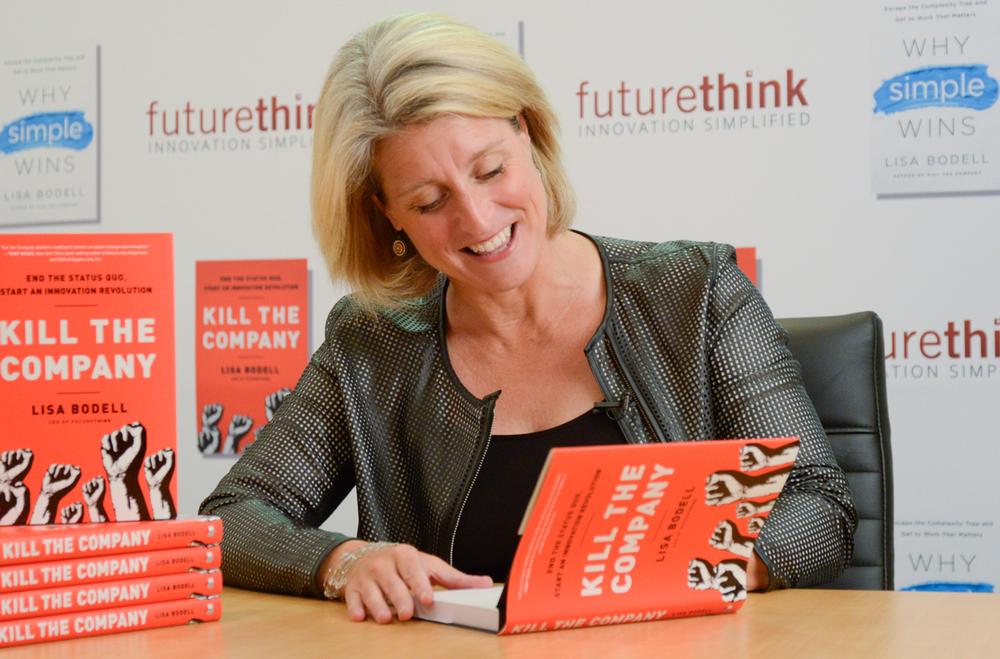
Your book is titled Kill the Company. What does that mean?
In many companies, we often stress the need to ‘think outside the box’ and ‘embrace change’. Despite this, few efforts actually manage to transform an organisation into an innovative success. In the end, we revert to the status quo.

Despite our best intentions, most efforts at innovation fall flat simply because the business itself was designed to prevent it. While we encourage creativity, we exist within a system that’s built to discourage it. This is the paradox I bring to light in my book.

The majority of companies, particularly those struggling with innovation, tend to exhibit negative or simply complacent cultures. These are places where bureaucracy, politics and red tape are prominent, and where scepticism has become second nature. These are all red flags of a status-quo environment, which can kill a business.

What solution do you propose?
Kill the Company helps organisations step outside themselves and be free to think creatively about what their needs are. Instead of pondering how to beat the competition, companies should look at how the competition can beat them. This kind of outside-in approach gets rid of what’s not working, and instead creates space for transformation.

Why are innovation and simplification key?
What my book recommends is simple: get rid of things first, rather than building on what doesn’t work. It’s a form of corporate spring-cleaning. The idea is to question assumptions and challenge rules that have outlived their usefulness. Killing these status-quo attitudes makes room for more value-added work, such as thinking.

Too many change initiatives simply add another layer of processes to the to-do lists of already overwhelmed and tired employees. Not this one! Innovation is supposed to make things better and easier, not worse and more complicated. Kill the Company is a guide to simplifying and streamlining, and then building and maintaining a place where everyone’s innovative spirit and energy fuel the firm’s common, long-term goals.

A company that empowers its people to think critically, question relentlessly and act boldly will own the future.

Do you think that innovation can sometimes impose greater complexity?
I don’t think that innovation presupposes complexity. I think that complexity, in fact, can very often interfere with our ability to move forward.

Complexity is actually killing companies’ ability to adapt and innovate, and simplicity is fast becoming the competitive advantage of our time.

By learning how to eliminate redundancies, communicate with clarity and make simplification a habit, individuals and organisations can begin to recognise which activities waste time and which create lasting value. By eliminating the low-value work, individuals feel less overwhelmed and more empowered, and are able to spend more time each day doing things that really matter – such as innovating.

What aspects of people’s attitudes need to change?
Change is hard because it’s often rooted in fear – essentially, fear of the unknown. When someone asks or forces us to change, we naturally resist.

In business, when most leaders are confronted with a big new idea, they push back and ask for more explanations, more financials, etc. They’re worried about taking a risk. However, an evolved leader gets comfortable with the unknown and learns about their tolerance for risk. This approach activates creative problem solving and inventive thinking instead of fear and doubt.

Can you tell us about your consultancy, futurethink?
futurethink is a global innovation training firm. We have a simple approach for unlocking this potential: our trainers and award-winning resources enable an entire organisation to think differently, drive change and achieve innovation success. We empower companies even in highly regulated industries – such as Pfizer, JPMorgan and Lockheed Martin – to solve big problems in uncommon, long-term and transformative ways.

Our facilitated and on-demand learning approach helps to transform the status quo into an invigorated mindset – with measurable results.

What do you think of the fitness industry’s approach?
The thing I like about this industry is that it’s focused on transformation – transforming our health, our bodies, our minds and our outlook. It’s innovative at its core. People who get involved with clubs are typically ready to change.

However, I think the industry can be prone to pursuing short-term trends instead of focusing on long-term innovation. There are a lot of trends, fads and ‘what’s hot’ lists at present. However, true innovation is longer lasting than these passing fads. I’d say that the real change agents in the fitness industry are the ones who are currently coming up with novel ideas that are centred on solving big problems rather than fads that will outlive their appeal.

Sign up here to get Fit Tech's weekly ezine and every issue of Fit Tech magazine free on digital.
More features
Editor's letter

Into the fitaverse

Fitness is already among the top three markets in the metaverse, with new technology and partnerships driving real growth and consumer engagement that looks likely to spill over into health clubs, gyms and studios
Fit Tech people

Ali Jawad

Paralympic powerlifter and founder, Accessercise
Users can easily identify which facilities in the UK are accessible to the disabled community
Fit Tech people

Hannes Sjöblad

MD, DSruptive
We want to give our users an implantable tool that allows them to collect their health data at any time and in any setting
Fit Tech people

Jamie Buck

Co-founder, Active in Time
We created a solution called AiT Voice, which turns digital data into a spoken audio timetable that connects to phone systems
Profile

Fahad Alhagbani: reinventing fitness

Let’s live in the future to improve today
Opinion

Building on the blockchain

For small sports teams looking to compete with giants, blockchain can be a secret weapon explains Lars Rensing, CEO of Protokol
Innovation

Bold move

Our results showed a greater than 60 per cent reduction in falls for individuals who actively participated in Bold’s programme
App analysis

Check your form

Sency’s motion analysis technology is allowing users to check their technique as they exercise. Co-founder and CEO Gal Rotman explains how
Profile

New reality

Sam Cole, CEO of FitXR, talks to Fit Tech about taking digital workouts to the next level, with an immersive, virtual reality fitness club
Profile

Sohail Rashid

35 million people a week participate in strength training. We want Brawn to help this audience achieve their goals
Ageing

Reverse Ageing

Many apps help people track their health, but Humanity founders Peter Ward and Michael Geer have put the focus on ageing, to help users to see the direct repercussions of their habits. They talk to Steph Eaves
App analysis

Going hybrid

Workout Anytime created its app in partnership with Virtuagym. Workout Anytime’s Greg Maurer and Virtuagym’s Hugo Braam explain the process behind its creation
Research

Physical activity monitors boost activity levels

Researchers at the University of Copenhagen have conducted a meta analysis of all relevant research and found that the body of evidence shows an impact
Editor's letter

Two-way coaching

Content providers have been hugely active in the fit tech market since the start of the pandemic. We expect the industry to move on from delivering these services on a ‘broadcast-only’ basis as two-way coaching becomes the new USP
Fit Tech People

Laurent Petit

Co-founder, Active Giving
The future of sports and fitness are dependent on the climate. Our goal is to positively influence the future of our planet by instilling a global vision of wellbeing and a sense of collective action
Fit Tech People

Adam Zeitsiff

CEO, Intelivideo
We don’t just create the technology and bail – we support our clients’ ongoing hybridisation efforts
Fit Tech People

Anantharaman Pattabiraman

CEO and co-founder, Auro
When you’re undertaking fitness activities, unless you’re on a stationary bike, in most cases it’s not safe or necessary to be tied to a screen, especially a small screen
Fit Tech People

Mike Hansen

Managing partner, Endorphinz
We noticed a big gap in the market – customers needed better insights but also recommendations on what to do, whether that be customer acquisition, content creation, marketing and more
More features
Wattbike’s mission is to make Wattbike the ultimate training partner for improving health and performance. ...
Matrix provides equipment to facilities in all market sectors including private health clubs, residential housing, ...
22-23 Sep 2026
Four Seasons Hotel Bangkok at Chao Phraya River, Bangkok , Thailand
Wattbike’s mission is to make Wattbike the ultimate training partner for improving health and performance. ...
Matrix provides equipment to facilities in all market sectors including private health clubs, residential housing, ...
Get Fit Tech
Sign up for the free Fit Tech ezine and breaking news alerts
Sign up
22-23 Sep 2026
Four Seasons Hotel Bangkok at Chao Phraya River, Bangkok , Thailand

latest fit tech news

PureGym is encouraging people to step away from their screens and go for a walk, in a new initiative timed ...
news • 29 May 2026
Active people app, Strava, has overhauled its strength training experience, allowing gym-goers to automatically log and share their lifts from ...
news • 27 May 2026

Fitness First UK is embracing digital wellness technology by installing Kip’s tap-to-activate phone controls across its UK estate. Kip tags ...
news • 22 May 2026
The world’s first awareness ring has been launched. Designed to promote presence, focus and calm via gentle haptic vibrations, the ...
news • 13 May 2026
Center Parcs’ Aqua Sana Forest Spa, Woburn Forest, UK, has transformed an unused space into a touchless wellness area called ...
news • 12 May 2026
Gharieni Group has launched a new company, Cobotics Innovations, to create automated wellness experiences. The first solution is a robotic ...
product innovation • 07 May 2026

US-based robotics wellness company Aescape Inc has entered insolvency proceedings following the sale of substantially all of its ...

news • 06 May 2026
Fitness platform, Zing Coach, has teamed up with Les Mills, in a partnership that gives its users access to group ...
news • 23 Apr 2026

TMActive is launching a new Active Wellbeing Studio next month in Tonbridge, UK, specifically aimed at people who face higher ...
news • 13 Apr 2026

Indian billionaire, Deepinder Goyal, is working on a device called Temple that aims to track blood flow to the brain ...
news • 10 Apr 2026
More fit tech news
features

IHRSA update: Lisa Bodell

Kristen Walsh talks to IHRSA 2018 keynote speaker Lisa Bodell, who says that the status quo must be sacrificed to achieve true innovation

Published in Health Club Management 2018 issue 3

Your book is titled Kill the Company. What does that mean?
In many companies, we often stress the need to ‘think outside the box’ and ‘embrace change’. Despite this, few efforts actually manage to transform an organisation into an innovative success. In the end, we revert to the status quo.

Despite our best intentions, most efforts at innovation fall flat simply because the business itself was designed to prevent it. While we encourage creativity, we exist within a system that’s built to discourage it. This is the paradox I bring to light in my book.

The majority of companies, particularly those struggling with innovation, tend to exhibit negative or simply complacent cultures. These are places where bureaucracy, politics and red tape are prominent, and where scepticism has become second nature. These are all red flags of a status-quo environment, which can kill a business.

What solution do you propose?
Kill the Company helps organisations step outside themselves and be free to think creatively about what their needs are. Instead of pondering how to beat the competition, companies should look at how the competition can beat them. This kind of outside-in approach gets rid of what’s not working, and instead creates space for transformation.

Why are innovation and simplification key?
What my book recommends is simple: get rid of things first, rather than building on what doesn’t work. It’s a form of corporate spring-cleaning. The idea is to question assumptions and challenge rules that have outlived their usefulness. Killing these status-quo attitudes makes room for more value-added work, such as thinking.

Too many change initiatives simply add another layer of processes to the to-do lists of already overwhelmed and tired employees. Not this one! Innovation is supposed to make things better and easier, not worse and more complicated. Kill the Company is a guide to simplifying and streamlining, and then building and maintaining a place where everyone’s innovative spirit and energy fuel the firm’s common, long-term goals.

A company that empowers its people to think critically, question relentlessly and act boldly will own the future.

Do you think that innovation can sometimes impose greater complexity?
I don’t think that innovation presupposes complexity. I think that complexity, in fact, can very often interfere with our ability to move forward.

Complexity is actually killing companies’ ability to adapt and innovate, and simplicity is fast becoming the competitive advantage of our time.

By learning how to eliminate redundancies, communicate with clarity and make simplification a habit, individuals and organisations can begin to recognise which activities waste time and which create lasting value. By eliminating the low-value work, individuals feel less overwhelmed and more empowered, and are able to spend more time each day doing things that really matter – such as innovating.

What aspects of people’s attitudes need to change?
Change is hard because it’s often rooted in fear – essentially, fear of the unknown. When someone asks or forces us to change, we naturally resist.

In business, when most leaders are confronted with a big new idea, they push back and ask for more explanations, more financials, etc. They’re worried about taking a risk. However, an evolved leader gets comfortable with the unknown and learns about their tolerance for risk. This approach activates creative problem solving and inventive thinking instead of fear and doubt.

Can you tell us about your consultancy, futurethink?
futurethink is a global innovation training firm. We have a simple approach for unlocking this potential: our trainers and award-winning resources enable an entire organisation to think differently, drive change and achieve innovation success. We empower companies even in highly regulated industries – such as Pfizer, JPMorgan and Lockheed Martin – to solve big problems in uncommon, long-term and transformative ways.

Our facilitated and on-demand learning approach helps to transform the status quo into an invigorated mindset – with measurable results.

What do you think of the fitness industry’s approach?
The thing I like about this industry is that it’s focused on transformation – transforming our health, our bodies, our minds and our outlook. It’s innovative at its core. People who get involved with clubs are typically ready to change.

However, I think the industry can be prone to pursuing short-term trends instead of focusing on long-term innovation. There are a lot of trends, fads and ‘what’s hot’ lists at present. However, true innovation is longer lasting than these passing fads. I’d say that the real change agents in the fitness industry are the ones who are currently coming up with novel ideas that are centred on solving big problems rather than fads that will outlive their appeal.

Sign up here to get Fit Tech's weekly ezine and every issue of Fit Tech magazine free on digital.
More features
Editor's letter

Into the fitaverse

Fitness is already among the top three markets in the metaverse, with new technology and partnerships driving real growth and consumer engagement that looks likely to spill over into health clubs, gyms and studios
Fit Tech people

Ali Jawad

Paralympic powerlifter and founder, Accessercise
Users can easily identify which facilities in the UK are accessible to the disabled community
Fit Tech people

Hannes Sjöblad

MD, DSruptive
We want to give our users an implantable tool that allows them to collect their health data at any time and in any setting
Fit Tech people

Jamie Buck

Co-founder, Active in Time
We created a solution called AiT Voice, which turns digital data into a spoken audio timetable that connects to phone systems
Profile

Fahad Alhagbani: reinventing fitness

Let’s live in the future to improve today
Opinion

Building on the blockchain

For small sports teams looking to compete with giants, blockchain can be a secret weapon explains Lars Rensing, CEO of Protokol
Innovation

Bold move

Our results showed a greater than 60 per cent reduction in falls for individuals who actively participated in Bold’s programme
App analysis

Check your form

Sency’s motion analysis technology is allowing users to check their technique as they exercise. Co-founder and CEO Gal Rotman explains how
Profile

New reality

Sam Cole, CEO of FitXR, talks to Fit Tech about taking digital workouts to the next level, with an immersive, virtual reality fitness club
Profile

Sohail Rashid

35 million people a week participate in strength training. We want Brawn to help this audience achieve their goals
Ageing

Reverse Ageing

Many apps help people track their health, but Humanity founders Peter Ward and Michael Geer have put the focus on ageing, to help users to see the direct repercussions of their habits. They talk to Steph Eaves
App analysis

Going hybrid

Workout Anytime created its app in partnership with Virtuagym. Workout Anytime’s Greg Maurer and Virtuagym’s Hugo Braam explain the process behind its creation
Research

Physical activity monitors boost activity levels

Researchers at the University of Copenhagen have conducted a meta analysis of all relevant research and found that the body of evidence shows an impact
Editor's letter

Two-way coaching

Content providers have been hugely active in the fit tech market since the start of the pandemic. We expect the industry to move on from delivering these services on a ‘broadcast-only’ basis as two-way coaching becomes the new USP
Fit Tech People

Laurent Petit

Co-founder, Active Giving
The future of sports and fitness are dependent on the climate. Our goal is to positively influence the future of our planet by instilling a global vision of wellbeing and a sense of collective action
Fit Tech People

Adam Zeitsiff

CEO, Intelivideo
We don’t just create the technology and bail – we support our clients’ ongoing hybridisation efforts
Fit Tech People

Anantharaman Pattabiraman

CEO and co-founder, Auro
When you’re undertaking fitness activities, unless you’re on a stationary bike, in most cases it’s not safe or necessary to be tied to a screen, especially a small screen
Fit Tech People

Mike Hansen

Managing partner, Endorphinz
We noticed a big gap in the market – customers needed better insights but also recommendations on what to do, whether that be customer acquisition, content creation, marketing and more
More features