







What’s the elevator pitch for Sanctum?
It’s a cathartic, spiritual mind/body experience where we combine ancient methods and philosophies and mix them with their modern equivalents.
We created a signature workout sequence, which is a combination of high intensity movement, Kundalini yoga, martial arts and the power of the mind and created a multi-sensory immersive experience around it.
Our workouts are delivered in unique locations all over the world, such as churches, ancient ruins and beaches.
Everybody wears headphones and through those they’re hearing a rollercoaster of motivational music, soundscapes, poetry and wisdom. We also work with binaural beats and healing frequencies.
The spaces are filled with candles and the fragrance of sage smudge sticks, which are used in shamanic tribes to clean spaces – it smells delicious.
What’s the philosophy behind your approach?
I call myself a gatherer not a creator, because I gathered multiple methods and philosophies and put them together in one signature sequence or framework, for which we have copyright.
Our guides use this Sanctum Framework, so although you’ll always see the same buildup of the class each will be different, as guides create their own theme by sharing personal, authentic stories.
We call our instructors guides because they don’t tell people what to do. They guide them through the experience and share tools, but in the end, each individual is the master of their own experience.
Tell us about your instructors
I have a background in theatre and so we often have dancers and actors on our team.
This is because I can train people how to move, but the magic we seek comes from them being an inspiration and being gifted in storytelling and this makes the role ideal for people who’ve trained in the creative arts.
I created the Sanctum Academy to coach new guides, which is a three week intensive training programme and the main things we focus on are their core values and their presence and then we look at how they can create stories that will touch others.
They need to be able to tell stories which are personal, but relatable and to be able to be vulnerable, but not too vulnerable. There’s a balance to be struck.
People don’t remember the number of squats they did, but they remember a personal story, or that advice about letting go. This is the magic of Sanctum, so we dive into areas such as spirituality, rather than what you see in a standard class where it’s all, “come on, let’s go!”
Music is a key part of Sanctum – tell us more
We’ve created our own sonic branding with Myndstream – which is part of the company that does music for Stranger Things and Bridgerton.
This sonic theme is used before and during our classes and online and makes us the world’s first movement class to incorporate its own unique sonic branding.
We create classes where the storytelling, the music and the movement come together in one experience.
What’s the science behind the headphones?
Berkeley University researched why people cry more on a plane when watching a movie with headphones than when they watch it on TV and found that when people listen through headphones, their brain perceives the sound as though it’s their own voice and identifies more closely with what’s being said and this heightens their emotions.
This means that when people are in my class I have a conversation with each of them inside their head. It doesn’t matter if I have two thousand people or ten in a class, we still have a one-on-one connection and their brain perceives it though it’s their own voice. That’s what makes it so intimate.
When it comes to delivering a multi sensory experience, sound is our most important element and when we started there was no system that suited our needs, so we created our own. It fits inside a small suitcase so we can take it on planes as hand luggage.
What’s special about Sanctum’s approach?
The goal is to alter body frequencies and we believe people experience by doing, so we don’t over-explain.
We do a lot of Kundalini heart openers, for example, which activate energy centres in the body, but we don’t explain this during the class, because we want to make the experience approachable for everybody – even those who might be intimidated by Kundalini yoga.
That also applies to the sound. For example, tomorrow I’m doing a class around love and my intro talk will be accompanied by a soundscape at 528 Hz, which is the frequency of love.
If we speak about love, play the frequency of love and add heart openers to it – so people place their hands on their heart and feel it beating – these things connect.
This gives you an example of how we bring elements together around an important theme to activate people, but we don’t want to explain it too much, it’s part of the magic that they can find it for themselves.
Everything is energy, so if the energy is right and if everything fits well, it has the desired impact.
Tell us your personal story
I used to be a dancer, my mum was very spiritual and my dad is a business guy, so I brought all those elements together and eight years ago I started to travel the world to acquire more knowledge of spirituality and different philosophies.
I enjoyed discovering practices and beliefs that are thousands of years old, such as Kundalini yoga and Qigong, that work with energy within the body and I began to weave these into a new modality.
Doing it I felt the release that I had as a dancer, because we use our body as a vessel to express ourselves.
I started Sanctum as a mindful fitness concept, however, I now realise it’s more a ritual. It’s also grown more communal as it became clear from customer feedback how important the community aspect is.
We live in a world with more than seven billion people, yet loneliness is one of our biggest diseases. Sanctum has, very organically, become a safe space and when people put their headphones on, they’re in a place where they can laugh and cry and be themselves, but with each other.
Human beings find collective experience so powerful and that’s one of the main pillars of Sanctum.
Where are you located?
We started in Amsterdam and host daily classes in the most beautiful churches and other spiritual spaces.
We launched in London this year and host classes in South Kensington, Shoreditch and Bayswater.
The US is very much on our radar for 2025 and soon we’ll start planting seeds there and creating a buzz with invite-only events for the media.
The rest of Europe is also in our sights – we want to grow mindfully and make sure the quality is high.
What rates do you charge?
In London £40 a class and in Amsterdam €25 – it’s a different market and very competitive.
We want more people to be able to experience it, so we don’t want to make it too expensive. Our private retreats are more high-end, but it’s important to have that balance: we want to be working in all parts of society and not making it too elitist.
Tell us about the retreats
We work with hotels and resorts to create three or four night retreats which have daily Sanctum experiences at their core.
We focus on nature and use the story of the place in the class, so we might do them on a beach in Ibiza or in the ruins of Rome where we create classes based around the Roman gods.
We partner with holistic experts to deliver wellbeing with an edge – for example, we might do a cacao ceremony, or instead of using an acoustic DJ, collaborate with a DJ who creates music from tapping into the electrical impulses in plants.
We also work with experts in energy and integration, such as breathwork and sound healing.
We curate the whole programme for these retreats and the social elements are important – people come to meet new and like-minded people, so we have dancing parties, so they can dance together.
We really believe in the power of joy and joyful healing and want to show that mindfulness can be fun and not always serious and that you can laugh and celebrate your imperfections.
We also want to enable people to find stillness, so organise things such as journaling workshops where they can learn how to journal their thoughts. Fundamentally, it’s a holistic approach.
When we create a retreat, we want to take people through all the spectrums – high energy, low. energy, going within themselves and reaching out to others.
Where can people experience the retreats?
In Europe at Six Senses Ibiza and Six Senses Crans Montana where we’ll be doing a retreat from 3-6 October this year. We’re taking part in the Soneva Soul Festival in the Maldives from 9-13 October and we have a partnership with Auberge Resorts, with four retreats being delivered in the US in 2024.
What does it cost?
It depends on the property, but as a guide, it will be €3,500 and €5,000 for four days.
You’re also doing mega events...
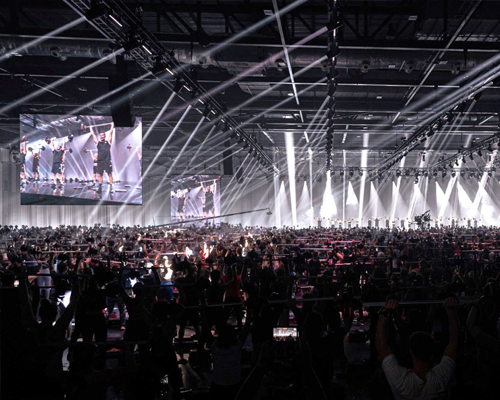
Our biggest event concept – called the Frequency Festival – sees 2,000 people taking part over a two and a half hour period, so the energy is off the charts.
The next of these festivals will be in the Olympic Stadium in Amsterdam on 21 September and there’ll also be one in London on 16 November at The Beams (www.thebeamslondon.com).
What are your dreams for the business?
We want to make Sanctum a global movement to help people get in touch with themselves and others in order to live their best life and make the right choices.
We really need this in the world right now. We need more love and connection.
Often when I leave a fitness class in a gym, I leave stressed because it’s about the ‘beach body’, it’s about ‘bigger biceps’ and it’s very aggressive and that is what we really didn’t want to do when we were creating Sanctum.
We never focus on bigger biceps or the number of calories burned – even though it’s considerable – our focus goes deeper into how people feel.
I think we’re a part of a movement and you’ll start to see big changes in this regard – there will be more studios and clubs heading in a more mindful direction, such as The Class from Taryn Toomey (www.theclass.com) in New York, and Kinergy (www.kinrgy.com).
In The Netherlands, there are already some classes that are trying to do the same as we do, which is a compliment – we’re focusing on our own innovation rather than fighting them in court. We’re a disrupter and we’re always trying to work out how we can create something different.