




EGYM | Fit Tech promotion
features

Technology: Rio Olympics set to be the most technologically advanced Games ever

The Rio Olympics are set to be remembered as the most technologically advanced Games ever. Tom Walker looks at the innovation

Published in Sports Management Aug 2016 issue 125

It totally changes the experience for the audience," says Sebastián Cuattrin, rowing manager of the Rio 2016 Olympic Games. "It will make it possible to see the different tactics being used by different teams, in particular when there is a change of speed."

Cuattrin is describing the technology which will help fans follow the canoe and rowing events at the Rio Games in more detail than ever before. Thanks to GPS devices attached to each vessel, spectators will be able to see a number of key data – such as speed, direction and changes in tempo – while watching the live action.

The GPS-based system is just one of the innovations at Rio designed to enhance the Olympic experience for athletes, officials and both live and TV spectators. From improving the way competitions are officiated to making paying for refreshments easier for fans, Rio will be bursting with new tech.

SPORTS
The Games will be the first Olympics during which full video review systems will be used in a sport. Volleyball players will be able to – if unhappy with a referee’s call – challenge a decision and refer it to a second video operating official, who will use television footage to verify any challenged points.

Replays of the review will be shown in real time on the arena screens while the challenge is studied – which will no doubt add to the drama for the fans (and the blushes of the referee, if the call is reversed). "The crowd will be waiting with bated breath," says Cristiana Figueira, manager of volleyball at the Rio 2016 organising committee. "We are expecting a lot of booing and applause and the reviews will be in use for both volleyball and beach volleyball”.

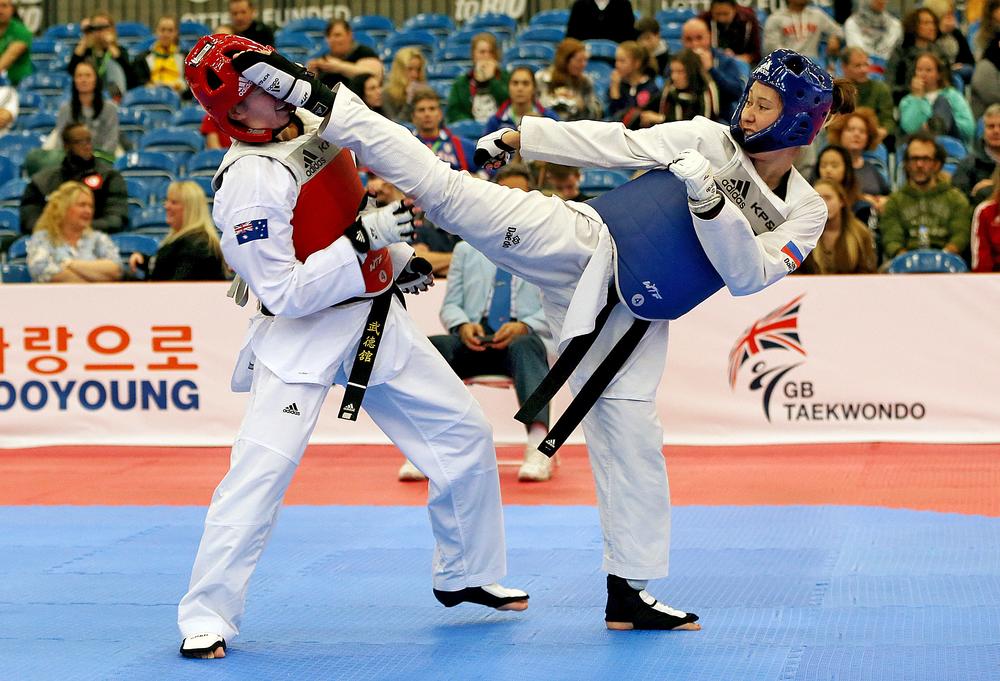
Technology will also ensure fair play in taekwondo, where special sensors will be placed in athletes’ headgear for the first time. The idea is to minimise the chances of refereeing errors, as blows to the head are worth three times more than blows to the torso – and so often decide contests.

“New technology has given transparency to the sport,” says Phillippe Bouedo, technical delegate of the World Taekwondo Federation. “In London, we had sensors into the vests, but not the headgear. In Rio, for the first time in the history of the Games, we will have both.”

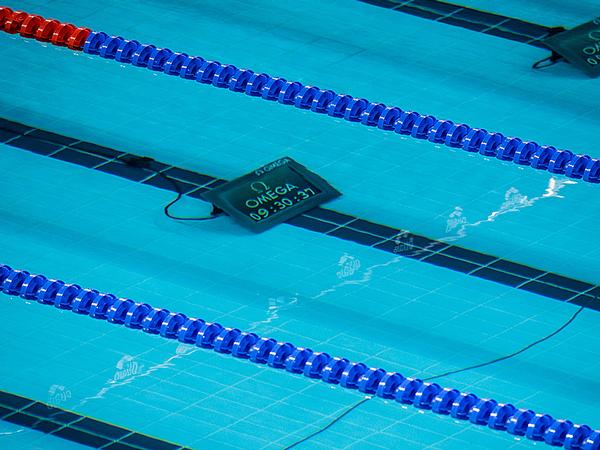
Meanwhile, in the Rio pools, swimmers will have one thing less to worry about during their performances thanks to technology. Digital lap counters, supplied by Swiss watchmaker and timing specialist Omega, will be installed and used during the long distance 800m and 1500m freestyle events.

It is not uncommon for distance swimmers to lose track of their lap count – even in elite competitions – so the devices will help by automatically updating the lap count each time a swimmer hits the touchpad on the wall at the end of each lane.

Eduardo Gayotto, swimming manager at Rio 2016, says the counters were first installed at a test event at the Aquatics Centre in May. “The counters mean that athletes can focus more on their own performance,” he says.

“As soon as they turn they can see how much they have swum."

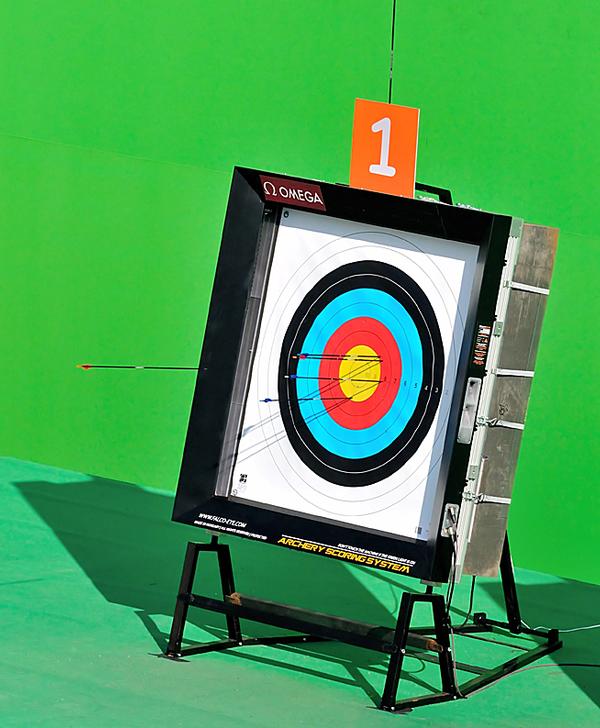
Other sports to feature technological first at Rio include archery, where a new electronic scoring system will replace the ancient tradition of a referee deciding the score. The targets are now based on a high-technology sensor system, which – as well as being 100 per cent accurate – will transform the spectator experience of the sport by removing the long delay to find out the score of each arrow.

"When the arrow hits the target, the system shows the score on the big screen immediately," says Rio 2016 archery manager Luiz Eduardo Almeida. "It is extremely accurate and much, much faster than waiting for a referee to examine the hit and then give out the result."

The new system, also supplied by Omega, identifies the exact point of the arrow in the target within an accuracy of 0.2mm, much more precise than the human eye could ever be capable of. The score is displayed on the screen in less than one second after the arrow hits the target.

BROADCASTING
Advances made in virtual reality (VR) technology since the London 2012 Games mean that the Rio Games will be the first to feature VR transmissions. Olympic Broadcasting Services (OBS), the organisation responsible for sending out the official video feed to national broadcasters, will use Super-Hi Vision 8K video to record the opening and closing ceremonies in VR. It will also broadcast one event per day in VR.  

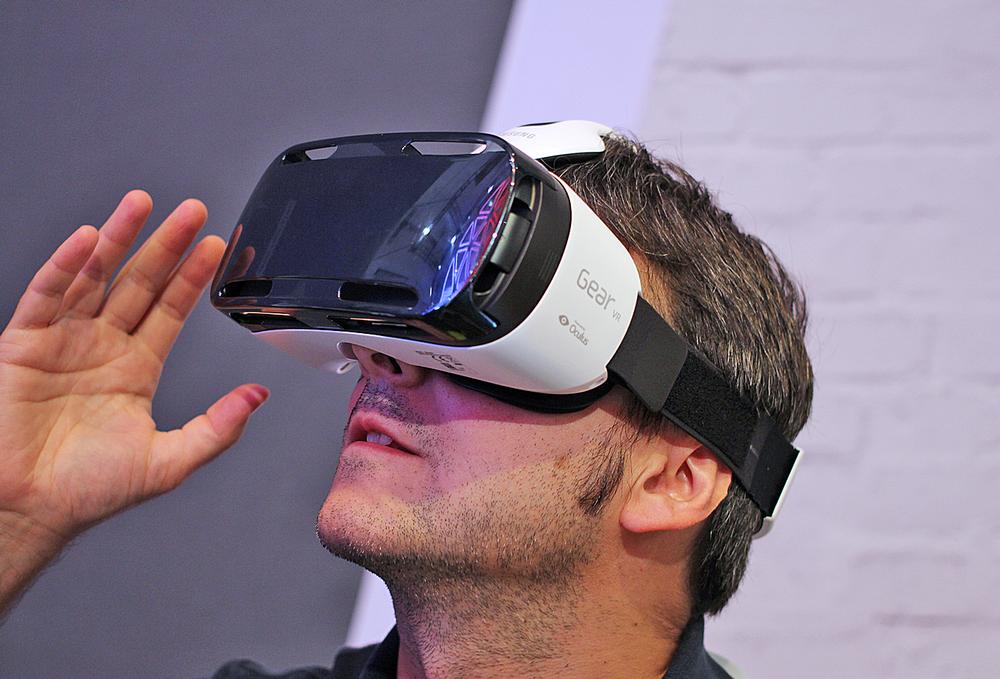
Some broadcasters will be making full use of the opportunity. US-based NBC has already  promised to use the feed to broadcast 85 hours of Olympic action in VR, making events available for the Samsung Gear VR headset through its NBC Sports app.

Yiannis Exarchos, OBS chief executive, said: “VR technology carries incredible potential for the sport broadcast industry, offering a truly immersive user experience. It has the power to enable hundreds of millions of people around the world to have a real sense of presence and participation.”

ALTERNATIVE GAMES
At Rio, technological innovation won’t be limited to the action within the sporting arenas either. During the Games, a partnership initiative between the Rio 2016 Organising Committee and Israel-based Hype Foundation will see eight start-ups compete in the first ever Global Sports Technology Competition.

The aim of the competition has been to uncover the best sports technology innovations from around the globe. The competition has seen the initial group of 60 sports technology startups – which showcased their sports-based innovations to panels of elite judges – sized down to the eight finalists, who will now compete for a €100,000 grand prize.

Rio will also push the boundaries of what sport actually is. An international gaming tournament is set to take place alongside the Games, featuring mixed-sex squads of professional video gamers to play in tournaments held in large venues.

The competition, organised by the recently established International eGames Committee (IEGC), will be the first of a programme of tournaments planned to take place in Olympic years in the host cities – with future tournaments planned for Pyeongchang in 2018 and Tokyo in 2020.

Sign up here to get Fit Tech's weekly ezine and every issue of Fit Tech magazine free on digital.
Gallery
More features
Editor's letter

Into the fitaverse

Fitness is already among the top three markets in the metaverse, with new technology and partnerships driving real growth and consumer engagement that looks likely to spill over into health clubs, gyms and studios
Fit Tech people

Ali Jawad

Paralympic powerlifter and founder, Accessercise
Users can easily identify which facilities in the UK are accessible to the disabled community
Fit Tech people

Hannes Sjöblad

MD, DSruptive
We want to give our users an implantable tool that allows them to collect their health data at any time and in any setting
Fit Tech people

Jamie Buck

Co-founder, Active in Time
We created a solution called AiT Voice, which turns digital data into a spoken audio timetable that connects to phone systems
Profile

Fahad Alhagbani: reinventing fitness

The team is young and ambitious, and the awareness of technology is very high. We share trends and out-of-the-box ideas almost every day
Opinion

Building on the blockchain

For small sports teams looking to compete with giants, blockchain can be a secret weapon explains Lars Rensing, CEO of Protokol
Innovation

Bold move

Our results showed a greater than 60 per cent reduction in falls for individuals who actively participated in Bold’s programme
App analysis

Check your form

Sency’s motion analysis technology is allowing users to check their technique as they exercise. Co-founder and CEO Gal Rotman explains how
Profile

New reality

Sam Cole, CEO of FitXR, talks to Fit Tech about taking digital workouts to the next level, with an immersive, virtual reality fitness club
Profile

Sohail Rashid

35 million people a week participate in strength training. We want Brawn to help this audience achieve their goals
Ageing

Reverse Ageing

Many apps help people track their health, but Humanity founders Peter Ward and Michael Geer have put the focus on ageing, to help users to see the direct repercussions of their habits. They talk to Steph Eaves
App analysis

Going hybrid

Workout Anytime created its app in partnership with Virtuagym. Workout Anytime’s Greg Maurer and Virtuagym’s Hugo Braam explain the process behind its creation
Research

Physical activity monitors boost activity levels

Researchers at the University of Copenhagen have conducted a meta analysis of all relevant research and found that the body of evidence shows an impact
Editor's letter

Two-way coaching

Content providers have been hugely active in the fit tech market since the start of the pandemic. We expect the industry to move on from delivering these services on a ‘broadcast-only’ basis as two-way coaching becomes the new USP
Fit Tech People

Laurent Petit

Co-founder, Active Giving
The future of sports and fitness are dependent on the climate. Our goal is to positively influence the future of our planet by instilling a global vision of wellbeing and a sense of collective action
Fit Tech People

Adam Zeitsiff

CEO, Intelivideo
We don’t just create the technology and bail – we support our clients’ ongoing hybridisation efforts
Fit Tech People

Anantharaman Pattabiraman

CEO and co-founder, Auro
When you’re undertaking fitness activities, unless you’re on a stationary bike, in most cases it’s not safe or necessary to be tied to a screen, especially a small screen
Fit Tech People

Mike Hansen

Managing partner, Endorphinz
We noticed a big gap in the market – customers needed better insights but also recommendations on what to do, whether that be customer acquisition, content creation, marketing and more
More features
Matrix provides equipment to facilities in all market sectors including private health clubs, residential housing, ...
FIBO pursues the vision of a strong and healthy society and as a global network ...
22-23 Sep 2026
Four Seasons Hotel Bangkok at Chao Phraya River, Bangkok , Thailand
Matrix provides equipment to facilities in all market sectors including private health clubs, residential housing, ...
FIBO pursues the vision of a strong and healthy society and as a global network ...
Get Fit Tech
Sign up for the free Fit Tech ezine and breaking news alerts
Sign up
22-23 Sep 2026
Four Seasons Hotel Bangkok at Chao Phraya River, Bangkok , Thailand

latest fit tech news

PureGym is encouraging people to step away from their screens and go for a walk, in a new initiative timed ...
news • 29 May 2026
Active people app, Strava, has overhauled its strength training experience, allowing gym-goers to automatically log and share their lifts from ...
news • 27 May 2026

Fitness First UK is embracing digital wellness technology by installing Kip’s tap-to-activate phone controls across its UK estate. Kip tags ...
news • 22 May 2026
The world’s first awareness ring has been launched. Designed to promote presence, focus and calm via gentle haptic vibrations, the ...
news • 13 May 2026
Center Parcs’ Aqua Sana Forest Spa, Woburn Forest, UK, has transformed an unused space into a touchless wellness area called ...
news • 12 May 2026
Gharieni Group has launched a new company, Cobotics Innovations, to create automated wellness experiences. The first solution is a robotic ...
product innovation • 07 May 2026

US-based robotics wellness company Aescape Inc has entered insolvency proceedings following the sale of substantially all of its ...

news • 06 May 2026
Fitness platform, Zing Coach, has teamed up with Les Mills, in a partnership that gives its users access to group ...
news • 23 Apr 2026

TMActive is launching a new Active Wellbeing Studio next month in Tonbridge, UK, specifically aimed at people who face higher ...
news • 13 Apr 2026

Indian billionaire, Deepinder Goyal, is working on a device called Temple that aims to track blood flow to the brain ...
news • 10 Apr 2026
More fit tech news
features

Technology: Rio Olympics set to be the most technologically advanced Games ever

The Rio Olympics are set to be remembered as the most technologically advanced Games ever. Tom Walker looks at the innovation

Published in Sports Management Aug 2016 issue 125

It totally changes the experience for the audience," says Sebastián Cuattrin, rowing manager of the Rio 2016 Olympic Games. "It will make it possible to see the different tactics being used by different teams, in particular when there is a change of speed."

Cuattrin is describing the technology which will help fans follow the canoe and rowing events at the Rio Games in more detail than ever before. Thanks to GPS devices attached to each vessel, spectators will be able to see a number of key data – such as speed, direction and changes in tempo – while watching the live action.

The GPS-based system is just one of the innovations at Rio designed to enhance the Olympic experience for athletes, officials and both live and TV spectators. From improving the way competitions are officiated to making paying for refreshments easier for fans, Rio will be bursting with new tech.

SPORTS
The Games will be the first Olympics during which full video review systems will be used in a sport. Volleyball players will be able to – if unhappy with a referee’s call – challenge a decision and refer it to a second video operating official, who will use television footage to verify any challenged points.

Replays of the review will be shown in real time on the arena screens while the challenge is studied – which will no doubt add to the drama for the fans (and the blushes of the referee, if the call is reversed). "The crowd will be waiting with bated breath," says Cristiana Figueira, manager of volleyball at the Rio 2016 organising committee. "We are expecting a lot of booing and applause and the reviews will be in use for both volleyball and beach volleyball”.

Technology will also ensure fair play in taekwondo, where special sensors will be placed in athletes’ headgear for the first time. The idea is to minimise the chances of refereeing errors, as blows to the head are worth three times more than blows to the torso – and so often decide contests.

“New technology has given transparency to the sport,” says Phillippe Bouedo, technical delegate of the World Taekwondo Federation. “In London, we had sensors into the vests, but not the headgear. In Rio, for the first time in the history of the Games, we will have both.”

Meanwhile, in the Rio pools, swimmers will have one thing less to worry about during their performances thanks to technology. Digital lap counters, supplied by Swiss watchmaker and timing specialist Omega, will be installed and used during the long distance 800m and 1500m freestyle events.

It is not uncommon for distance swimmers to lose track of their lap count – even in elite competitions – so the devices will help by automatically updating the lap count each time a swimmer hits the touchpad on the wall at the end of each lane.

Eduardo Gayotto, swimming manager at Rio 2016, says the counters were first installed at a test event at the Aquatics Centre in May. “The counters mean that athletes can focus more on their own performance,” he says.

“As soon as they turn they can see how much they have swum."

Other sports to feature technological first at Rio include archery, where a new electronic scoring system will replace the ancient tradition of a referee deciding the score. The targets are now based on a high-technology sensor system, which – as well as being 100 per cent accurate – will transform the spectator experience of the sport by removing the long delay to find out the score of each arrow.

"When the arrow hits the target, the system shows the score on the big screen immediately," says Rio 2016 archery manager Luiz Eduardo Almeida. "It is extremely accurate and much, much faster than waiting for a referee to examine the hit and then give out the result."

The new system, also supplied by Omega, identifies the exact point of the arrow in the target within an accuracy of 0.2mm, much more precise than the human eye could ever be capable of. The score is displayed on the screen in less than one second after the arrow hits the target.

BROADCASTING
Advances made in virtual reality (VR) technology since the London 2012 Games mean that the Rio Games will be the first to feature VR transmissions. Olympic Broadcasting Services (OBS), the organisation responsible for sending out the official video feed to national broadcasters, will use Super-Hi Vision 8K video to record the opening and closing ceremonies in VR. It will also broadcast one event per day in VR.  

Some broadcasters will be making full use of the opportunity. US-based NBC has already  promised to use the feed to broadcast 85 hours of Olympic action in VR, making events available for the Samsung Gear VR headset through its NBC Sports app.

Yiannis Exarchos, OBS chief executive, said: “VR technology carries incredible potential for the sport broadcast industry, offering a truly immersive user experience. It has the power to enable hundreds of millions of people around the world to have a real sense of presence and participation.”

ALTERNATIVE GAMES
At Rio, technological innovation won’t be limited to the action within the sporting arenas either. During the Games, a partnership initiative between the Rio 2016 Organising Committee and Israel-based Hype Foundation will see eight start-ups compete in the first ever Global Sports Technology Competition.

The aim of the competition has been to uncover the best sports technology innovations from around the globe. The competition has seen the initial group of 60 sports technology startups – which showcased their sports-based innovations to panels of elite judges – sized down to the eight finalists, who will now compete for a €100,000 grand prize.

Rio will also push the boundaries of what sport actually is. An international gaming tournament is set to take place alongside the Games, featuring mixed-sex squads of professional video gamers to play in tournaments held in large venues.

The competition, organised by the recently established International eGames Committee (IEGC), will be the first of a programme of tournaments planned to take place in Olympic years in the host cities – with future tournaments planned for Pyeongchang in 2018 and Tokyo in 2020.
Sign up here to get Fit Tech's weekly ezine and every issue of Fit Tech magazine free on digital.
Gallery
More features
Editor's letter

Into the fitaverse

Fitness is already among the top three markets in the metaverse, with new technology and partnerships driving real growth and consumer engagement that looks likely to spill over into health clubs, gyms and studios
Fit Tech people

Ali Jawad

Paralympic powerlifter and founder, Accessercise
Users can easily identify which facilities in the UK are accessible to the disabled community
Fit Tech people

Hannes Sjöblad

MD, DSruptive
We want to give our users an implantable tool that allows them to collect their health data at any time and in any setting
Fit Tech people

Jamie Buck

Co-founder, Active in Time
We created a solution called AiT Voice, which turns digital data into a spoken audio timetable that connects to phone systems
Profile

Fahad Alhagbani: reinventing fitness

The team is young and ambitious, and the awareness of technology is very high. We share trends and out-of-the-box ideas almost every day
Opinion

Building on the blockchain

For small sports teams looking to compete with giants, blockchain can be a secret weapon explains Lars Rensing, CEO of Protokol
Innovation

Bold move

Our results showed a greater than 60 per cent reduction in falls for individuals who actively participated in Bold’s programme
App analysis

Check your form

Sency’s motion analysis technology is allowing users to check their technique as they exercise. Co-founder and CEO Gal Rotman explains how
Profile

New reality

Sam Cole, CEO of FitXR, talks to Fit Tech about taking digital workouts to the next level, with an immersive, virtual reality fitness club
Profile

Sohail Rashid

35 million people a week participate in strength training. We want Brawn to help this audience achieve their goals
Ageing

Reverse Ageing

Many apps help people track their health, but Humanity founders Peter Ward and Michael Geer have put the focus on ageing, to help users to see the direct repercussions of their habits. They talk to Steph Eaves
App analysis

Going hybrid

Workout Anytime created its app in partnership with Virtuagym. Workout Anytime’s Greg Maurer and Virtuagym’s Hugo Braam explain the process behind its creation
Research

Physical activity monitors boost activity levels

Researchers at the University of Copenhagen have conducted a meta analysis of all relevant research and found that the body of evidence shows an impact
Editor's letter

Two-way coaching

Content providers have been hugely active in the fit tech market since the start of the pandemic. We expect the industry to move on from delivering these services on a ‘broadcast-only’ basis as two-way coaching becomes the new USP
Fit Tech People

Laurent Petit

Co-founder, Active Giving
The future of sports and fitness are dependent on the climate. Our goal is to positively influence the future of our planet by instilling a global vision of wellbeing and a sense of collective action
Fit Tech People

Adam Zeitsiff

CEO, Intelivideo
We don’t just create the technology and bail – we support our clients’ ongoing hybridisation efforts
Fit Tech People

Anantharaman Pattabiraman

CEO and co-founder, Auro
When you’re undertaking fitness activities, unless you’re on a stationary bike, in most cases it’s not safe or necessary to be tied to a screen, especially a small screen
Fit Tech People

Mike Hansen

Managing partner, Endorphinz
We noticed a big gap in the market – customers needed better insights but also recommendations on what to do, whether that be customer acquisition, content creation, marketing and more
More features