




The Leisure Media Company Ltd | Fit Tech promotion
features

Tech: Conversations about the future

Dr Tim Anstiss is developing coachbots that are supporting positive behaviour change for operators such as Life Leisure and KA Leisure

Published in Health Club Management 2024 issue 6

An article in last month’s edition of HCM looked at research which found the three top AI chatbots – Google Bard, ChatGPT and Llama 2 – were unable to determine people’s ‘readiness to change’ from the language they used during chatbot conversations.

‘Readiness to change’ is described in the five motivational stages of behaviour change – see Table 1.

The research also suggested that even if a chatbot is able to determine a person’s ‘stage of change’, it mainly provides them with information to help them change – even though a recent review paper indicates that information provision alone is one of the least effective ways of supporting a person in changing their behaviour.

In addition, when chatbots rely on data gathered from the internet, the quality of the answers they return can be questionable. Sometimes they even make up scientific references that don’t exist.

The good news is that all this may not matter very much, as generative AI models are not the only ways to develop chatbots.

Background insight
I’ve spent much of my career as a doctor working in the physical activity and health field, including helping the UK’s Department of Health develop the ‘Let’s Get Moving’ National Physical Activity Pathway.

I’ve trained thousands of health and leisure professionals in motivational interviewing and brief interventions for physical activity, most recently helping the Faculty of Sports and Exercise Medicine with its Moving Medicine Initiative – specifically its Active Conversations course (www.hcmmag.com/activeconversations).

I’ve become curious about the role chatbots can play in helping people become more active – including people with health problems.

This interest started while I was delivering staff training in health coaching for an initiative called ‘Derby, a city on the move’, a Sport England-funded project in the East Midlands.

The project lead asked if I could create a chatbot to help people become more active. We developed one with a coaching style and called it a coachbot. It was added to the project’s website and since then, interest in this technology has taken off.

The growth of coachbots
Over the last few years, we’ve developed phone-, tablet- and PC-based coachbots – chatbots that coach, but don’t instruct – for a range of clients, including NHS England, The London Borough of Southwark and Respiratory Innovation Wales.

We’ve also worked with a social prescribing programme, a public health institute, some NHS Trusts, health charities and talking therapy providers.

Each coachbot focuses on supporting different positive behaviours – for example, becoming more active, stopping smoking, drinking less, taking up health screening, losing weight, improving mental health and wellbeing and even being better prepared for an upcoming health-related appointment.

We’ve developed coachbots in Arabic, German and Slovenian, as well as English – and even developed one as the interface for a tiny robot!

To date our coachbots have delivered over 10,000 chats. Here are some of the things the users of these have told us:

• “It was clear, concise and easy to use”

• “I found it very fast and responsive”

• “It gives you the space to think and not be judged”

• “I found it very helpful and supportive”

• “It made me think of ways to handle situations”

• “It’s good to get instant help”

• “It makes you think about things in a structured way”

• “This feels like a friendly conversation”

The results
One independent study of our coachbots in a busy talking therapies service found many clients developed a positive relationship with the coachbot, saying it helped them to think more clearly, helped reduce their anxiety and provided them with ideas to help themselves. Some particularly appreciated the anonymity the coachbot provided.

Working with Life Leisure
We’re currently working with John Oxley and LifeLeisure in Stockport, developing a suite of bespoke coachbots aimed at increasing uptake, engagement and outcomes from LifeLeisure’s Exercise on Referral programme, improve the onboarding process for new members and supporting existing members in getting the most from their membership – including helping them design and implement a personalised wellbeing plan that goes beyond physical activity.

We’ll also be assessing the impact of these coachbots on membership retention.

Both KA Leisure in North Ayrshire and Leisure Focus are also exploring the role co-designed coachbots can play in engaging local communities, guiding people towards self-directed healthy change and integrating with local health systems, all while pivoting to wellbeing.

Recognising that a coachbot can help people become better prepared for an appointment and more ready to engage in a programme, we’ve also started working with Stuart Stokes at ReferAll to explore how the solution can best be integrated into its self-referral platform.

Further research
King’s College London is seeking research funding to explore how coachbots might help people with Type 2 diabetes make changes to reduce their risk of renal failure – changes that might involve getting support to become more active.

Keele University is helping us explore the role coachbots might play in helping people with multiple long-term conditions take steps towards improved health and wellbeing, as well as increasing uptake rates for a cardiovascular screening service.

The Faculty of Sports and Exercise Medicine is helping explore the development of an automated, conversational, quality-assured screening and guidance process to help people with health conditions become active safely – knowing that many people need reassurance.

Reflecting on the past
Ten years ago I wrote a couple of articles in HCM magazine – one on health coaching and the other on wellbeing coaching. At the time I said:

“If all health and fitness professionals were trained in proven methods of health coaching, such as motivational interviewing, more members would achieve their health goals, retention figures would climb, and the health of the nation might just improve.”

And, “Without wishing to understate the importance of doctors, psychologists and other mental health professionals in helping people with psychological health problems get well, I believe many of us would benefit from evidence-based wellbeing coaching by a professional. This service is best offered in non-clinical settings such as health clubs and leisure centres.”

So it was fantastic to read in last month’s HCM about all the great work going on around the country as operators make progress with their pivots to active wellbeing.

Where next?
My prediction is that this trend will be accompanied by an increased use of friendly, smart conversational agents such as coachbots. These agents won’t replace conversations with skilled professionals, but will augment and complement them, enabling the delivery of ‘hybrid’ or ‘blended’ health and wellbeing coaching to many more thousands of people, at pace and scale and at a low cost per session.

People will have increased choice when it comes to how they engage, get help navigating the system to more quickly find and access the services they want and need, while experiencing a NICE-compliant intervention designed to increase their readiness to change and engage in more and better self-care.

Operators will be able to generate and act on unique behavioural insight data about what matters to people, their reasons for changing, their plans and any additional help they might need, while pressure on local health systems will fall, if only a little.

At Virtual Health Labs we feel we’re just getting started on our mission of helping a million people a day take steps towards improved health and wellbeing.

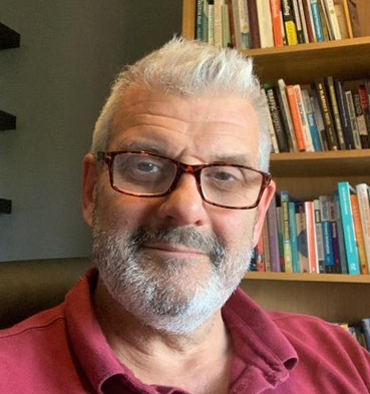
Dr Tim Anstiss is a medical doctor, educator and coach and founder of Virtual Health Labs.
More: www.virtualhealthlabs.com

"Coachbots won’t replace skilled professionals, but will augment them, enabling the delivery of hybrid coaching at pace and scale" – Dr Tim Anstiss

Table 1: The five motivational stages of behaviour change
1. Precontemplation

Not thinking about change

2. Contemplation

Thinking about change but not yet decided. Ambivalent. Mixed Feelings.

3. Preparation

Getting ready to change.

4. Action

Changing the behaviour.

5. Maintenance

Keeping up the new behaviour.

Sign up here to get Fit Tech's weekly ezine and every issue of Fit Tech magazine free on digital.
Gallery
More features
Editor's letter

Into the fitaverse

Fitness is already among the top three markets in the metaverse, with new technology and partnerships driving real growth and consumer engagement that looks likely to spill over into health clubs, gyms and studios
Fit Tech people

Ali Jawad

Paralympic powerlifter and founder, Accessercise
Users can easily identify which facilities in the UK are accessible to the disabled community
Fit Tech people

Hannes Sjöblad

MD, DSruptive
We want to give our users an implantable tool that allows them to collect their health data at any time and in any setting
Fit Tech people

Jamie Buck

Co-founder, Active in Time
We created a solution called AiT Voice, which turns digital data into a spoken audio timetable that connects to phone systems
Profile

Fahad Alhagbani: reinventing fitness

Alexa can help you book classes, check trainers’ bios and schedules, find out opening times, and a host of other information
Opinion

Building on the blockchain

For small sports teams looking to compete with giants, blockchain can be a secret weapon explains Lars Rensing, CEO of Protokol
Innovation

Bold move

Our results showed a greater than 60 per cent reduction in falls for individuals who actively participated in Bold’s programme
App analysis

Check your form

Sency’s motion analysis technology is allowing users to check their technique as they exercise. Co-founder and CEO Gal Rotman explains how
Profile

New reality

Sam Cole, CEO of FitXR, talks to Fit Tech about taking digital workouts to the next level, with an immersive, virtual reality fitness club
Profile

Sohail Rashid

My vision was to create a platform that could improve the sport for lifters at all levels and attract more people, similar to how Strava, Peloton and Zwift have in other sports
Ageing

Reverse Ageing

Many apps help people track their health, but Humanity founders Peter Ward and Michael Geer have put the focus on ageing, to help users to see the direct repercussions of their habits. They talk to Steph Eaves
App analysis

Going hybrid

Workout Anytime created its app in partnership with Virtuagym. Workout Anytime’s Greg Maurer and Virtuagym’s Hugo Braam explain the process behind its creation
Research

Physical activity monitors boost activity levels

Researchers at the University of Copenhagen have conducted a meta analysis of all relevant research and found that the body of evidence shows an impact
Editor's letter

Two-way coaching

Content providers have been hugely active in the fit tech market since the start of the pandemic. We expect the industry to move on from delivering these services on a ‘broadcast-only’ basis as two-way coaching becomes the new USP
Fit Tech People

Laurent Petit

Co-founder, Active Giving
The future of sports and fitness are dependent on the climate. Our goal is to positively influence the future of our planet by instilling a global vision of wellbeing and a sense of collective action
Fit Tech People

Adam Zeitsiff

CEO, Intelivideo
We don’t just create the technology and bail – we support our clients’ ongoing hybridisation efforts
Fit Tech People

Anantharaman Pattabiraman

CEO and co-founder, Auro
When you’re undertaking fitness activities, unless you’re on a stationary bike, in most cases it’s not safe or necessary to be tied to a screen, especially a small screen
Fit Tech People

Mike Hansen

Managing partner, Endorphinz
We noticed a big gap in the market – customers needed better insights but also recommendations on what to do, whether that be customer acquisition, content creation, marketing and more
More features
Fitbench creates modular training solutions designed to support efficient, high-quality workouts in a wide range ...
Taylor Made Designs offer health clubs a fully-managed end-to-end service. From garment design to sourcing, ...
22-23 Sep 2026
Four Seasons Hotel Bangkok at Chao Phraya River, Bangkok , Thailand
Fitbench creates modular training solutions designed to support efficient, high-quality workouts in a wide range ...
Taylor Made Designs offer health clubs a fully-managed end-to-end service. From garment design to sourcing, ...
Get Fit Tech
Sign up for the free Fit Tech ezine and breaking news alerts
Sign up
22-23 Sep 2026
Four Seasons Hotel Bangkok at Chao Phraya River, Bangkok , Thailand

latest fit tech news

PureGym is encouraging people to step away from their screens and go for a walk, in a new initiative timed ...
news • 29 May 2026
Active people app, Strava, has overhauled its strength training experience, allowing gym-goers to automatically log and share their lifts from ...
news • 27 May 2026

Fitness First UK is embracing digital wellness technology by installing Kip’s tap-to-activate phone controls across its UK estate. Kip tags ...
news • 22 May 2026
The world’s first awareness ring has been launched. Designed to promote presence, focus and calm via gentle haptic vibrations, the ...
news • 13 May 2026
Center Parcs’ Aqua Sana Forest Spa, Woburn Forest, UK, has transformed an unused space into a touchless wellness area called ...
news • 12 May 2026
Gharieni Group has launched a new company, Cobotics Innovations, to create automated wellness experiences. The first solution is a robotic ...
product innovation • 07 May 2026

US-based robotics wellness company Aescape Inc has entered insolvency proceedings following the sale of substantially all of its ...

news • 06 May 2026
Fitness platform, Zing Coach, has teamed up with Les Mills, in a partnership that gives its users access to group ...
news • 23 Apr 2026

TMActive is launching a new Active Wellbeing Studio next month in Tonbridge, UK, specifically aimed at people who face higher ...
news • 13 Apr 2026

Indian billionaire, Deepinder Goyal, is working on a device called Temple that aims to track blood flow to the brain ...
news • 10 Apr 2026
More fit tech news
features

Tech: Conversations about the future

Dr Tim Anstiss is developing coachbots that are supporting positive behaviour change for operators such as Life Leisure and KA Leisure

Published in Health Club Management 2024 issue 6

An article in last month’s edition of HCM looked at research which found the three top AI chatbots – Google Bard, ChatGPT and Llama 2 – were unable to determine people’s ‘readiness to change’ from the language they used during chatbot conversations.

‘Readiness to change’ is described in the five motivational stages of behaviour change – see Table 1.

The research also suggested that even if a chatbot is able to determine a person’s ‘stage of change’, it mainly provides them with information to help them change – even though a recent review paper indicates that information provision alone is one of the least effective ways of supporting a person in changing their behaviour.

In addition, when chatbots rely on data gathered from the internet, the quality of the answers they return can be questionable. Sometimes they even make up scientific references that don’t exist.

The good news is that all this may not matter very much, as generative AI models are not the only ways to develop chatbots.

Background insight
I’ve spent much of my career as a doctor working in the physical activity and health field, including helping the UK’s Department of Health develop the ‘Let’s Get Moving’ National Physical Activity Pathway.

I’ve trained thousands of health and leisure professionals in motivational interviewing and brief interventions for physical activity, most recently helping the Faculty of Sports and Exercise Medicine with its Moving Medicine Initiative – specifically its Active Conversations course (www.hcmmag.com/activeconversations).

I’ve become curious about the role chatbots can play in helping people become more active – including people with health problems.

This interest started while I was delivering staff training in health coaching for an initiative called ‘Derby, a city on the move’, a Sport England-funded project in the East Midlands.

The project lead asked if I could create a chatbot to help people become more active. We developed one with a coaching style and called it a coachbot. It was added to the project’s website and since then, interest in this technology has taken off.

The growth of coachbots
Over the last few years, we’ve developed phone-, tablet- and PC-based coachbots – chatbots that coach, but don’t instruct – for a range of clients, including NHS England, The London Borough of Southwark and Respiratory Innovation Wales.

We’ve also worked with a social prescribing programme, a public health institute, some NHS Trusts, health charities and talking therapy providers.

Each coachbot focuses on supporting different positive behaviours – for example, becoming more active, stopping smoking, drinking less, taking up health screening, losing weight, improving mental health and wellbeing and even being better prepared for an upcoming health-related appointment.

We’ve developed coachbots in Arabic, German and Slovenian, as well as English – and even developed one as the interface for a tiny robot!

To date our coachbots have delivered over 10,000 chats. Here are some of the things the users of these have told us:

• “It was clear, concise and easy to use”

• “I found it very fast and responsive”

• “It gives you the space to think and not be judged”

• “I found it very helpful and supportive”

• “It made me think of ways to handle situations”

• “It’s good to get instant help”

• “It makes you think about things in a structured way”

• “This feels like a friendly conversation”

The results
One independent study of our coachbots in a busy talking therapies service found many clients developed a positive relationship with the coachbot, saying it helped them to think more clearly, helped reduce their anxiety and provided them with ideas to help themselves. Some particularly appreciated the anonymity the coachbot provided.

Working with Life Leisure
We’re currently working with John Oxley and LifeLeisure in Stockport, developing a suite of bespoke coachbots aimed at increasing uptake, engagement and outcomes from LifeLeisure’s Exercise on Referral programme, improve the onboarding process for new members and supporting existing members in getting the most from their membership – including helping them design and implement a personalised wellbeing plan that goes beyond physical activity.

We’ll also be assessing the impact of these coachbots on membership retention.

Both KA Leisure in North Ayrshire and Leisure Focus are also exploring the role co-designed coachbots can play in engaging local communities, guiding people towards self-directed healthy change and integrating with local health systems, all while pivoting to wellbeing.

Recognising that a coachbot can help people become better prepared for an appointment and more ready to engage in a programme, we’ve also started working with Stuart Stokes at ReferAll to explore how the solution can best be integrated into its self-referral platform.

Further research
King’s College London is seeking research funding to explore how coachbots might help people with Type 2 diabetes make changes to reduce their risk of renal failure – changes that might involve getting support to become more active.

Keele University is helping us explore the role coachbots might play in helping people with multiple long-term conditions take steps towards improved health and wellbeing, as well as increasing uptake rates for a cardiovascular screening service.

The Faculty of Sports and Exercise Medicine is helping explore the development of an automated, conversational, quality-assured screening and guidance process to help people with health conditions become active safely – knowing that many people need reassurance.

Reflecting on the past
Ten years ago I wrote a couple of articles in HCM magazine – one on health coaching and the other on wellbeing coaching. At the time I said:

“If all health and fitness professionals were trained in proven methods of health coaching, such as motivational interviewing, more members would achieve their health goals, retention figures would climb, and the health of the nation might just improve.”

And, “Without wishing to understate the importance of doctors, psychologists and other mental health professionals in helping people with psychological health problems get well, I believe many of us would benefit from evidence-based wellbeing coaching by a professional. This service is best offered in non-clinical settings such as health clubs and leisure centres.”

So it was fantastic to read in last month’s HCM about all the great work going on around the country as operators make progress with their pivots to active wellbeing.

Where next?
My prediction is that this trend will be accompanied by an increased use of friendly, smart conversational agents such as coachbots. These agents won’t replace conversations with skilled professionals, but will augment and complement them, enabling the delivery of ‘hybrid’ or ‘blended’ health and wellbeing coaching to many more thousands of people, at pace and scale and at a low cost per session.

People will have increased choice when it comes to how they engage, get help navigating the system to more quickly find and access the services they want and need, while experiencing a NICE-compliant intervention designed to increase their readiness to change and engage in more and better self-care.

Operators will be able to generate and act on unique behavioural insight data about what matters to people, their reasons for changing, their plans and any additional help they might need, while pressure on local health systems will fall, if only a little.

At Virtual Health Labs we feel we’re just getting started on our mission of helping a million people a day take steps towards improved health and wellbeing.

Dr Tim Anstiss is a medical doctor, educator and coach and founder of Virtual Health Labs.

More: www.virtualhealthlabs.com

"Coachbots won’t replace skilled professionals, but will augment them, enabling the delivery of hybrid coaching at pace and scale" – Dr Tim Anstiss

Table 1: The five motivational stages of behaviour change
1. Precontemplation

Not thinking about change

2. Contemplation

Thinking about change but not yet decided. Ambivalent. Mixed Feelings.

3. Preparation

Getting ready to change.

4. Action

Changing the behaviour.

5. Maintenance

Keeping up the new behaviour.

Sign up here to get Fit Tech's weekly ezine and every issue of Fit Tech magazine free on digital.
Gallery
More features
Editor's letter

Into the fitaverse

Fitness is already among the top three markets in the metaverse, with new technology and partnerships driving real growth and consumer engagement that looks likely to spill over into health clubs, gyms and studios
Fit Tech people

Ali Jawad

Paralympic powerlifter and founder, Accessercise
Users can easily identify which facilities in the UK are accessible to the disabled community
Fit Tech people

Hannes Sjöblad

MD, DSruptive
We want to give our users an implantable tool that allows them to collect their health data at any time and in any setting
Fit Tech people

Jamie Buck

Co-founder, Active in Time
We created a solution called AiT Voice, which turns digital data into a spoken audio timetable that connects to phone systems
Profile

Fahad Alhagbani: reinventing fitness

Alexa can help you book classes, check trainers’ bios and schedules, find out opening times, and a host of other information
Opinion

Building on the blockchain

For small sports teams looking to compete with giants, blockchain can be a secret weapon explains Lars Rensing, CEO of Protokol
Innovation

Bold move

Our results showed a greater than 60 per cent reduction in falls for individuals who actively participated in Bold’s programme
App analysis

Check your form

Sency’s motion analysis technology is allowing users to check their technique as they exercise. Co-founder and CEO Gal Rotman explains how
Profile

New reality

Sam Cole, CEO of FitXR, talks to Fit Tech about taking digital workouts to the next level, with an immersive, virtual reality fitness club
Profile

Sohail Rashid

My vision was to create a platform that could improve the sport for lifters at all levels and attract more people, similar to how Strava, Peloton and Zwift have in other sports
Ageing

Reverse Ageing

Many apps help people track their health, but Humanity founders Peter Ward and Michael Geer have put the focus on ageing, to help users to see the direct repercussions of their habits. They talk to Steph Eaves
App analysis

Going hybrid

Workout Anytime created its app in partnership with Virtuagym. Workout Anytime’s Greg Maurer and Virtuagym’s Hugo Braam explain the process behind its creation
Research

Physical activity monitors boost activity levels

Researchers at the University of Copenhagen have conducted a meta analysis of all relevant research and found that the body of evidence shows an impact
Editor's letter

Two-way coaching

Content providers have been hugely active in the fit tech market since the start of the pandemic. We expect the industry to move on from delivering these services on a ‘broadcast-only’ basis as two-way coaching becomes the new USP
Fit Tech People

Laurent Petit

Co-founder, Active Giving
The future of sports and fitness are dependent on the climate. Our goal is to positively influence the future of our planet by instilling a global vision of wellbeing and a sense of collective action
Fit Tech People

Adam Zeitsiff

CEO, Intelivideo
We don’t just create the technology and bail – we support our clients’ ongoing hybridisation efforts
Fit Tech People

Anantharaman Pattabiraman

CEO and co-founder, Auro
When you’re undertaking fitness activities, unless you’re on a stationary bike, in most cases it’s not safe or necessary to be tied to a screen, especially a small screen
Fit Tech People

Mike Hansen

Managing partner, Endorphinz
We noticed a big gap in the market – customers needed better insights but also recommendations on what to do, whether that be customer acquisition, content creation, marketing and more
More features