












With restrictions continuing to plague fitness clubs in some parts of the world, it’s challenging to quantify the full impact of COVID-19 on the global health club industry,” explains Melissa Rodriguez, director of research at IHRSA. “However, in creating the latest IHRSA Global Report, we’ve taken insights gathered from the closures, feedback from leading operators and information from publicly traded companies, to identify the key takeaways from 2020 and understand the outlook for the future.”






FIBO pursues the vision of a strong and healthy society and as a global network ...

CET have developed ice baths specifically for the fitness and wellness sectors in addition to ...

22-23 Sep 2026
Four Seasons Hotel Bangkok at Chao Phraya River, Bangkok , Thailand


latest fit tech news

PureGym is encouraging people to step away from their screens and go for a walk, in a new initiative timed ...
news •
29 May 2026

Active people app, Strava, has overhauled its strength training experience, allowing gym-goers to automatically log and share their lifts from ...
news •
27 May 2026


The world’s first awareness ring has been launched. Designed to promote presence, focus and calm via gentle haptic vibrations, the ...
news •
13 May 2026

Center Parcs’ Aqua Sana Forest Spa, Woburn Forest, UK, has transformed an unused space into a touchless wellness area called ...
news •
12 May 2026

Gharieni Group has launched a new company, Cobotics Innovations, to create automated wellness experiences. The first solution is a robotic ...
product innovation •
07 May 2026

US-based robotics wellness company Aescape Inc has entered insolvency proceedings following the sale of substantially all of its ...
news •
06 May 2026

Fitness platform, Zing Coach, has teamed up with Les Mills, in a partnership that gives its users access to group ...
news •
23 Apr 2026


features
Statistics: A new benchmark
This year’s edition of the IHRSA Global Report which addresses performance from 2020, is a valuable record of the tremendous impact of the COVID-19 pandemic on the sector, creating a benchmark from which to understand the recovery. Kristen Walsh reports for HCM


Published in Health Club Management 2021 issue 9
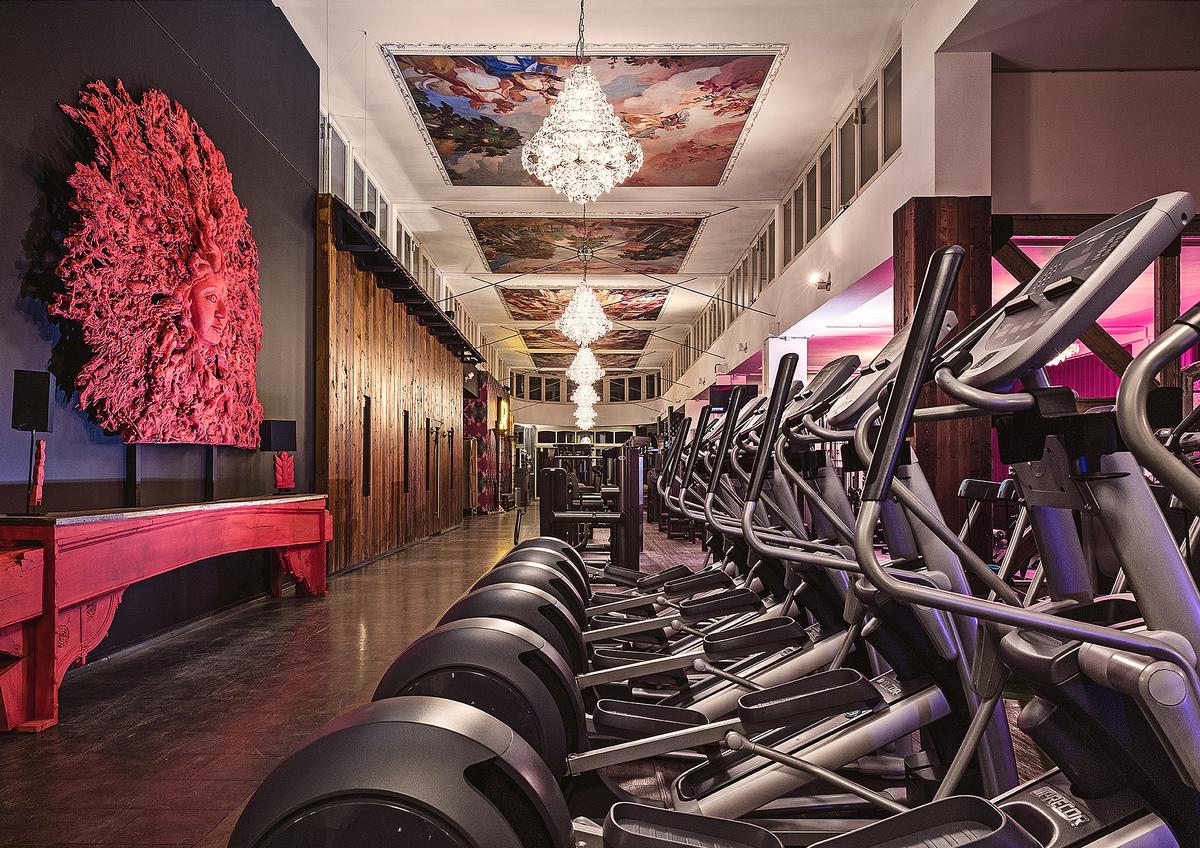
Several leading markets in Europe saw at least two waves of fitness closures in 2020. Above: John Reed Berlin photo: ihrsa - john reed berlin
With restrictions continuing to plague fitness clubs in some parts of the world, it’s challenging to quantify the full impact of COVID-19 on the global health club industry,” explains Melissa Rodriguez, director of research at IHRSA. “However, in creating the latest IHRSA Global Report, we’ve taken insights gathered from the closures, feedback from leading operators and information from publicly traded companies, to identify the key takeaways from 2020 and understand the outlook for the future.”
Key IHRSA research takeaways
1. Closures and restrictions overwhelmed the industry worldwide in 2020
In North America, while restrictions had been loosened in some regions, capacity limits remained in the majority of states and provinces. Around 17 per cent of health club establishments in the US permanently closed in 2020, as the industry lost 58 per cent of its revenue when compared to the previous year.
In Canada, shutdowns led to closures lasting up to six months for many health clubs. In 2021, Canadian businesses are still grappling with capacity restrictions across multiple jurisdictions.
The top Latin American fitness club markets encountered prolonged shutdowns, some continuing into 2021. Gyms in Colombia and Peru contended with maximum capacity restrictions of 30 per cent and 20 per cent, respectively, while clubs in Mexico and Argentina were closed for up to eight months. Fitness centres in Chile were still closed as of April 2021, with restrictions continuing in some parts of the country by August 2021.
Several leading markets in Europe endured at least two waves of fitness closures in 2020, with some such as the UK dealing with three. The most recent wave of lockdowns in 2021 has dictated closures in Germany, the Netherlands, France, Italy, Denmark and some regions of Spain.
Fitness club closures in the Asia-Pacific region varied in 2020. In China, a nationwide lockdown lasted about two months, including the Chinese New Year, when most businesses traditionally close. Clubs in India were extremely challenged during national lockdowns, with some regions being closed for more than seven months.
2. Recovery will be a long-term effort across the industry worldwide and uneven across segments
Budget gyms seem poised for a quicker comeback where they’re allowed to resume in-person business free of harsh restrictions.
With locations spread across geographic markets and with varying closure durations and restrictions, Planet Fitness and Basic-Fit 2020 membership levels decreased by only 6 per cent and 5 per cent, respectively, relative to 2019. Both brands grew their number of locations in 2020, despite the global pandemic.
Ongoing closures and restrictions may be more severe in terms of lost business for studios, especially if they have a pay-as-you-go business model.
YogaWorks, The Flywheel and Cyc Fitness – studio brands that filed for bankruptcy in the US – closed all their locations in 2020 and as we went to press, some of SoulCycle’s nearly 100 facilities were still closed in the US.
Expanding to hybrid with digital fitness was especially critical for smaller footprint studios, while liquidity has been key to recovery for clubs enduring ongoing shutdowns and reduced membership levels, which may elevate the closure risk of small businesses. Mature club operators with liquidity and access to capital are withstanding the pandemic far better.
The annual reports issued by publicly-traded health club companies have all emphasised the importance of liquidity as the means to endure economic uncertainty due to prolonged closures and restrictions. A study from JP Morgan of more than 500,000 small businesses showed that the typical small enterprise has less than 30 days’ worth of expenses in reserve.
3. Fitness clubs located in regions either less impacted by COVID-19 or with access to government relief are positioned for recovery
Markets with ongoing, multiple closures face an uphill challenge for recovery relative to markets with short-lived lockdowns, such as China.
Based on The 2019-2020 China Health & Fitness Market Report by Deloitte, China’s leading health and fitness brands report their membership attendances and group exercise participation in June 2020 was at 67 per cent and 84 per cent respectively, when compared to June 2019.
In Latin America, key markets struggled with closures ranging from a few months to a year and counting as we go to press. Latin American clubs that participated in the survey for this year’s IHRSA Global Report cited a double-digit percentage loss in both memberships and revenue.
Grupo Sports World, for example, reported year-on-year membership and revenue declines of 38 per cent and 54 per cent, respectively.
Annual results from full-service operators, SATS and Leejam Sports Club Company, suggest an imminent turnaround for clubs in countries less impacted by COVID-19.
SATS is the number one ownership group in terms of number of health and fitness clubs in Norway, Finland and Sweden, where shutdowns were relatively brief in terms of the whole of the west of Europe.
The company grew by five locations and lost nine per cent of membership – a modest decline by COVID-19 standards. Leejam Sports Club Company, based in Saudi Arabia, grew its number of clubs and lost only six per cent of members in 2020.
The Gym Group, a low-cost gym operator in the UK, lost 27 per cent of its members in 2020, when its clubs were closed for 55 per cent of trading days. Revenue dropped by 47 per cent – the highest decline among publicly-traded low-cost club companies.
However, by the end of June 2021, the company was reporting that memberships were getting close to pre-pandemic levels, with total numbers having increased from 547,000 at the end of February 2021 to 734,000 as of 28 June, versus 794,000 in December 2019.
Access to adequate government relief may have played a critical role in keeping clubs open in some developed markets. While nearly 20 per cent of clubs closed for good in the US, the number in Germany decreased by only 1.4 per cent. The Paycheck Protection Program in the US – an employment-related relief measure – did not fully address the fixed costs associated with running a health club operation, which are expenses the proposed Gyms Act covers [IHRSA’s proposed legislation to protect the sector in the US www.HCMmag.com/gymsact]
In Germany, lawmakers approved a number of relief measures, including a reduced VAT rate, up to 12-months’ wage subsidies for furloughed workers and the suspension of obligation to file for insolvency, which gave businesses more time to apply for government aid or to make restructuring arrangements in order to continue operations.
Conclusions
These takeaways highlight that although there will be regional hotspots of rapid recovery, overall, it will take time for the global health and fitness industry to get back to pre-pandemic trading levels globally.
The COVID-19 pandemic has underscored the importance of health and physical activity, auguring well for the long-term outlook of the industry. The boom of digital fitness and home equipment sales in 2020 speaks to the growing awareness and increasing demand from consumers.
Pre-COVID-19, the global industry served more than 180 million members at 205,000 clubs in nearly 70 global markets and we expect these numbers to be regained as the industry recovers, as the health club industry remains uniquely positioned to meet the fitness and wellness needs of communities around the globe.

photo: IHRSA
"We’ve taken insights gathered from the closures, feedback from leading operators and information from publicly traded companies, to identify key takeaways from 2020" – Melissa Rodriguez, director of research, IHRSA
Sign up here to get Fit Tech's weekly ezine and every issue of Fit Tech magazine free on digital.
Gallery

The 2019-2020 China Health & Fitness Market Report by Deloitte showed the market in China has coped well with the pandemic photo: XiXinXing/shutterstocK
More features

Editor's letter
Into the fitaverse
Fitness is already among the top three markets in the metaverse, with new technology and partnerships driving real growth and consumer engagement that looks likely to spill over into health clubs, gyms and studios

Fit Tech people
Ali Jawad
Paralympic powerlifter and founder, Accessercise
“Users can easily identify which facilities in the UK are accessible to the disabled community”

Fit Tech people
Hannes Sjöblad
MD, DSruptive
“We want to give our users an implantable tool that allows them to collect their health data at any time and in any setting”

Fit Tech people
Jamie Buck
Co-founder, Active in Time
“We created a solution called AiT Voice, which turns digital data into a spoken audio timetable that connects to phone systems”


Opinion
Building on the blockchain
For small sports teams looking to compete with giants, blockchain can be a secret weapon explains Lars Rensing, CEO of Protokol

Innovation
Bold move
“Our results showed a greater than 60 per cent reduction in falls for individuals who actively participated in Bold’s programme”

App analysis
Check your form
Sency’s motion analysis technology is
allowing users to check their technique
as they exercise. Co-founder and
CEO Gal Rotman explains how


Profile
New reality
Sam Cole, CEO of FitXR, talks to
Fit Tech about taking digital
workouts to the next level, with an
immersive, virtual reality fitness club

Profile
Sohail Rashid
“35 million people a week participate in strength training. We want Brawn to help this audience achieve their goals”

Ageing
Reverse Ageing
Many apps help people track their
health, but Humanity founders
Peter Ward and Michael Geer
have put the focus on ageing,
to help users to see the direct
repercussions of their habits.
They talk to Steph Eaves

App analysis
Going hybrid
Workout Anytime created its app in partnership with Virtuagym. Workout Anytime’s Greg Maurer and Virtuagym’s Hugo Braam explain the process behind its creation

Research
Physical activity monitors boost activity levels
Researchers at the University of Copenhagen have conducted a meta analysis of all relevant research and found that the body of evidence shows an impact

Editor's letter
Two-way coaching
Content providers have been hugely active in the fit tech market since the start of the pandemic. We expect the industry to move on from delivering these services on a ‘broadcast-only’ basis as two-way coaching becomes the new USP

Fit Tech People
Laurent Petit
Co-founder, Active Giving
“The future of sports and fitness are dependent on the climate. Our goal is to positively influence the future of our planet by instilling a global vision of wellbeing and a sense of collective action”

Fit Tech People
Adam Zeitsiff
CEO, Intelivideo
“We don’t just create the technology and bail – we support our clients’ ongoing hybridisation efforts”

Fit Tech People
Anantharaman Pattabiraman
CEO and co-founder, Auro
“When you’re undertaking fitness activities, unless you’re on a stationary bike, in most cases it’s not safe or necessary to be tied to a screen, especially a small screen”

Fit Tech People
Mike Hansen
Managing partner, Endorphinz
“We noticed a big gap in the market – customers needed better insights but also recommendations on what to do, whether that be customer acquisition, content creation, marketing and more”

