












Flooring is rarely a headline-grabber in the overall scheme of things when it comes to health club development or refurbishment, yet the choices are some of the most consequential design decisions the team will make.






FIBO pursues the vision of a strong and healthy society and as a global network ...

Panatta's mission is to create machines that are aesthetically pleasing, functional and competitive in price ...

22-23 Sep 2026
Four Seasons Hotel Bangkok at Chao Phraya River, Bangkok , Thailand


latest fit tech news

PureGym is encouraging people to step away from their screens and go for a walk, in a new initiative timed ...
news •
29 May 2026

Active people app, Strava, has overhauled its strength training experience, allowing gym-goers to automatically log and share their lifts from ...
news •
27 May 2026


The world’s first awareness ring has been launched. Designed to promote presence, focus and calm via gentle haptic vibrations, the ...
news •
13 May 2026

Center Parcs’ Aqua Sana Forest Spa, Woburn Forest, UK, has transformed an unused space into a touchless wellness area called ...
news •
12 May 2026

Gharieni Group has launched a new company, Cobotics Innovations, to create automated wellness experiences. The first solution is a robotic ...
product innovation •
07 May 2026

US-based robotics wellness company Aescape Inc has entered insolvency proceedings following the sale of substantially all of its ...
news •
06 May 2026

Fitness platform, Zing Coach, has teamed up with Les Mills, in a partnership that gives its users access to group ...
news •
23 Apr 2026


features
Specifier: Surfacing decisions
The key to getting flooring right in a health club is blending performance, safety and brand, as Liz Terry discovers


Published in Health Club Management 2026 issue 2

Maintaining floors using the correct products is vital to safety Shutterstock / sklyareek
Flooring is rarely a headline-grabber in the overall scheme of things when it comes to health club development or refurbishment, yet the choices are some of the most consequential design decisions the team will make.
The Gym Floor
The gym floor, with its cardio and strength machines demands a finish that can handle constant use, heavy equipment and regular cleaning without degrading visually or technically.
Unlike free weights zones, dropped loads are infrequent, but rolling loads from treadmills and weight stack machines can be substantial.
In many clubs, designers are leaning towards high-performance non-slip vinyl for the gym floor. These finishes provide a visually cohesive surface, strong wear resistance and good cleanability.
When paired with the correct subfloor with moisture control, levelling and appropriate adhesives, they can deliver long life and operational simplicity.
Rubber flooring is also widely used, particularly in functional training areas or where acoustic control is a priority. The advantage of rubber in these spaces lies in its resilience and slip resistance, especially when perspiration is present. However, its density and thickness must be aligned with use, as a decorative rubber product will not withstand concentrated machine loads over time.
Subfloor integrity is the main factor. Many flooring failures attributed to product defects are the result of inadequate moisture assessment or poor levelling. Early investment in slab testing and preparation pays dividends over the lifecycle of the building.
Gym floor checklist
- Confirm cleaning regimes are compatible with the surface finish
- Avoid abrupt material transitions that create trip points
- Specify edge protection at high-impact perimeter areas
- Ensure equipment layouts align with structural load capacity
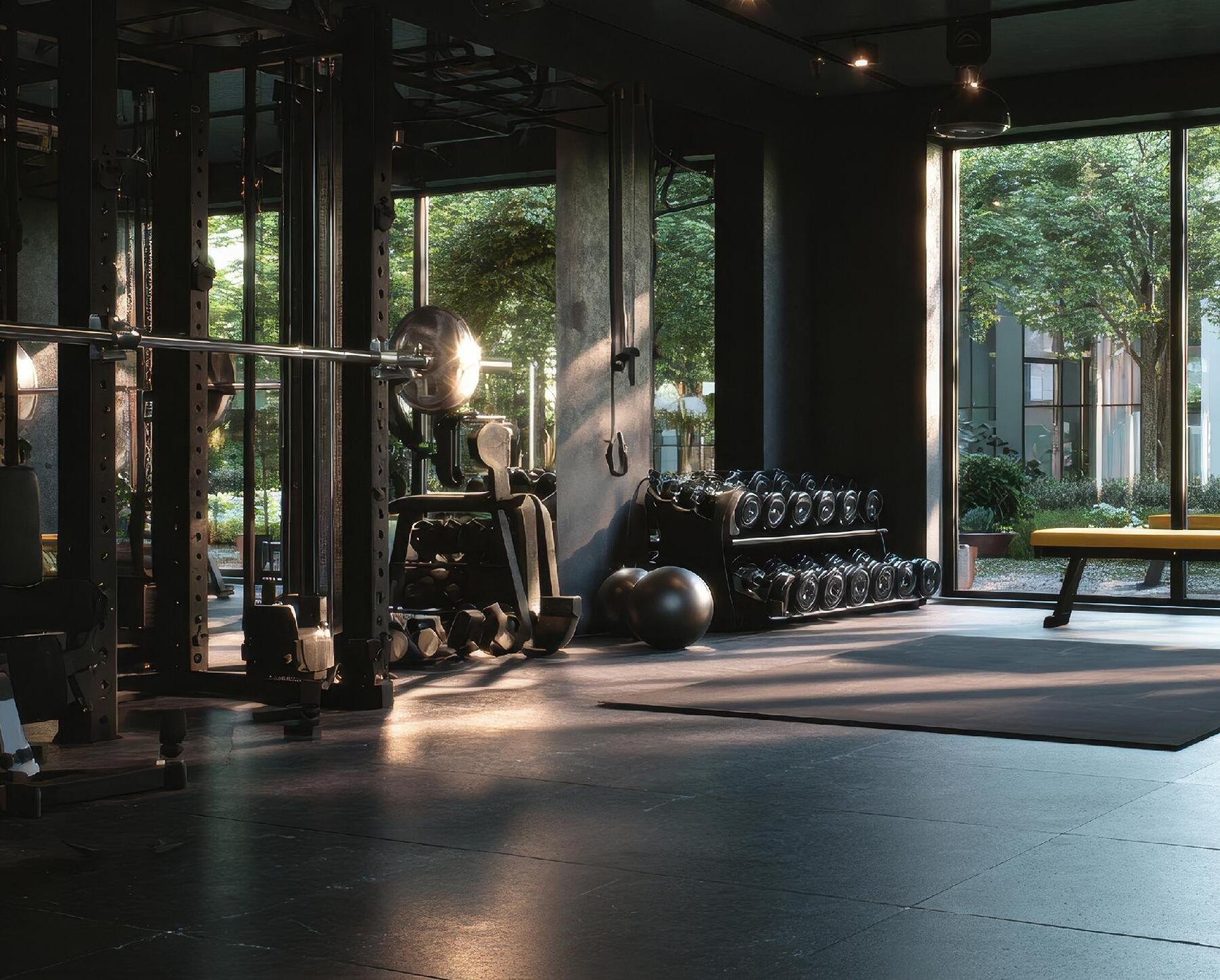
Tiles can be easily replaced, to keep the floor in good condition / Shutterstock / king ajyad
The Studios
Studios demand nuance – a space that’s used to host HIIT at 6.00am, dance at noon and Pilates in the evening can’t rely on a single simplistic flooring descriptor such as ‘anti-slip’.
The ideal studio floor delivers consistent traction for dynamic movement while providing sufficient shock absorption to support joint health.
For studios functioning as multipurpose sports spaces, EN 14904 provides relevant performance benchmarks, including shock absorption and vertical deformation standards. Purpose-designed vinyl sports floors can satisfy these criteria while offering simpler maintenance than sprung timber systems. In contrast, dance- or aerobics-focused studios may benefit from sprung floors that provide enhanced energy return and ease the power of impact on the joints.
Surface continuity is vital. Movement-based classes amplify trip hazards, so floor panels, access hatches or inconsistent threshold detailing can introduce risk. Equally important is understanding that some cleaning products can alter floor traction, and an overly glossy finish or residual cleaning films can increase slip potential, while certain disinfectants may degrade the surface over time.
Studios checklist
- Select surfaces aligned with the dominant class profile
- Maintain consistent traction through appropriate cleaning products
- Avoid unnecessary floor penetrations, such as hatches, or threshold changes
- Control humidity where timber systems are installed
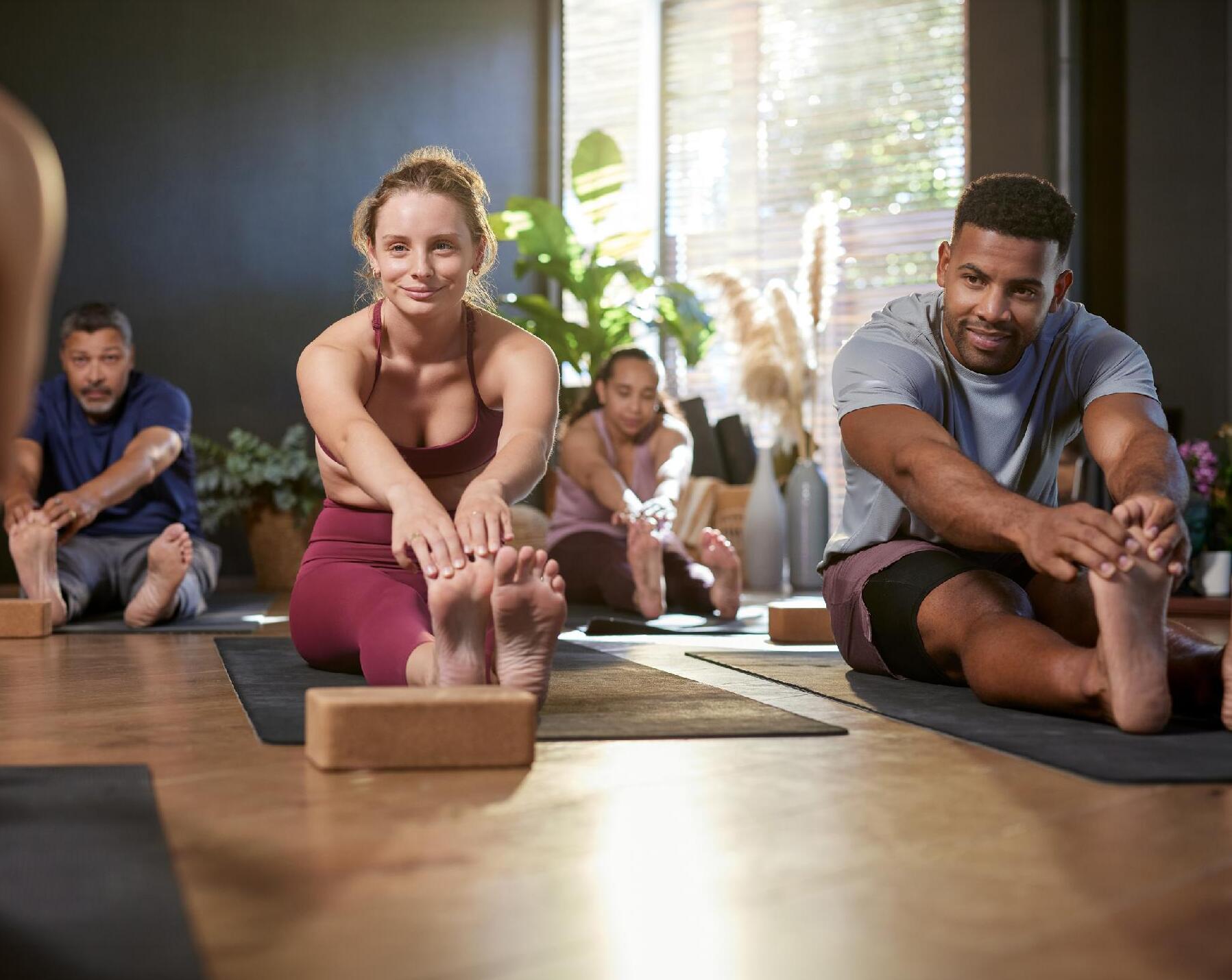
The ideal studio floor delivers consistent traction / Shutterstock / Rido
Weights Area
Free weights zones operate under different stresses – dropped barbells, concentrated point loading and constant mechanical impact require a flooring system designed to protect both the floor/slab and the user.
Dense rubber tiles are typically the foundation of these areas. Their thickness, which is often greater than general gym rubber, absorbs impact, reduces noise transmission and minimises vibration transfer.
In multi-storey facilities, this acoustic isolation becomes critical, particularly where spa or relaxation zones are located beneath lifting platforms or areas where weights might be dropped.
Modularity is also a factor and tile-based systems enable operators to replace damaged sections without lifting entire expanses of flooring, reducing long-term maintenance costs.
In high-performance lifting zones, dedicated platforms with engineered build-ups often sit above the primary slab, distributing load more evenly and further protecting the structure.
Weights Area checklist
- Align rubber density and thickness with expected lifting loads
- Incorporate acoustic isolation layers where required
- Use modular systems to simplify replacement
- Plan cleaning access around rack and platform layouts
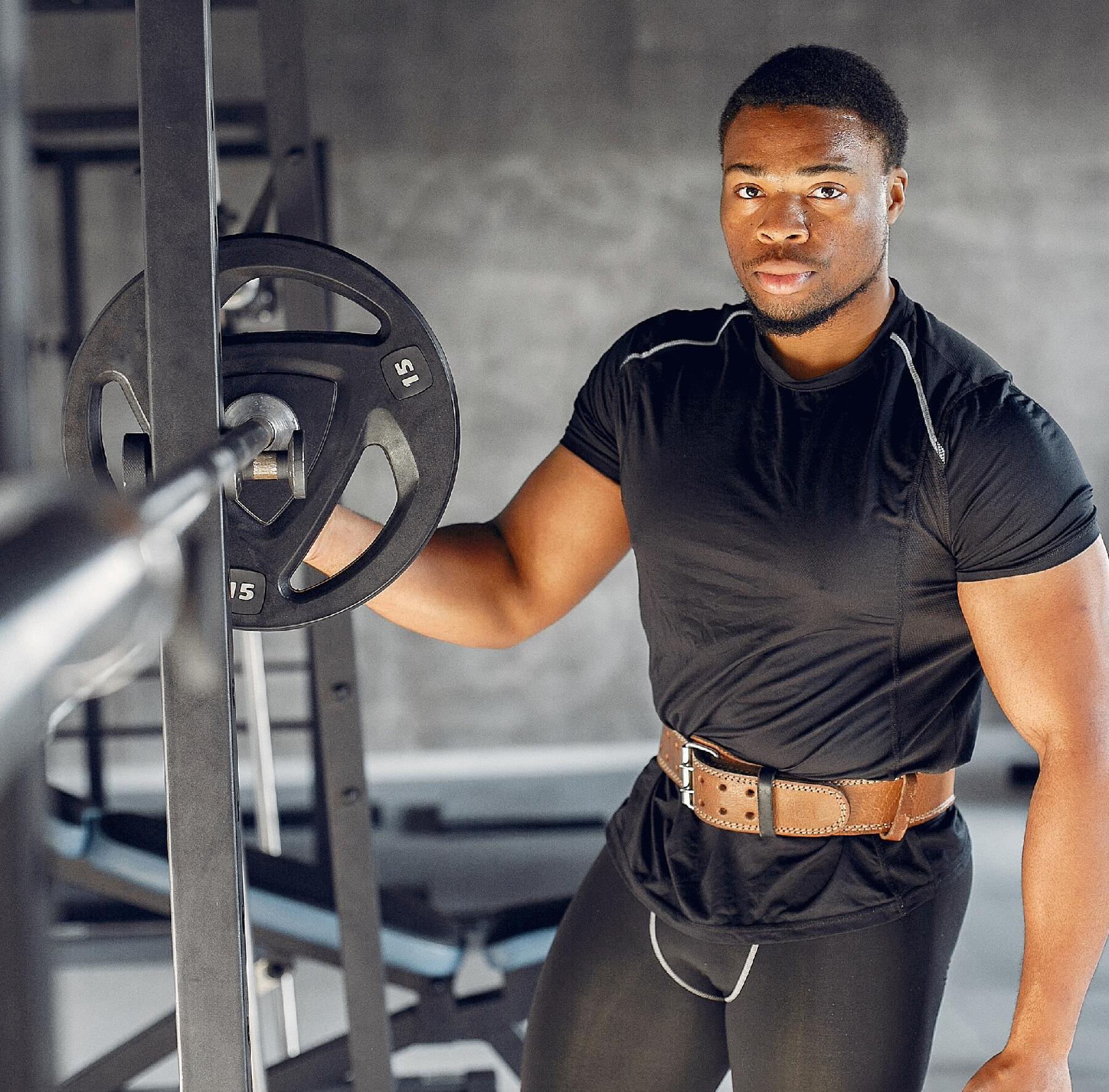
Acoustic isolation is necessary to ensure a successful installation / Shutterstock / Oleggg
Sign up here to get Fit Tech's weekly ezine and every issue of Fit Tech magazine free on digital.
More features
Editor's letter
Into the fitaverse
Fitness is already among the top three markets in the metaverse, with new technology and partnerships driving real growth and consumer engagement that looks likely to spill over into health clubs, gyms and studios

Fit Tech people
Ali Jawad
Paralympic powerlifter and founder, Accessercise
“Users can easily identify which facilities in the UK are accessible to the disabled community”

Fit Tech people
Hannes Sjöblad
MD, DSruptive
“We want to give our users an implantable tool that allows them to collect their health data at any time and in any setting”

Fit Tech people
Jamie Buck
Co-founder, Active in Time
“We created a solution called AiT Voice, which turns digital data into a spoken audio timetable that connects to phone systems”


Profile
Fahad Alhagbani: reinventing fitness
“The team is young and ambitious, and the awareness of technology is very high. We share trends and out-of-the-box ideas almost every day”

Opinion
Building on the blockchain
For small sports teams looking to compete with giants, blockchain can be a secret weapon explains Lars Rensing, CEO of Protokol

Innovation
Bold move
“Our results showed a greater than 60 per cent reduction in falls for individuals who actively participated in Bold’s programme”

App analysis
Check your form
Sency’s motion analysis technology is
allowing users to check their technique
as they exercise. Co-founder and
CEO Gal Rotman explains how


Profile
New reality
Sam Cole, CEO of FitXR, talks to
Fit Tech about taking digital
workouts to the next level, with an
immersive, virtual reality fitness club

Profile
Sohail Rashid
“My vision was to create a platform that could improve the sport for lifters at all levels and attract more people, similar to how Strava, Peloton and Zwift have in other sports”

Ageing
Reverse Ageing
Many apps help people track their
health, but Humanity founders
Peter Ward and Michael Geer
have put the focus on ageing,
to help users to see the direct
repercussions of their habits.
They talk to Steph Eaves

App analysis
Going hybrid
Workout Anytime created its app in partnership with Virtuagym. Workout Anytime’s Greg Maurer and Virtuagym’s Hugo Braam explain the process behind its creation

Research
Physical activity monitors boost activity levels
Researchers at the University of Copenhagen have conducted a meta analysis of all relevant research and found that the body of evidence shows an impact

Editor's letter
Two-way coaching
Content providers have been hugely active in the fit tech market since the start of the pandemic. We expect the industry to move on from delivering these services on a ‘broadcast-only’ basis as two-way coaching becomes the new USP

Fit Tech People
Laurent Petit
Co-founder, Active Giving
“The future of sports and fitness are dependent on the climate. Our goal is to positively influence the future of our planet by instilling a global vision of wellbeing and a sense of collective action”

Fit Tech People
Adam Zeitsiff
CEO, Intelivideo
“We don’t just create the technology and bail – we support our clients’ ongoing hybridisation efforts”

Fit Tech People
Anantharaman Pattabiraman
CEO and co-founder, Auro
“When you’re undertaking fitness activities, unless you’re on a stationary bike, in most cases it’s not safe or necessary to be tied to a screen, especially a small screen”

Fit Tech People
Mike Hansen
Managing partner, Endorphinz
“We noticed a big gap in the market – customers needed better insights but also recommendations on what to do, whether that be customer acquisition, content creation, marketing and more”

