
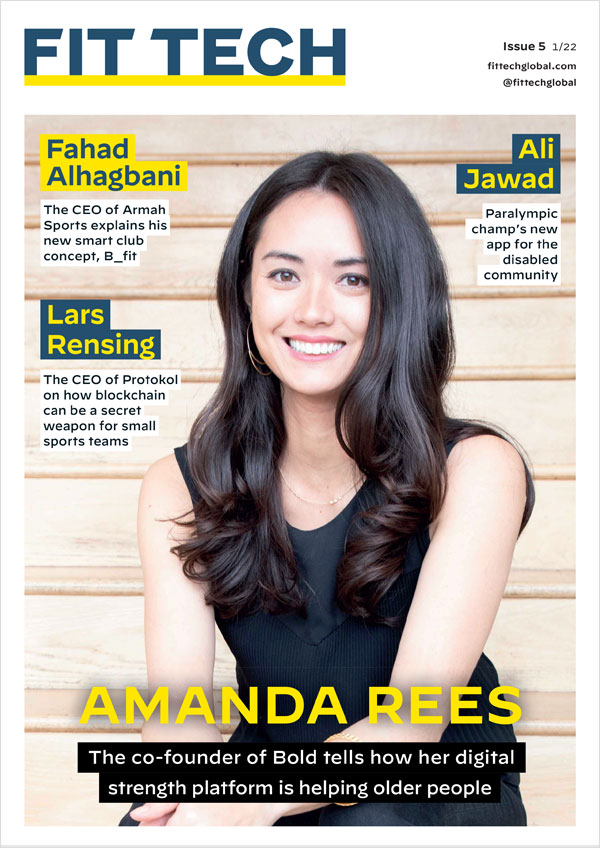




EGYM | Fit Tech promotion
features

Research round-up: Calming influence

US scientists have discovered that exercise has an impact on neurons in the brain that make it more resilient to stress

Published in Health Club Management 2013 issue 9

It’s commonly accepted that regular exercise helps reduce anxiety and stress, but just how it does this has not been clear. What’s also confused scientists is how exercise can help people feel more calm when it actually stimulates the growth of new, more excitable/active neurons in the ventral hippocampus – the main part of the brain that helps to regulate anxiety.

However, scientists at the University of Princeton in the US now think they have the answer to both of these conundrums. Their findings were published in the May 2013 edition of the Journal of Neuroscience*.

Shocking test
The findings were based on a small study of adult mice. One group of mice was given unlimited access to a running wheel, while another group was not and remained sedentary and caged. As natural runners, mice will cover up to 2.5 miles daily on a wheel.

After six weeks, all mice were briefly exposed to cold water to activate the ventral hippocampus. An analysis of brain activity showed that the cells of active and sedentary mice responded in different ways almost as soon as they were faced with this stressful situation.

Brain-altering activity
The scientists discovered four underlying mechanisms at work when the mice were exposed to the cold water.

In the neurons of the sedentary mice, the shock spurred an increase in ‘immediate early genes’ – short-lived genes that are rapidly turned on when a neuron fires. However, the active mice did not have these genes in their neurons, which suggests their brain cells did not immediately leap into an excited state in response to the cold water.

Instead, the brains in active mice showed every sign of controlling reactions above and beyond what was observed in sedentary mice – which is where the three other mechanisms come into play.

In the active mice, there was also a boost of activity in inhibitory neurons when they were exposed to the cold water. These inhibitory neurons keep excitable neurons – those more likely to rapidly respond to stimuli – in check, thereby shutting off excitement in the ventral hippocampus.

Simultaneously, the scientists observed that the brain neurons in the active mice released more of the neurotransmitter gamma-aminobutyric acid (GABA), which dampens neural excitement. Finally, a protein that helps to deliver and release GABA into the brain was also present in higher amounts in the non-sedentary group.

In short, the scientists found that physical activity rewires the brain to cope better with stress.

Treating anxiety
This is one of the first studies to focus in depth on the impact of exercise on the ventral hippocampus. As such, it has helped to pinpoint the important brain cells and regions related to anxiety regulation. The research also shows that the brain can be extremely adaptive, tailoring its own processes according to the lifestyle and surroundings of an organism.

Senior author Elizabeth Gould, Princeton’s Dorman T Warren professor of psychology, says: “Understanding how the brain regulates anxious behaviour gives us potential clues about helping people with anxiety disorders. It also tells us something about how the brain modifies itself to respond optimally to its own environment.”

*Gould E et al. Physical exercise prevents stress-induced activation of granule neurons and enhances local inhibitory mechanisms in the dentate gyrus. J Neurosci, May 2013

Sign up here to get Fit Tech's weekly ezine and every issue of Fit Tech magazine free on digital.
More features
Editor's letter

Into the fitaverse

Fitness is already among the top three markets in the metaverse, with new technology and partnerships driving real growth and consumer engagement that looks likely to spill over into health clubs, gyms and studios
Fit Tech people

Ali Jawad

Paralympic powerlifter and founder, Accessercise
Users can easily identify which facilities in the UK are accessible to the disabled community
Fit Tech people

Hannes Sjöblad

MD, DSruptive
We want to give our users an implantable tool that allows them to collect their health data at any time and in any setting
Fit Tech people

Jamie Buck

Co-founder, Active in Time
We created a solution called AiT Voice, which turns digital data into a spoken audio timetable that connects to phone systems
Profile

Fahad Alhagbani: reinventing fitness

Alexa can help you book classes, check trainers’ bios and schedules, find out opening times, and a host of other information
Opinion

Building on the blockchain

For small sports teams looking to compete with giants, blockchain can be a secret weapon explains Lars Rensing, CEO of Protokol
Innovation

Bold move

We ended up raising US$7m in venture capital from incredible investors, including Andreessen Horowitz, Khosla Ventures, Primetime Partners, and GingerBread Capital
App analysis

Check your form

Sency’s motion analysis technology is allowing users to check their technique as they exercise. Co-founder and CEO Gal Rotman explains how
Profile

New reality

Sam Cole, CEO of FitXR, talks to Fit Tech about taking digital workouts to the next level, with an immersive, virtual reality fitness club
Profile

Sohail Rashid

The app is free and it’s $40 to participate in one of our virtual events
Ageing

Reverse Ageing

Many apps help people track their health, but Humanity founders Peter Ward and Michael Geer have put the focus on ageing, to help users to see the direct repercussions of their habits. They talk to Steph Eaves
App analysis

Going hybrid

Workout Anytime created its app in partnership with Virtuagym. Workout Anytime’s Greg Maurer and Virtuagym’s Hugo Braam explain the process behind its creation
Research

Physical activity monitors boost activity levels

Researchers at the University of Copenhagen have conducted a meta analysis of all relevant research and found that the body of evidence shows an impact
Editor's letter

Two-way coaching

Content providers have been hugely active in the fit tech market since the start of the pandemic. We expect the industry to move on from delivering these services on a ‘broadcast-only’ basis as two-way coaching becomes the new USP
Fit Tech People

Laurent Petit

Co-founder, Active Giving
The future of sports and fitness are dependent on the climate. Our goal is to positively influence the future of our planet by instilling a global vision of wellbeing and a sense of collective action
Fit Tech People

Adam Zeitsiff

CEO, Intelivideo
We don’t just create the technology and bail – we support our clients’ ongoing hybridisation efforts
Fit Tech People

Anantharaman Pattabiraman

CEO and co-founder, Auro
When you’re undertaking fitness activities, unless you’re on a stationary bike, in most cases it’s not safe or necessary to be tied to a screen, especially a small screen
Fit Tech People

Mike Hansen

Managing partner, Endorphinz
We noticed a big gap in the market – customers needed better insights but also recommendations on what to do, whether that be customer acquisition, content creation, marketing and more
More features
The UK's largest annual trade event dedicated to physical activity, health, and performance...
Taylor Made Designs offer health clubs a fully-managed end-to-end service. From garment design to sourcing, ...
22-23 Sep 2026
Four Seasons Hotel Bangkok at Chao Phraya River, Bangkok , Thailand
The UK's largest annual trade event dedicated to physical activity, health, and performance...
Taylor Made Designs offer health clubs a fully-managed end-to-end service. From garment design to sourcing, ...
Get Fit Tech
Sign up for the free Fit Tech ezine and breaking news alerts
Sign up
22-23 Sep 2026
Four Seasons Hotel Bangkok at Chao Phraya River, Bangkok , Thailand

latest fit tech news

PureGym is encouraging people to step away from their screens and go for a walk, in a new initiative timed ...
news • 29 May 2026
Active people app, Strava, has overhauled its strength training experience, allowing gym-goers to automatically log and share their lifts from ...
news • 27 May 2026

Fitness First UK is embracing digital wellness technology by installing Kip’s tap-to-activate phone controls across its UK estate. Kip tags ...
news • 22 May 2026
The world’s first awareness ring has been launched. Designed to promote presence, focus and calm via gentle haptic vibrations, the ...
news • 13 May 2026
Center Parcs’ Aqua Sana Forest Spa, Woburn Forest, UK, has transformed an unused space into a touchless wellness area called ...
news • 12 May 2026
Gharieni Group has launched a new company, Cobotics Innovations, to create automated wellness experiences. The first solution is a robotic ...
product innovation • 07 May 2026

US-based robotics wellness company Aescape Inc has entered insolvency proceedings following the sale of substantially all of its ...

news • 06 May 2026
Fitness platform, Zing Coach, has teamed up with Les Mills, in a partnership that gives its users access to group ...
news • 23 Apr 2026

TMActive is launching a new Active Wellbeing Studio next month in Tonbridge, UK, specifically aimed at people who face higher ...
news • 13 Apr 2026

Indian billionaire, Deepinder Goyal, is working on a device called Temple that aims to track blood flow to the brain ...
news • 10 Apr 2026
More fit tech news
features

Research round-up: Calming influence

US scientists have discovered that exercise has an impact on neurons in the brain that make it more resilient to stress

Published in Health Club Management 2013 issue 9

It’s commonly accepted that regular exercise helps reduce anxiety and stress, but just how it does this has not been clear. What’s also confused scientists is how exercise can help people feel more calm when it actually stimulates the growth of new, more excitable/active neurons in the ventral hippocampus – the main part of the brain that helps to regulate anxiety.

However, scientists at the University of Princeton in the US now think they have the answer to both of these conundrums. Their findings were published in the May 2013 edition of the Journal of Neuroscience*.

Shocking test
The findings were based on a small study of adult mice. One group of mice was given unlimited access to a running wheel, while another group was not and remained sedentary and caged. As natural runners, mice will cover up to 2.5 miles daily on a wheel.

After six weeks, all mice were briefly exposed to cold water to activate the ventral hippocampus. An analysis of brain activity showed that the cells of active and sedentary mice responded in different ways almost as soon as they were faced with this stressful situation.

Brain-altering activity
The scientists discovered four underlying mechanisms at work when the mice were exposed to the cold water.

In the neurons of the sedentary mice, the shock spurred an increase in ‘immediate early genes’ – short-lived genes that are rapidly turned on when a neuron fires. However, the active mice did not have these genes in their neurons, which suggests their brain cells did not immediately leap into an excited state in response to the cold water.

Instead, the brains in active mice showed every sign of controlling reactions above and beyond what was observed in sedentary mice – which is where the three other mechanisms come into play.

In the active mice, there was also a boost of activity in inhibitory neurons when they were exposed to the cold water. These inhibitory neurons keep excitable neurons – those more likely to rapidly respond to stimuli – in check, thereby shutting off excitement in the ventral hippocampus.

Simultaneously, the scientists observed that the brain neurons in the active mice released more of the neurotransmitter gamma-aminobutyric acid (GABA), which dampens neural excitement. Finally, a protein that helps to deliver and release GABA into the brain was also present in higher amounts in the non-sedentary group.

In short, the scientists found that physical activity rewires the brain to cope better with stress.

Treating anxiety
This is one of the first studies to focus in depth on the impact of exercise on the ventral hippocampus. As such, it has helped to pinpoint the important brain cells and regions related to anxiety regulation. The research also shows that the brain can be extremely adaptive, tailoring its own processes according to the lifestyle and surroundings of an organism.

Senior author Elizabeth Gould, Princeton’s Dorman T Warren professor of psychology, says: “Understanding how the brain regulates anxious behaviour gives us potential clues about helping people with anxiety disorders. It also tells us something about how the brain modifies itself to respond optimally to its own environment.”

*Gould E et al. Physical exercise prevents stress-induced activation of granule neurons and enhances local inhibitory mechanisms in the dentate gyrus. J Neurosci, May 2013

Sign up here to get Fit Tech's weekly ezine and every issue of Fit Tech magazine free on digital.
More features
Editor's letter

Into the fitaverse

Fitness is already among the top three markets in the metaverse, with new technology and partnerships driving real growth and consumer engagement that looks likely to spill over into health clubs, gyms and studios
Fit Tech people

Ali Jawad

Paralympic powerlifter and founder, Accessercise
Users can easily identify which facilities in the UK are accessible to the disabled community
Fit Tech people

Hannes Sjöblad

MD, DSruptive
We want to give our users an implantable tool that allows them to collect their health data at any time and in any setting
Fit Tech people

Jamie Buck

Co-founder, Active in Time
We created a solution called AiT Voice, which turns digital data into a spoken audio timetable that connects to phone systems
Profile

Fahad Alhagbani: reinventing fitness

Alexa can help you book classes, check trainers’ bios and schedules, find out opening times, and a host of other information
Opinion

Building on the blockchain

For small sports teams looking to compete with giants, blockchain can be a secret weapon explains Lars Rensing, CEO of Protokol
Innovation

Bold move

We ended up raising US$7m in venture capital from incredible investors, including Andreessen Horowitz, Khosla Ventures, Primetime Partners, and GingerBread Capital
App analysis

Check your form

Sency’s motion analysis technology is allowing users to check their technique as they exercise. Co-founder and CEO Gal Rotman explains how
Profile

New reality

Sam Cole, CEO of FitXR, talks to Fit Tech about taking digital workouts to the next level, with an immersive, virtual reality fitness club
Profile

Sohail Rashid

The app is free and it’s $40 to participate in one of our virtual events
Ageing

Reverse Ageing

Many apps help people track their health, but Humanity founders Peter Ward and Michael Geer have put the focus on ageing, to help users to see the direct repercussions of their habits. They talk to Steph Eaves
App analysis

Going hybrid

Workout Anytime created its app in partnership with Virtuagym. Workout Anytime’s Greg Maurer and Virtuagym’s Hugo Braam explain the process behind its creation
Research

Physical activity monitors boost activity levels

Researchers at the University of Copenhagen have conducted a meta analysis of all relevant research and found that the body of evidence shows an impact
Editor's letter

Two-way coaching

Content providers have been hugely active in the fit tech market since the start of the pandemic. We expect the industry to move on from delivering these services on a ‘broadcast-only’ basis as two-way coaching becomes the new USP
Fit Tech People

Laurent Petit

Co-founder, Active Giving
The future of sports and fitness are dependent on the climate. Our goal is to positively influence the future of our planet by instilling a global vision of wellbeing and a sense of collective action
Fit Tech People

Adam Zeitsiff

CEO, Intelivideo
We don’t just create the technology and bail – we support our clients’ ongoing hybridisation efforts
Fit Tech People

Anantharaman Pattabiraman

CEO and co-founder, Auro
When you’re undertaking fitness activities, unless you’re on a stationary bike, in most cases it’s not safe or necessary to be tied to a screen, especially a small screen
Fit Tech People

Mike Hansen

Managing partner, Endorphinz
We noticed a big gap in the market – customers needed better insights but also recommendations on what to do, whether that be customer acquisition, content creation, marketing and more
More features