
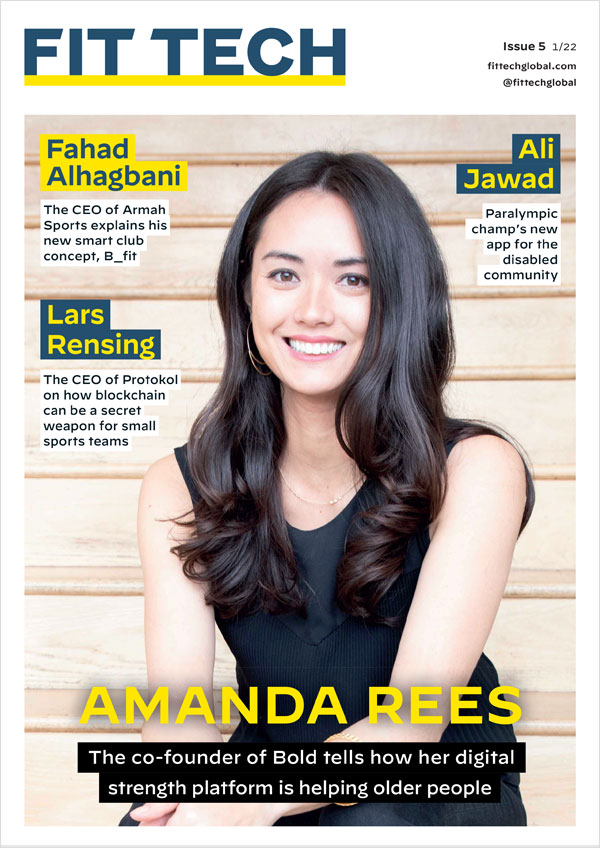




GET FIT TECH
Sign up for the FREE digital edition of Fit Tech magazine and also get the Fit Tech ezine and breaking news email alerts.
Not right now, thanksclose this window I've already subscribed!
features

Research: New heights

EuropeActive and Deloitte’s 2025 European Health & Fitness Market Report shows a buoyant and expanding market. Karsten Hollasch and Steffen Gausselmann sum up the key findings of this gold standard research, which is now in its 12th year

Published in HCM Handbook 2025 issue 1

The strong growth trend in the European fitness and health market continued last year. Membership numbers and revenues developed positively, setting a new industry benchmark.

In 2024, European health and fitness operators generated €36 billion in revenue, an increase of approximately 10 per cent on 2023. This was mainly driven by a combination of additional price increases, which were implemented in response to ongoing inflationary pressures, along with expansion and a significant rise in memberships.

By the end of last year, the European fitness market had grown to more than 64,000 clubs (an increase of around 2 per cent), serving around 71.6 million members (up 6 per cent). This upward trend is also evident in the positive business climate among European operators. In January 2025, 80 per cent of all European operators surveyed for this report rated their current business situation as good – a 20 per cent increase from January 2023.

Additional penetration for the overall market through intermediaries can be anticipated. In Germany, intermediaries such as EGYM Wellpass, Urban Sports Club and Wellhub provide more than 1.2 million members with access to physical activity, adding roughly 10 per cent more users to the market.

The top 20 fitness operators collectively generated €7.4 billion in revenue in 2024, marking a 15 per cent increase. In terms of memberships, Basic-Fit leads the ranking with almost 4.3 million members, followed by PureGym (around two million) and RSG Group (around 1.8 million). Together, these three operators account for more than 40 per cent of the top 20’s total membership.

By the end of the year, these leading operators had 18.8 million members, an 8 per cent increase compared to 2023. Their combined network of clubs also grew by 9 per cent, reaching 6,851 locations. Overall, the Top 20 operators either matched, or outperformed, the broader European market across all three mentioned KPIs.

Behaviour and wellbeing
A chapter is dedicated to the fourth edition of EuropeActive’s Fitness Consumer Survey, which questioned almost 13,000 people in 19 countries in January 2025. This offers key insights into consumer behaviour and emerging trends, notably, the enduring trend of hybrid fitness with people using home, outdoor and health club settings to work out.

While participation in home and outdoor fitness among regular fitness practitioners has decreased by 2 and 5 percentage points respectively, club-based exercise has seen a 2 per cent increase compared to the previous year. This shift reflects the post-pandemic return to fitness clubs as the preferred workout environment.

Analogously to last year, the most important factors when choosing a health club are the hard facts, such as location and price, followed by value for money, opening hours and quality of equipment. Social factors, such as community, referrals and the club’s environmental or social sustainability, play a secondary role in decision-making. Among the hard factors, location ranked first this year, ahead of price. This reverses last year’s order, suggesting consumers feel inflationary pressures are easing, or they have become accustomed to them.

When it comes to consumers’ wellbeing, regular fitness practitioners are more likely to experience a higher level of physical and emotional wellbeing compared to those without a regular fitness routine.

A greater proportion of respondents without a regular fitness routine also indicated a strong desire for improvement regarding different physical and emotional wellbeing components. For example, the share of regular fitness practitioners who consider themselves in very good physical health is about 30 per cent higher than those without a regular fitness routine.

Conversely, the share of individuals who don’t exercise regularly and feel the need to improve their physical health is about 21 per cent higher than among those who exercise at least once a week.

Mergers and acquisitions
During 2024, there were 30 M&A deals – with a minimum of four clubs and at least 50 per cent of the target’s shares – across Europe’s health and fitness club sector, resulting in the transfer of 669 clubs.

This surpassed the five-year average of 18 deals, marking a record number of M&A transactions in one year. Several companies completed multiple transactions: VivaGym Group (five), Benefit Systems (three), LifeFit Group (three) and Nordic Wellness (two). The three largest deals by club volume included the acquisition of Germany’s LifeFit Group (140 clubs) by financial investor Waterland Private Equity, the sale of VivaGym Group (104 clubs) to Providence Equity Partners, and the acquisition of Altafit (70 clubs in Spain) by VivaGym Group.

Key takeAways
The health and fitness club sector has continued its growth, surpassing the 70 million membership mark across Europe, with the volume and quantity of M&A deals reaching its highest annual number yet. A clear trend towards greater health awareness within the population can be observed, with an increasing importance of the fitness industry for physical and also mental health and wellbeing.

As a result, many chains are broadening their services to incorporate wellbeing options, reflecting a shift towards a more holistic approach to fitness.

With the market’s steady expansion and its shifting focus towards the consumers’ overall wellbeing, EuropeActive remains committed to its goal of reaching 100 million members across the sector by 2030.

About the authors
Karsten Hollasch is partner, EMEA private equity leader and Steffen Gausselmann is senior manager, Sports Business Group at Deloitte Germany

Get the report
The 150 page report can be ordered at: www.hcmmag.com/EHRMR2025

Sign up here to get Fit Tech's weekly ezine and every issue of Fit Tech magazine free on digital.
Gallery
More features
Editor's letter

Into the fitaverse

Fitness is already among the top three markets in the metaverse, with new technology and partnerships driving real growth and consumer engagement that looks likely to spill over into health clubs, gyms and studios
Fit Tech people

Ali Jawad

Paralympic powerlifter and founder, Accessercise
Users can easily identify which facilities in the UK are accessible to the disabled community
Fit Tech people

Hannes Sjöblad

MD, DSruptive
We want to give our users an implantable tool that allows them to collect their health data at any time and in any setting
Fit Tech people

Jamie Buck

Co-founder, Active in Time
We created a solution called AiT Voice, which turns digital data into a spoken audio timetable that connects to phone systems
Profile

Fahad Alhagbani: reinventing fitness

Alexa can help you book classes, check trainers’ bios and schedules, find out opening times, and a host of other information
Opinion

Building on the blockchain

For small sports teams looking to compete with giants, blockchain can be a secret weapon explains Lars Rensing, CEO of Protokol
Innovation

Bold move

Our results showed a greater than 60 per cent reduction in falls for individuals who actively participated in Bold’s programme
App analysis

Check your form

Sency’s motion analysis technology is allowing users to check their technique as they exercise. Co-founder and CEO Gal Rotman explains how
Profile

New reality

Sam Cole, CEO of FitXR, talks to Fit Tech about taking digital workouts to the next level, with an immersive, virtual reality fitness club
Profile

Sohail Rashid

35 million people a week participate in strength training. We want Brawn to help this audience achieve their goals
Ageing

Reverse Ageing

Many apps help people track their health, but Humanity founders Peter Ward and Michael Geer have put the focus on ageing, to help users to see the direct repercussions of their habits. They talk to Steph Eaves
App analysis

Going hybrid

Workout Anytime created its app in partnership with Virtuagym. Workout Anytime’s Greg Maurer and Virtuagym’s Hugo Braam explain the process behind its creation
Research

Physical activity monitors boost activity levels

Researchers at the University of Copenhagen have conducted a meta analysis of all relevant research and found that the body of evidence shows an impact
Editor's letter

Two-way coaching

Content providers have been hugely active in the fit tech market since the start of the pandemic. We expect the industry to move on from delivering these services on a ‘broadcast-only’ basis as two-way coaching becomes the new USP
Fit Tech People

Laurent Petit

Co-founder, Active Giving
The future of sports and fitness are dependent on the climate. Our goal is to positively influence the future of our planet by instilling a global vision of wellbeing and a sense of collective action
Fit Tech People

Adam Zeitsiff

CEO, Intelivideo
We don’t just create the technology and bail – we support our clients’ ongoing hybridisation efforts
Fit Tech People

Anantharaman Pattabiraman

CEO and co-founder, Auro
When you’re undertaking fitness activities, unless you’re on a stationary bike, in most cases it’s not safe or necessary to be tied to a screen, especially a small screen
Fit Tech People

Mike Hansen

Managing partner, Endorphinz
We noticed a big gap in the market – customers needed better insights but also recommendations on what to do, whether that be customer acquisition, content creation, marketing and more
More features
Panatta's mission is to create machines that are aesthetically pleasing, functional and competitive in price ...
The UK's largest annual trade event dedicated to physical activity, health, and performance...
22-23 Sep 2026
Four Seasons Hotel Bangkok at Chao Phraya River, Bangkok , Thailand
29-31 Oct 2026
Impact Exhibition Center, Bangkok, Thailand, Bangkok, Thailand
Panatta's mission is to create machines that are aesthetically pleasing, functional and competitive in price ...
The UK's largest annual trade event dedicated to physical activity, health, and performance...
Get Fit Tech
Sign up for the free Fit Tech ezine and breaking news alerts
Sign up
22-23 Sep 2026
Four Seasons Hotel Bangkok at Chao Phraya River, Bangkok , Thailand
29-31 Oct 2026
Impact Exhibition Center, Bangkok, Thailand, Bangkok, Thailand

latest fit tech news

Garmin has expanded its wearable portfolio with the launch of the Cirqa Smart Band, a screen-free fitness tracker ...

news • 22 Jul 2026

Wattbike has announced a new integration with EGYM, which enables the bikes to contribute to the Cardio BioAge score of ...
news • 20 Jul 2026

Preventive healthcare company Neko Health has added body composition analysis to its full-body health scan and launched a new mobile ...
news • 24 Jun 2026

A new brain clinic has opened in London, which uses non-invasive brain stimulation to treat chronic pain, anxiety and burnout ...
news • 22 Jun 2026

Samsung has unveiled a suite of AI-powered health features for its Galaxy Watch range, as the technology giant ...

news • 22 Jun 2026

Elevate Arena is underway at London's Excel and the hot topic of AI was the first point of discussion on ...
news • 18 Jun 2026
Peloton has made the strategic acquisition of Pilates start-up, Skōp, to support the expansion of its strength ecosystem. As demand ...
news • 09 Jun 2026

Longevitix, a clinical platform for preventive and longevity medicine, has launched its AI-powered intelligence system to help physicians deliver continuous, ...
news • 08 Jun 2026

Fitness First UK is integrating red light therapy into its yoga and Pilates classes through a partnership with Bon Charge. ...
news • 08 Jun 2026
PureGym is encouraging people to step away from their screens and go for a walk, in a new initiative timed ...
news • 29 May 2026
More fit tech news
features

Research: New heights

EuropeActive and Deloitte’s 2025 European Health & Fitness Market Report shows a buoyant and expanding market. Karsten Hollasch and Steffen Gausselmann sum up the key findings of this gold standard research, which is now in its 12th year

Published in HCM Handbook 2025 issue 1

The strong growth trend in the European fitness and health market continued last year. Membership numbers and revenues developed positively, setting a new industry benchmark.

In 2024, European health and fitness operators generated €36 billion in revenue, an increase of approximately 10 per cent on 2023. This was mainly driven by a combination of additional price increases, which were implemented in response to ongoing inflationary pressures, along with expansion and a significant rise in memberships.

By the end of last year, the European fitness market had grown to more than 64,000 clubs (an increase of around 2 per cent), serving around 71.6 million members (up 6 per cent). This upward trend is also evident in the positive business climate among European operators. In January 2025, 80 per cent of all European operators surveyed for this report rated their current business situation as good – a 20 per cent increase from January 2023.

Additional penetration for the overall market through intermediaries can be anticipated. In Germany, intermediaries such as EGYM Wellpass, Urban Sports Club and Wellhub provide more than 1.2 million members with access to physical activity, adding roughly 10 per cent more users to the market.

The top 20 fitness operators collectively generated €7.4 billion in revenue in 2024, marking a 15 per cent increase. In terms of memberships, Basic-Fit leads the ranking with almost 4.3 million members, followed by PureGym (around two million) and RSG Group (around 1.8 million). Together, these three operators account for more than 40 per cent of the top 20’s total membership.

By the end of the year, these leading operators had 18.8 million members, an 8 per cent increase compared to 2023. Their combined network of clubs also grew by 9 per cent, reaching 6,851 locations. Overall, the Top 20 operators either matched, or outperformed, the broader European market across all three mentioned KPIs.

Behaviour and wellbeing
A chapter is dedicated to the fourth edition of EuropeActive’s Fitness Consumer Survey, which questioned almost 13,000 people in 19 countries in January 2025. This offers key insights into consumer behaviour and emerging trends, notably, the enduring trend of hybrid fitness with people using home, outdoor and health club settings to work out.

While participation in home and outdoor fitness among regular fitness practitioners has decreased by 2 and 5 percentage points respectively, club-based exercise has seen a 2 per cent increase compared to the previous year. This shift reflects the post-pandemic return to fitness clubs as the preferred workout environment.

Analogously to last year, the most important factors when choosing a health club are the hard facts, such as location and price, followed by value for money, opening hours and quality of equipment. Social factors, such as community, referrals and the club’s environmental or social sustainability, play a secondary role in decision-making. Among the hard factors, location ranked first this year, ahead of price. This reverses last year’s order, suggesting consumers feel inflationary pressures are easing, or they have become accustomed to them.

When it comes to consumers’ wellbeing, regular fitness practitioners are more likely to experience a higher level of physical and emotional wellbeing compared to those without a regular fitness routine.

A greater proportion of respondents without a regular fitness routine also indicated a strong desire for improvement regarding different physical and emotional wellbeing components. For example, the share of regular fitness practitioners who consider themselves in very good physical health is about 30 per cent higher than those without a regular fitness routine.

Conversely, the share of individuals who don’t exercise regularly and feel the need to improve their physical health is about 21 per cent higher than among those who exercise at least once a week.

Mergers and acquisitions
During 2024, there were 30 M&A deals – with a minimum of four clubs and at least 50 per cent of the target’s shares – across Europe’s health and fitness club sector, resulting in the transfer of 669 clubs.

This surpassed the five-year average of 18 deals, marking a record number of M&A transactions in one year. Several companies completed multiple transactions: VivaGym Group (five), Benefit Systems (three), LifeFit Group (three) and Nordic Wellness (two). The three largest deals by club volume included the acquisition of Germany’s LifeFit Group (140 clubs) by financial investor Waterland Private Equity, the sale of VivaGym Group (104 clubs) to Providence Equity Partners, and the acquisition of Altafit (70 clubs in Spain) by VivaGym Group.

Key takeAways
The health and fitness club sector has continued its growth, surpassing the 70 million membership mark across Europe, with the volume and quantity of M&A deals reaching its highest annual number yet. A clear trend towards greater health awareness within the population can be observed, with an increasing importance of the fitness industry for physical and also mental health and wellbeing.

As a result, many chains are broadening their services to incorporate wellbeing options, reflecting a shift towards a more holistic approach to fitness.

With the market’s steady expansion and its shifting focus towards the consumers’ overall wellbeing, EuropeActive remains committed to its goal of reaching 100 million members across the sector by 2030.

About the authors
Karsten Hollasch is partner, EMEA private equity leader and Steffen Gausselmann is senior manager, Sports Business Group at Deloitte Germany

Get the report
The 150 page report can be ordered at: www.hcmmag.com/EHRMR2025

Sign up here to get Fit Tech's weekly ezine and every issue of Fit Tech magazine free on digital.
Gallery
More features
Editor's letter

Into the fitaverse

Fitness is already among the top three markets in the metaverse, with new technology and partnerships driving real growth and consumer engagement that looks likely to spill over into health clubs, gyms and studios
Fit Tech people

Ali Jawad

Paralympic powerlifter and founder, Accessercise
Users can easily identify which facilities in the UK are accessible to the disabled community
Fit Tech people

Hannes Sjöblad

MD, DSruptive
We want to give our users an implantable tool that allows them to collect their health data at any time and in any setting
Fit Tech people

Jamie Buck

Co-founder, Active in Time
We created a solution called AiT Voice, which turns digital data into a spoken audio timetable that connects to phone systems
Profile

Fahad Alhagbani: reinventing fitness

Alexa can help you book classes, check trainers’ bios and schedules, find out opening times, and a host of other information
Opinion

Building on the blockchain

For small sports teams looking to compete with giants, blockchain can be a secret weapon explains Lars Rensing, CEO of Protokol
Innovation

Bold move

Our results showed a greater than 60 per cent reduction in falls for individuals who actively participated in Bold’s programme
App analysis

Check your form

Sency’s motion analysis technology is allowing users to check their technique as they exercise. Co-founder and CEO Gal Rotman explains how
Profile

New reality

Sam Cole, CEO of FitXR, talks to Fit Tech about taking digital workouts to the next level, with an immersive, virtual reality fitness club
Profile

Sohail Rashid

35 million people a week participate in strength training. We want Brawn to help this audience achieve their goals
Ageing

Reverse Ageing

Many apps help people track their health, but Humanity founders Peter Ward and Michael Geer have put the focus on ageing, to help users to see the direct repercussions of their habits. They talk to Steph Eaves
App analysis

Going hybrid

Workout Anytime created its app in partnership with Virtuagym. Workout Anytime’s Greg Maurer and Virtuagym’s Hugo Braam explain the process behind its creation
Research

Physical activity monitors boost activity levels

Researchers at the University of Copenhagen have conducted a meta analysis of all relevant research and found that the body of evidence shows an impact
Editor's letter

Two-way coaching

Content providers have been hugely active in the fit tech market since the start of the pandemic. We expect the industry to move on from delivering these services on a ‘broadcast-only’ basis as two-way coaching becomes the new USP
Fit Tech People

Laurent Petit

Co-founder, Active Giving
The future of sports and fitness are dependent on the climate. Our goal is to positively influence the future of our planet by instilling a global vision of wellbeing and a sense of collective action
Fit Tech People

Adam Zeitsiff

CEO, Intelivideo
We don’t just create the technology and bail – we support our clients’ ongoing hybridisation efforts
Fit Tech People

Anantharaman Pattabiraman

CEO and co-founder, Auro
When you’re undertaking fitness activities, unless you’re on a stationary bike, in most cases it’s not safe or necessary to be tied to a screen, especially a small screen
Fit Tech People

Mike Hansen

Managing partner, Endorphinz
We noticed a big gap in the market – customers needed better insights but also recommendations on what to do, whether that be customer acquisition, content creation, marketing and more
More features