



The Leisure Media Company Ltd | Fit Tech promotion
features

Promotional feature: MIHA BODYTEC

A 'shop-in-shop' EMS model offers affordable start-up costs and huge potential to improve your health club profits, says EMS operator Thomas Kammerling

Published in Health Club Management 2017 issue 8

he fitness industry has changed fundamentally in recent years. Above all this is due to an oversupply and price decline of the ‘fitness’ offer by discount giants. If, as a health club operator, you do not refine and enhance your brand, you'll probably not be able to survive the next few years.

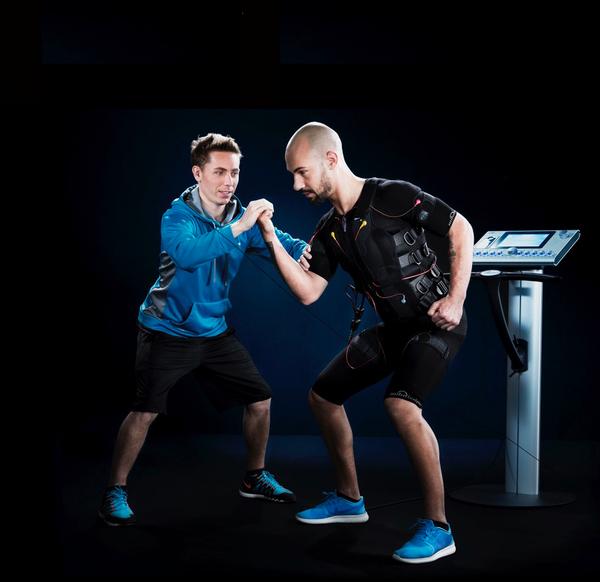
For many clubs, the concept of EMS personal training could provide an important lifeline with potential for huge market growth and a chance for service and price differentiation targeted at specific customer segments.

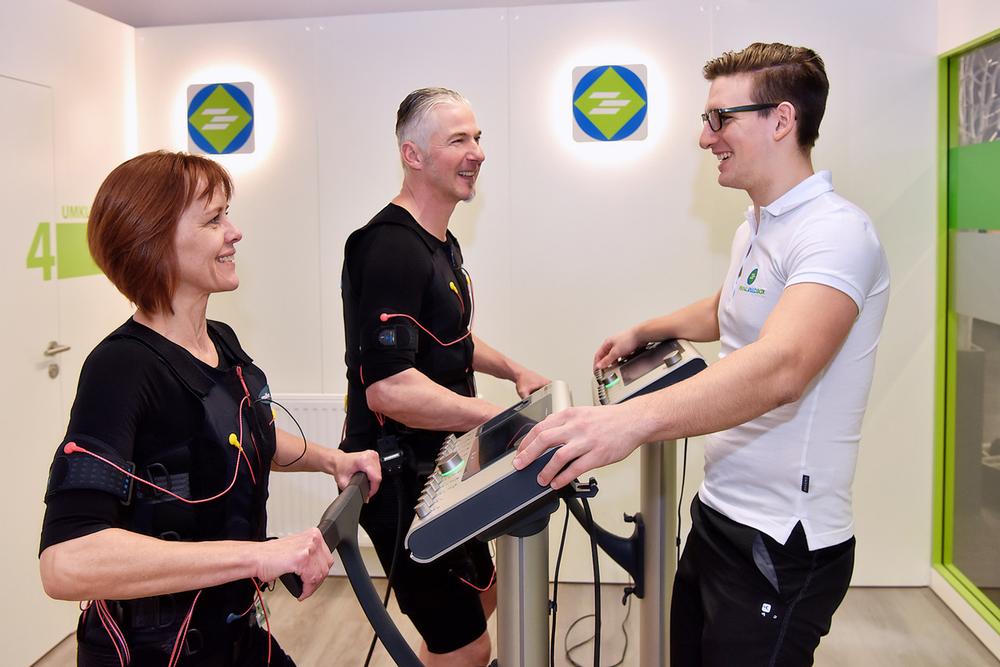
The EMS concept has been proven to deliver quality and time-efficient personal training, making it accessible to a broader customer demographic. In Germany, EMS continues its positive development and increasingly skims a significant part of the classic fitness market. Here we discuss the specific advantages of integrating EMS into your existing facilities as a 'shop-in-shop' system.

Is it enough to let the EMS personal training take place in the training area?
The answer to this is ‘no’, as the experience of numerous club operators as well as the world market leader for EMS training – miha bodytec clearly shows. You should avoid mixing EMS personal training with conventional PT as this may deter the prospect and blur the line between two very different service categories.

The experience regarding the drop-out and fluctuation rate of EMS clients shows that the member attrition rate of the shop-in-shop system is far lower than conventional models, usually with a fluctuation rate of less than 10%.

Can I use my course training room for EMS?
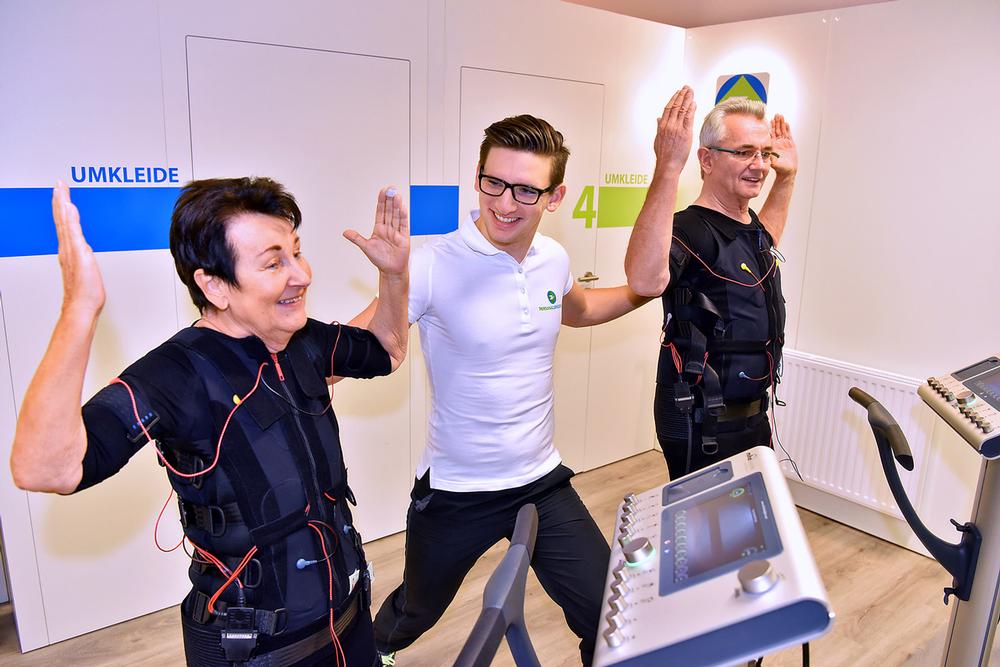
At first, this may appear to be a viable solution, but it's not advisable if you want to have lasting economic success with EMS training. If you want to create the added value and high esteem that is typically expected by EMS customers, you need to build it up by separating it spatially and giving it a high-quality look and feel.

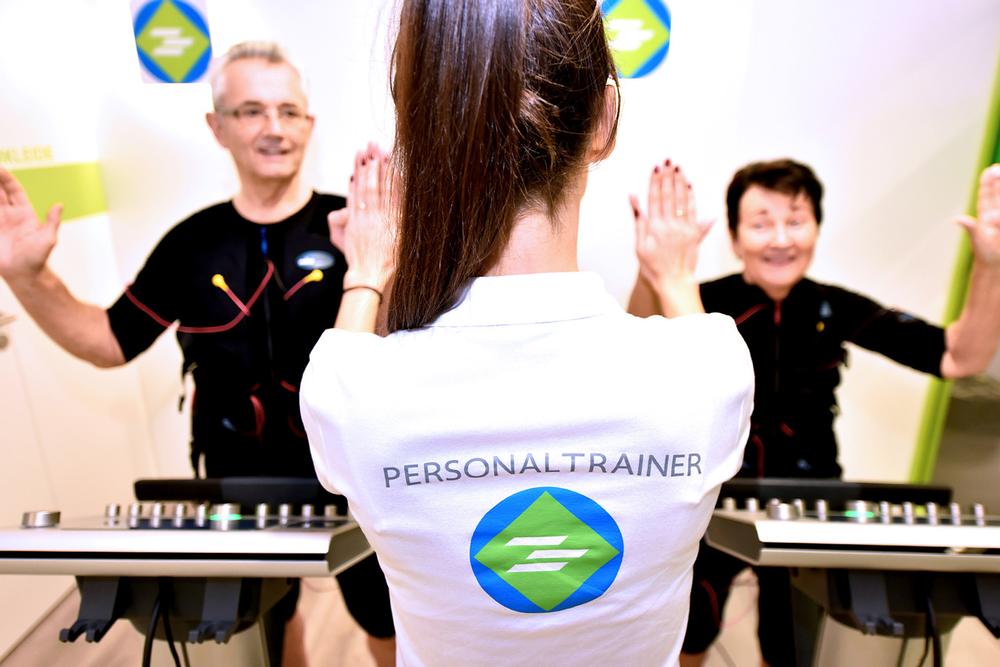
In comparison to typical health club fees, EMS customers are willing to pay more than twice as much for a weekly 20-minute EMS session in a 1:2 personal training scenario. So these clients deserves a luxury training space. Compare it to a hotel room: the luxury suite costs twice as much per night, and as a guest you should be able to feel that difference!

This is why the 'shop-in-shop' system works so well. It's even advisable to give your EMS personal training its own brand name. The key point is that you increase the exclusivity of this service and clearly separate and elevate it from the rest of the company.

Do I cannibalise my existing health club members by adding an EMS shop-in-shop system?
Experience shows otherwise. Your EMS personal training should focus on attracting people who have not yet found their way into your club, or who are former members who'd quit their classic fitness training due to lack of time or motivation, or because they did not achieve their goals. Imagine if you could reach out to previous customers and re-enrol them into your new EMS training club by overcoming the typical cancellation arguments of ‘too little time’?

What are the advantages and synergies offered by the integration of the shop-in-shop system?
You''ll see the great benefit of this system by being able to reach the EMS target group because of the clear separation from the rest of your club – while still fully exploiting the great synergies that enable you to integrate the EMS concept into your existing business.

These synergies begin, for example, with the enormous cost advantages compared to a ‘stand-alone’ boutique-studio with regard to rent, personnel procurement as well as sales opportunities.

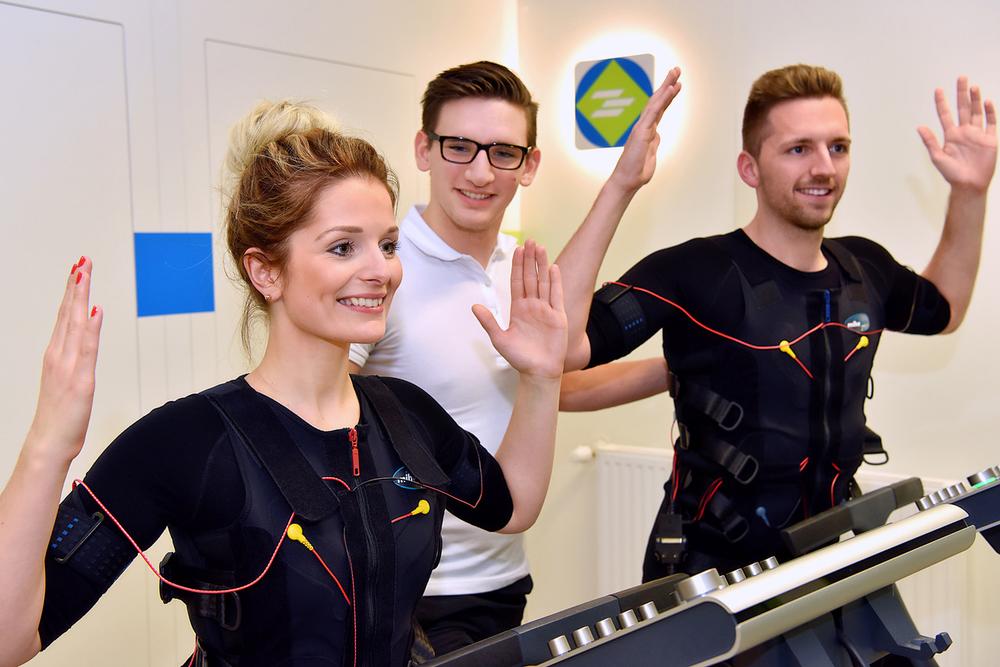
However, the most interesting benefits come in the form of additional sales potentials for your existing health and fitness club. Through EMS personal training you now appeal to a whole new target group and, of course, gain a lot more interest in your club.

All your new EMS personal training clients also have family, friends and acquaintances, who represent potential EMS customers or fitness club customers. Added to this are revenues from the supplementary sale of nutritional concepts, supplements and similar benefits.

What do I need for a functioning shop?
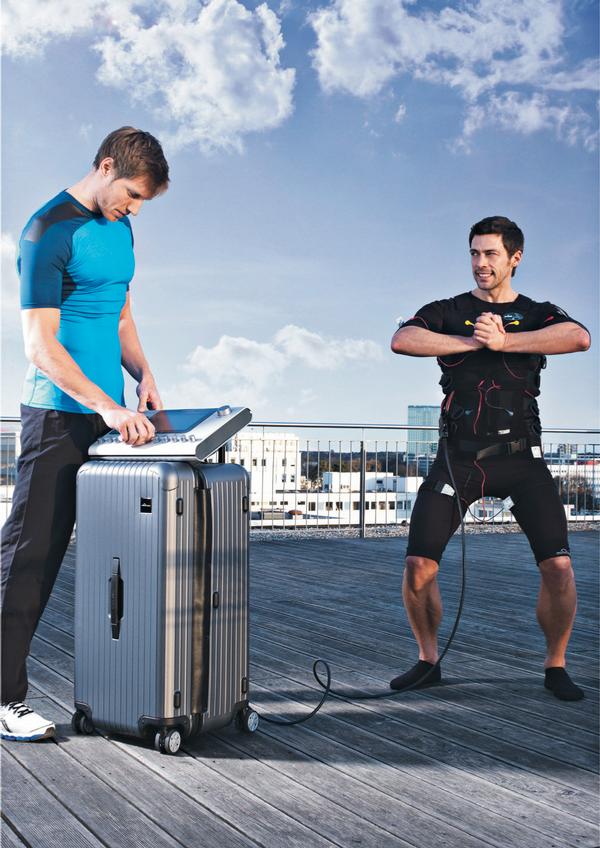
You need the basics, which is two EMS devices, a room design of around 40 sqm as well as trained employees. The acquisition costs are manageable and far more favourable than any electronic circuit concept in the industry. However, the low acquisition costs do not mean that EMS personal training will become a big seller in your area by itself. For that, you need working structures and procedures for your employees in order to win EMS customers, be successful and achieve maximum profitability.
Sign up here to get Fit Tech's weekly ezine and every issue of Fit Tech magazine free on digital.
Gallery
More features
Editor's letter

Into the fitaverse

Fitness is already among the top three markets in the metaverse, with new technology and partnerships driving real growth and consumer engagement that looks likely to spill over into health clubs, gyms and studios
Fit Tech people

Ali Jawad

Paralympic powerlifter and founder, Accessercise
Users can easily identify which facilities in the UK are accessible to the disabled community
Fit Tech people

Hannes Sjöblad

MD, DSruptive
We want to give our users an implantable tool that allows them to collect their health data at any time and in any setting
Fit Tech people

Jamie Buck

Co-founder, Active in Time
We created a solution called AiT Voice, which turns digital data into a spoken audio timetable that connects to phone systems
Profile

Fahad Alhagbani: reinventing fitness

Let’s live in the future to improve today
Opinion

Building on the blockchain

For small sports teams looking to compete with giants, blockchain can be a secret weapon explains Lars Rensing, CEO of Protokol
Innovation

Bold move

Our results showed a greater than 60 per cent reduction in falls for individuals who actively participated in Bold’s programme
App analysis

Check your form

Sency’s motion analysis technology is allowing users to check their technique as they exercise. Co-founder and CEO Gal Rotman explains how
Profile

New reality

Sam Cole, CEO of FitXR, talks to Fit Tech about taking digital workouts to the next level, with an immersive, virtual reality fitness club
Profile

Sohail Rashid

My vision was to create a platform that could improve the sport for lifters at all levels and attract more people, similar to how Strava, Peloton and Zwift have in other sports
Ageing

Reverse Ageing

Many apps help people track their health, but Humanity founders Peter Ward and Michael Geer have put the focus on ageing, to help users to see the direct repercussions of their habits. They talk to Steph Eaves
App analysis

Going hybrid

Workout Anytime created its app in partnership with Virtuagym. Workout Anytime’s Greg Maurer and Virtuagym’s Hugo Braam explain the process behind its creation
Research

Physical activity monitors boost activity levels

Researchers at the University of Copenhagen have conducted a meta analysis of all relevant research and found that the body of evidence shows an impact
Editor's letter

Two-way coaching

Content providers have been hugely active in the fit tech market since the start of the pandemic. We expect the industry to move on from delivering these services on a ‘broadcast-only’ basis as two-way coaching becomes the new USP
Fit Tech People

Laurent Petit

Co-founder, Active Giving
The future of sports and fitness are dependent on the climate. Our goal is to positively influence the future of our planet by instilling a global vision of wellbeing and a sense of collective action
Fit Tech People

Adam Zeitsiff

CEO, Intelivideo
We don’t just create the technology and bail – we support our clients’ ongoing hybridisation efforts
Fit Tech People

Anantharaman Pattabiraman

CEO and co-founder, Auro
When you’re undertaking fitness activities, unless you’re on a stationary bike, in most cases it’s not safe or necessary to be tied to a screen, especially a small screen
Fit Tech People

Mike Hansen

Managing partner, Endorphinz
We noticed a big gap in the market – customers needed better insights but also recommendations on what to do, whether that be customer acquisition, content creation, marketing and more
More features
Orbit4 is a digital operations platform designed to help fitness and leisure operators manage assets, ...
Founded nearly 50 years ago, Balanced Body works with the highest quality materials, and pride ...
22-23 Sep 2026
Four Seasons Hotel Bangkok at Chao Phraya River, Bangkok , Thailand
Orbit4 is a digital operations platform designed to help fitness and leisure operators manage assets, ...
Founded nearly 50 years ago, Balanced Body works with the highest quality materials, and pride ...
Get Fit Tech
Sign up for the free Fit Tech ezine and breaking news alerts
Sign up
22-23 Sep 2026
Four Seasons Hotel Bangkok at Chao Phraya River, Bangkok , Thailand

latest fit tech news

PureGym is encouraging people to step away from their screens and go for a walk, in a new initiative timed ...
news • 29 May 2026
Active people app, Strava, has overhauled its strength training experience, allowing gym-goers to automatically log and share their lifts from ...
news • 27 May 2026

Fitness First UK is embracing digital wellness technology by installing Kip’s tap-to-activate phone controls across its UK estate. Kip tags ...
news • 22 May 2026
The world’s first awareness ring has been launched. Designed to promote presence, focus and calm via gentle haptic vibrations, the ...
news • 13 May 2026
Center Parcs’ Aqua Sana Forest Spa, Woburn Forest, UK, has transformed an unused space into a touchless wellness area called ...
news • 12 May 2026
Gharieni Group has launched a new company, Cobotics Innovations, to create automated wellness experiences. The first solution is a robotic ...
product innovation • 07 May 2026

US-based robotics wellness company Aescape Inc has entered insolvency proceedings following the sale of substantially all of its ...

news • 06 May 2026
Fitness platform, Zing Coach, has teamed up with Les Mills, in a partnership that gives its users access to group ...
news • 23 Apr 2026

TMActive is launching a new Active Wellbeing Studio next month in Tonbridge, UK, specifically aimed at people who face higher ...
news • 13 Apr 2026

Indian billionaire, Deepinder Goyal, is working on a device called Temple that aims to track blood flow to the brain ...
news • 10 Apr 2026
More fit tech news
features

Promotional feature: MIHA BODYTEC

A 'shop-in-shop' EMS model offers affordable start-up costs and huge potential to improve your health club profits, says EMS operator Thomas Kammerling

Published in Health Club Management 2017 issue 8

he fitness industry has changed fundamentally in recent years. Above all this is due to an oversupply and price decline of the ‘fitness’ offer by discount giants. If, as a health club operator, you do not refine and enhance your brand, you'll probably not be able to survive the next few years.

For many clubs, the concept of EMS personal training could provide an important lifeline with potential for huge market growth and a chance for service and price differentiation targeted at specific customer segments.

The EMS concept has been proven to deliver quality and time-efficient personal training, making it accessible to a broader customer demographic. In Germany, EMS continues its positive development and increasingly skims a significant part of the classic fitness market. Here we discuss the specific advantages of integrating EMS into your existing facilities as a 'shop-in-shop' system.

Is it enough to let the EMS personal training take place in the training area?
The answer to this is ‘no’, as the experience of numerous club operators as well as the world market leader for EMS training – miha bodytec clearly shows. You should avoid mixing EMS personal training with conventional PT as this may deter the prospect and blur the line between two very different service categories.

The experience regarding the drop-out and fluctuation rate of EMS clients shows that the member attrition rate of the shop-in-shop system is far lower than conventional models, usually with a fluctuation rate of less than 10%.

Can I use my course training room for EMS?
At first, this may appear to be a viable solution, but it's not advisable if you want to have lasting economic success with EMS training. If you want to create the added value and high esteem that is typically expected by EMS customers, you need to build it up by separating it spatially and giving it a high-quality look and feel.

In comparison to typical health club fees, EMS customers are willing to pay more than twice as much for a weekly 20-minute EMS session in a 1:2 personal training scenario. So these clients deserves a luxury training space. Compare it to a hotel room: the luxury suite costs twice as much per night, and as a guest you should be able to feel that difference!

This is why the 'shop-in-shop' system works so well. It's even advisable to give your EMS personal training its own brand name. The key point is that you increase the exclusivity of this service and clearly separate and elevate it from the rest of the company.

Do I cannibalise my existing health club members by adding an EMS shop-in-shop system?
Experience shows otherwise. Your EMS personal training should focus on attracting people who have not yet found their way into your club, or who are former members who'd quit their classic fitness training due to lack of time or motivation, or because they did not achieve their goals. Imagine if you could reach out to previous customers and re-enrol them into your new EMS training club by overcoming the typical cancellation arguments of ‘too little time’?

What are the advantages and synergies offered by the integration of the shop-in-shop system?
You''ll see the great benefit of this system by being able to reach the EMS target group because of the clear separation from the rest of your club – while still fully exploiting the great synergies that enable you to integrate the EMS concept into your existing business.

These synergies begin, for example, with the enormous cost advantages compared to a ‘stand-alone’ boutique-studio with regard to rent, personnel procurement as well as sales opportunities.

However, the most interesting benefits come in the form of additional sales potentials for your existing health and fitness club. Through EMS personal training you now appeal to a whole new target group and, of course, gain a lot more interest in your club.

All your new EMS personal training clients also have family, friends and acquaintances, who represent potential EMS customers or fitness club customers. Added to this are revenues from the supplementary sale of nutritional concepts, supplements and similar benefits.

What do I need for a functioning shop?
You need the basics, which is two EMS devices, a room design of around 40 sqm as well as trained employees. The acquisition costs are manageable and far more favourable than any electronic circuit concept in the industry. However, the low acquisition costs do not mean that EMS personal training will become a big seller in your area by itself. For that, you need working structures and procedures for your employees in order to win EMS customers, be successful and achieve maximum profitability.
Sign up here to get Fit Tech's weekly ezine and every issue of Fit Tech magazine free on digital.
Gallery
More features
Editor's letter

Into the fitaverse

Fitness is already among the top three markets in the metaverse, with new technology and partnerships driving real growth and consumer engagement that looks likely to spill over into health clubs, gyms and studios
Fit Tech people

Ali Jawad

Paralympic powerlifter and founder, Accessercise
Users can easily identify which facilities in the UK are accessible to the disabled community
Fit Tech people

Hannes Sjöblad

MD, DSruptive
We want to give our users an implantable tool that allows them to collect their health data at any time and in any setting
Fit Tech people

Jamie Buck

Co-founder, Active in Time
We created a solution called AiT Voice, which turns digital data into a spoken audio timetable that connects to phone systems
Profile

Fahad Alhagbani: reinventing fitness

Let’s live in the future to improve today
Opinion

Building on the blockchain

For small sports teams looking to compete with giants, blockchain can be a secret weapon explains Lars Rensing, CEO of Protokol
Innovation

Bold move

Our results showed a greater than 60 per cent reduction in falls for individuals who actively participated in Bold’s programme
App analysis

Check your form

Sency’s motion analysis technology is allowing users to check their technique as they exercise. Co-founder and CEO Gal Rotman explains how
Profile

New reality

Sam Cole, CEO of FitXR, talks to Fit Tech about taking digital workouts to the next level, with an immersive, virtual reality fitness club
Profile

Sohail Rashid

My vision was to create a platform that could improve the sport for lifters at all levels and attract more people, similar to how Strava, Peloton and Zwift have in other sports
Ageing

Reverse Ageing

Many apps help people track their health, but Humanity founders Peter Ward and Michael Geer have put the focus on ageing, to help users to see the direct repercussions of their habits. They talk to Steph Eaves
App analysis

Going hybrid

Workout Anytime created its app in partnership with Virtuagym. Workout Anytime’s Greg Maurer and Virtuagym’s Hugo Braam explain the process behind its creation
Research

Physical activity monitors boost activity levels

Researchers at the University of Copenhagen have conducted a meta analysis of all relevant research and found that the body of evidence shows an impact
Editor's letter

Two-way coaching

Content providers have been hugely active in the fit tech market since the start of the pandemic. We expect the industry to move on from delivering these services on a ‘broadcast-only’ basis as two-way coaching becomes the new USP
Fit Tech People

Laurent Petit

Co-founder, Active Giving
The future of sports and fitness are dependent on the climate. Our goal is to positively influence the future of our planet by instilling a global vision of wellbeing and a sense of collective action
Fit Tech People

Adam Zeitsiff

CEO, Intelivideo
We don’t just create the technology and bail – we support our clients’ ongoing hybridisation efforts
Fit Tech People

Anantharaman Pattabiraman

CEO and co-founder, Auro
When you’re undertaking fitness activities, unless you’re on a stationary bike, in most cases it’s not safe or necessary to be tied to a screen, especially a small screen
Fit Tech People

Mike Hansen

Managing partner, Endorphinz
We noticed a big gap in the market – customers needed better insights but also recommendations on what to do, whether that be customer acquisition, content creation, marketing and more
More features