



GET FIT TECH
Sign up for the FREE digital edition of Fit Tech magazine and also get the Fit Tech ezine and breaking news email alerts.
Not right now, thanksclose this window I've already subscribed!
The Leisure Media Company Ltd | Fit Tech promotion
features

Life lessons: Chuck Runyon

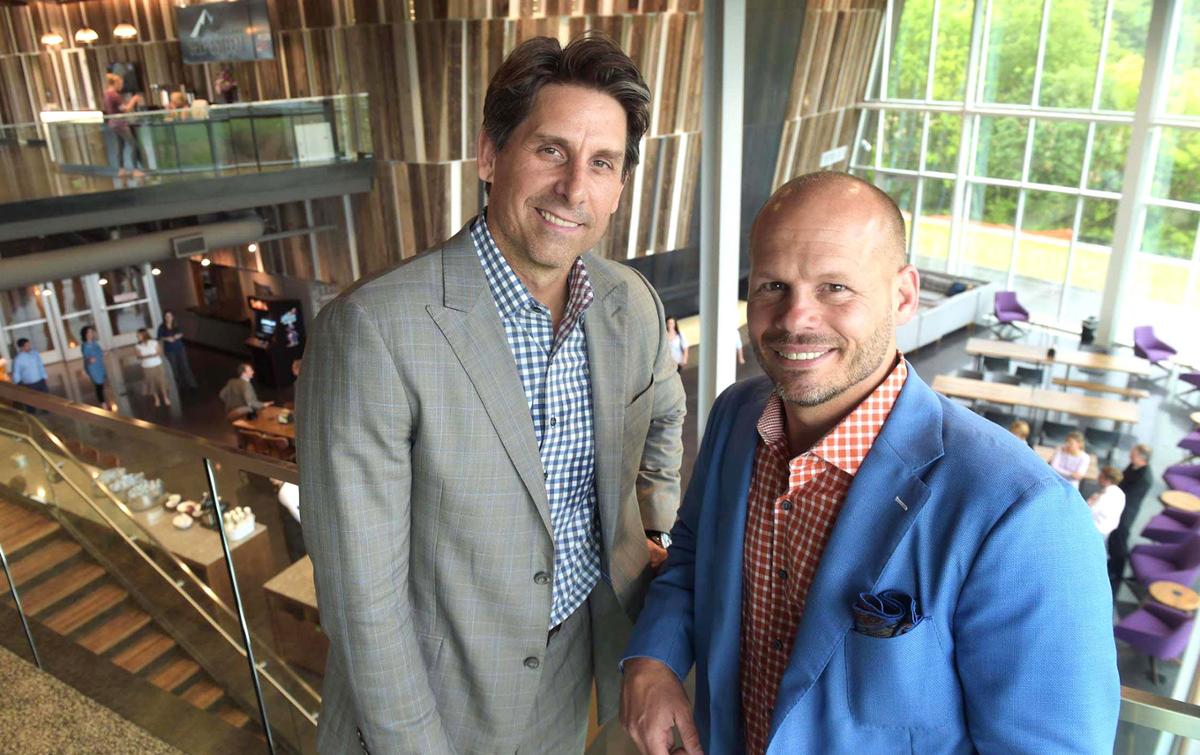
Chuck Runyon and Dave Mortensen took a risk buying out a partner in the early days of Anytime Fitness. Runyon talks to Kath Hudson about how that led to him and Mortensen creating the company culture that turbocharged expansion

Published in Health Club Management 2025 issue 6

Anytime Fitness began in 2002 with myself, Dave Mortensen and a third partner. The three of us already ran two successful businesses together in the health and fitness space and we all had young kids. Our families were friends too, so we spent a lot of our time together, both at work and in our spare time.

The Anytime Fitness business started to scale in 2007 and 2008 and we soon realised we had different ideas on the way forward through that growth. At that point we were on the cusp of 1,000 locations around the world and had just signed a master franchise agreement for Australia. Although it was the great recession and the banking system was collapsing, it was a great opportunity to find lease locations and negotiate with landlords, so we were growing faster.

It was definitely a buyer’s market and there was a clear opportunity to keep reinvesting to provide services, products and support to our franchises to help them run successful studios. We took the support of our franchisees very seriously, because they are often investing their life savings, or risking their kids’ college fund. Unfortunately the tension started to trickle down – a common theme for so many startups as they begin to scale.

Locking arms
This friction started to weaken our culture, for the only time in our 22-year history, because there wasn’t alignment at the top. Dave and I wanted to keep investing in the business and our stakeholders, so in December 2009, we bought out our third partner. It was an emotionally difficult time to say goodbye to a long-term collaborator, as well as a huge financial risk. Dave and I had to personally guarantee the loan and give away more equity during a risky global economic situation.

We decided not to sell any of our shares, but to complete the buyout and double down. With young families – I have four kids and Dave has five – it felt like a huge risk. However, it brought the two of us closer together; we both felt as though we were locking arms for the long game.

Although we knew the next few years were going to be challenging to pay back the high interest loan, we both felt blessed to have healthy kids and healthy families, so what really mattered was already solid. We also believed that if the business went south, we would figure it out. For whatever reason, we do have a high amount of confidence in ourselves (probably too much at times), and we knew we’d be much stronger as a partnership.

Purpose, people, profits and play
Dave and I then set out to become a best-in-class partnership and created a list of rules for the business.

Number one, that we were always serving something bigger than ourselves: we were serving the vision and the purpose of the company to grow, so we said we would never let our egos get in the way. The vision was bigger than either of us individually.

Number two, we’d always try to have healthy conflict, meaning we trusted each other enough to challenge each other’s ideas to make the idea better.

Number three, the stakeholders – our members and our franchisees – were served first. Providing our employees with incredible opportunities and an incredible culture for growth.

We also said we’d have a great deal of fun.

Those became the founding principles of the newly-structured company: purpose, people, profits and play. It cemented the vision in our minds, and every decision from then on has been run through that filter: Is it serving the organisation? Is it growing the brand? Does it help members?

This philosophy was the driving force behind the creation of Self Esteem Brands and the development of its seven brands. It also led us to a place where we could merge with Orangetheory to create Purpose Brands.

Friends forever
It took courage and confidence to sign that personal guarantee. If an event like COVID happened back then, we’d likely not be talking to HCM today, but we felt even stronger together after the buyout, because we were so aligned, which built confidence in our team.

We then had to work our butts off for the next two years to get to a place where we could refinance. As well as strengthening the partnership between Dave and me, it heightened our risk tolerance and showed belief in our team, the brand and where we were going.

We got a bit more savvy in the world of finance, private equity and lending and that led to even better decisions in 2014, when we sold a minority percentage to Roark Capital. The company culture thrived: we were awarded the ‘best place to work’ in Minnesota a few years in a row and it helped us win the talent war. We could hire really smart people and empower them to unlock their potential to help drive the business. We have an incredible team and our culture acts like gravity. It attracts good people and keeps them there.

The merger with Orangetheory Fitness and the subsequent creation of Purpose Brands would never have happened if we didn’t have a shared purpose and shared values. Dave Long and his management team are also consumer- and franchisee-driven. They care about their employees. That’s what brought us together and that’s what’s going to keep us successful.

Fast forward to today: Dave Mortensen and I have moved back to be supportive board members at Purpose Brands, the new company formed by the merger with Orangetheory Fitness. Now our time together is spent on hobbies, such as golf and boating. Our kids are all grown up, but our families still have this bond. They saw the very modest beginnings and now they get to see where the brands are today – 7,500 locations in 50 countries. We’re very proud of that and love those big numbers, which have come through thinking about one community at a time.

Dave and I have known each other for 35 years. There are not many friendships or partnerships that last that long, especially when you mix the two together. And we’re deeply proud of ourselves for taking the risk and doing what was right for growth; it’s why we’re here today.
Sign up here to get Fit Tech's weekly ezine and every issue of Fit Tech magazine free on digital.
Gallery
More features
Editor's letter

Into the fitaverse

Fitness is already among the top three markets in the metaverse, with new technology and partnerships driving real growth and consumer engagement that looks likely to spill over into health clubs, gyms and studios
Fit Tech people

Ali Jawad

Paralympic powerlifter and founder, Accessercise
Users can easily identify which facilities in the UK are accessible to the disabled community
Fit Tech people

Hannes Sjöblad

MD, DSruptive
We want to give our users an implantable tool that allows them to collect their health data at any time and in any setting
Fit Tech people

Jamie Buck

Co-founder, Active in Time
We created a solution called AiT Voice, which turns digital data into a spoken audio timetable that connects to phone systems
Profile

Fahad Alhagbani: reinventing fitness

Alexa can help you book classes, check trainers’ bios and schedules, find out opening times, and a host of other information
Opinion

Building on the blockchain

For small sports teams looking to compete with giants, blockchain can be a secret weapon explains Lars Rensing, CEO of Protokol
Innovation

Bold move

We ended up raising US$7m in venture capital from incredible investors, including Andreessen Horowitz, Khosla Ventures, Primetime Partners, and GingerBread Capital
App analysis

Check your form

Sency’s motion analysis technology is allowing users to check their technique as they exercise. Co-founder and CEO Gal Rotman explains how
Profile

New reality

Sam Cole, CEO of FitXR, talks to Fit Tech about taking digital workouts to the next level, with an immersive, virtual reality fitness club
Profile

Sohail Rashid

The app is free and it’s $40 to participate in one of our virtual events
Ageing

Reverse Ageing

Many apps help people track their health, but Humanity founders Peter Ward and Michael Geer have put the focus on ageing, to help users to see the direct repercussions of their habits. They talk to Steph Eaves
App analysis

Going hybrid

Workout Anytime created its app in partnership with Virtuagym. Workout Anytime’s Greg Maurer and Virtuagym’s Hugo Braam explain the process behind its creation
Research

Physical activity monitors boost activity levels

Researchers at the University of Copenhagen have conducted a meta analysis of all relevant research and found that the body of evidence shows an impact
Editor's letter

Two-way coaching

Content providers have been hugely active in the fit tech market since the start of the pandemic. We expect the industry to move on from delivering these services on a ‘broadcast-only’ basis as two-way coaching becomes the new USP
Fit Tech People

Laurent Petit

Co-founder, Active Giving
The future of sports and fitness are dependent on the climate. Our goal is to positively influence the future of our planet by instilling a global vision of wellbeing and a sense of collective action
Fit Tech People

Adam Zeitsiff

CEO, Intelivideo
We don’t just create the technology and bail – we support our clients’ ongoing hybridisation efforts
Fit Tech People

Anantharaman Pattabiraman

CEO and co-founder, Auro
When you’re undertaking fitness activities, unless you’re on a stationary bike, in most cases it’s not safe or necessary to be tied to a screen, especially a small screen
Fit Tech People

Mike Hansen

Managing partner, Endorphinz
We noticed a big gap in the market – customers needed better insights but also recommendations on what to do, whether that be customer acquisition, content creation, marketing and more
More features
Technogym provides a complete Ecosystem made of connected smart fitness equipment, digital services and training ...
Panatta's mission is to create machines that are aesthetically pleasing, functional and competitive in price ...
22-23 Sep 2026
Four Seasons Hotel Bangkok at Chao Phraya River, Bangkok , Thailand
Technogym provides a complete Ecosystem made of connected smart fitness equipment, digital services and training ...
Panatta's mission is to create machines that are aesthetically pleasing, functional and competitive in price ...
Get Fit Tech
Sign up for the free Fit Tech ezine and breaking news alerts
Sign up
22-23 Sep 2026
Four Seasons Hotel Bangkok at Chao Phraya River, Bangkok , Thailand

latest fit tech news

Peloton has made the strategic acquisition of Pilates start-up, Skōp, to support the expansion of its strength ecosystem. As demand ...
news • 09 Jun 2026

Longevitix, a clinical platform for preventive and longevity medicine, has launched its AI-powered intelligence system to help physicians deliver continuous, ...
news • 08 Jun 2026

Fitness First UK is integrating red light therapy into its yoga and Pilates classes through a partnership with Bon Charge. ...
news • 08 Jun 2026
PureGym is encouraging people to step away from their screens and go for a walk, in a new initiative timed ...
news • 29 May 2026
Active people app, Strava, has overhauled its strength training experience, allowing gym-goers to automatically log and share their lifts from ...
news • 27 May 2026

Fitness First UK is embracing digital wellness technology by installing Kip’s tap-to-activate phone controls across its UK estate. Kip tags ...
news • 22 May 2026
The world’s first awareness ring has been launched. Designed to promote presence, focus and calm via gentle haptic vibrations, the ...
news • 13 May 2026
Center Parcs’ Aqua Sana Forest Spa, Woburn Forest, UK, has transformed an unused space into a touchless wellness area called ...
news • 12 May 2026
Gharieni Group has launched a new company, Cobotics Innovations, to create automated wellness experiences. The first solution is a robotic ...
product innovation • 07 May 2026

US-based robotics wellness company Aescape Inc has entered insolvency proceedings following the sale of substantially all of its ...

news • 06 May 2026
More fit tech news
features

Life lessons: Chuck Runyon

Chuck Runyon and Dave Mortensen took a risk buying out a partner in the early days of Anytime Fitness. Runyon talks to Kath Hudson about how that led to him and Mortensen creating the company culture that turbocharged expansion

Published in Health Club Management 2025 issue 6

Anytime Fitness began in 2002 with myself, Dave Mortensen and a third partner. The three of us already ran two successful businesses together in the health and fitness space and we all had young kids. Our families were friends too, so we spent a lot of our time together, both at work and in our spare time.

The Anytime Fitness business started to scale in 2007 and 2008 and we soon realised we had different ideas on the way forward through that growth. At that point we were on the cusp of 1,000 locations around the world and had just signed a master franchise agreement for Australia. Although it was the great recession and the banking system was collapsing, it was a great opportunity to find lease locations and negotiate with landlords, so we were growing faster.

It was definitely a buyer’s market and there was a clear opportunity to keep reinvesting to provide services, products and support to our franchises to help them run successful studios. We took the support of our franchisees very seriously, because they are often investing their life savings, or risking their kids’ college fund. Unfortunately the tension started to trickle down – a common theme for so many startups as they begin to scale.

Locking arms
This friction started to weaken our culture, for the only time in our 22-year history, because there wasn’t alignment at the top. Dave and I wanted to keep investing in the business and our stakeholders, so in December 2009, we bought out our third partner. It was an emotionally difficult time to say goodbye to a long-term collaborator, as well as a huge financial risk. Dave and I had to personally guarantee the loan and give away more equity during a risky global economic situation.

We decided not to sell any of our shares, but to complete the buyout and double down. With young families – I have four kids and Dave has five – it felt like a huge risk. However, it brought the two of us closer together; we both felt as though we were locking arms for the long game.

Although we knew the next few years were going to be challenging to pay back the high interest loan, we both felt blessed to have healthy kids and healthy families, so what really mattered was already solid. We also believed that if the business went south, we would figure it out. For whatever reason, we do have a high amount of confidence in ourselves (probably too much at times), and we knew we’d be much stronger as a partnership.

Purpose, people, profits and play
Dave and I then set out to become a best-in-class partnership and created a list of rules for the business.

Number one, that we were always serving something bigger than ourselves: we were serving the vision and the purpose of the company to grow, so we said we would never let our egos get in the way. The vision was bigger than either of us individually.

Number two, we’d always try to have healthy conflict, meaning we trusted each other enough to challenge each other’s ideas to make the idea better.

Number three, the stakeholders – our members and our franchisees – were served first. Providing our employees with incredible opportunities and an incredible culture for growth.

We also said we’d have a great deal of fun.

Those became the founding principles of the newly-structured company: purpose, people, profits and play. It cemented the vision in our minds, and every decision from then on has been run through that filter: Is it serving the organisation? Is it growing the brand? Does it help members?

This philosophy was the driving force behind the creation of Self Esteem Brands and the development of its seven brands. It also led us to a place where we could merge with Orangetheory to create Purpose Brands.

Friends forever
It took courage and confidence to sign that personal guarantee. If an event like COVID happened back then, we’d likely not be talking to HCM today, but we felt even stronger together after the buyout, because we were so aligned, which built confidence in our team.

We then had to work our butts off for the next two years to get to a place where we could refinance. As well as strengthening the partnership between Dave and me, it heightened our risk tolerance and showed belief in our team, the brand and where we were going.

We got a bit more savvy in the world of finance, private equity and lending and that led to even better decisions in 2014, when we sold a minority percentage to Roark Capital. The company culture thrived: we were awarded the ‘best place to work’ in Minnesota a few years in a row and it helped us win the talent war. We could hire really smart people and empower them to unlock their potential to help drive the business. We have an incredible team and our culture acts like gravity. It attracts good people and keeps them there.

The merger with Orangetheory Fitness and the subsequent creation of Purpose Brands would never have happened if we didn’t have a shared purpose and shared values. Dave Long and his management team are also consumer- and franchisee-driven. They care about their employees. That’s what brought us together and that’s what’s going to keep us successful.

Fast forward to today: Dave Mortensen and I have moved back to be supportive board members at Purpose Brands, the new company formed by the merger with Orangetheory Fitness. Now our time together is spent on hobbies, such as golf and boating. Our kids are all grown up, but our families still have this bond. They saw the very modest beginnings and now they get to see where the brands are today – 7,500 locations in 50 countries. We’re very proud of that and love those big numbers, which have come through thinking about one community at a time.

Dave and I have known each other for 35 years. There are not many friendships or partnerships that last that long, especially when you mix the two together. And we’re deeply proud of ourselves for taking the risk and doing what was right for growth; it’s why we’re here today.
Sign up here to get Fit Tech's weekly ezine and every issue of Fit Tech magazine free on digital.
Gallery
More features
Editor's letter

Into the fitaverse

Fitness is already among the top three markets in the metaverse, with new technology and partnerships driving real growth and consumer engagement that looks likely to spill over into health clubs, gyms and studios
Fit Tech people

Ali Jawad

Paralympic powerlifter and founder, Accessercise
Users can easily identify which facilities in the UK are accessible to the disabled community
Fit Tech people

Hannes Sjöblad

MD, DSruptive
We want to give our users an implantable tool that allows them to collect their health data at any time and in any setting
Fit Tech people

Jamie Buck

Co-founder, Active in Time
We created a solution called AiT Voice, which turns digital data into a spoken audio timetable that connects to phone systems
Profile

Fahad Alhagbani: reinventing fitness

Alexa can help you book classes, check trainers’ bios and schedules, find out opening times, and a host of other information
Opinion

Building on the blockchain

For small sports teams looking to compete with giants, blockchain can be a secret weapon explains Lars Rensing, CEO of Protokol
Innovation

Bold move

We ended up raising US$7m in venture capital from incredible investors, including Andreessen Horowitz, Khosla Ventures, Primetime Partners, and GingerBread Capital
App analysis

Check your form

Sency’s motion analysis technology is allowing users to check their technique as they exercise. Co-founder and CEO Gal Rotman explains how
Profile

New reality

Sam Cole, CEO of FitXR, talks to Fit Tech about taking digital workouts to the next level, with an immersive, virtual reality fitness club
Profile

Sohail Rashid

The app is free and it’s $40 to participate in one of our virtual events
Ageing

Reverse Ageing

Many apps help people track their health, but Humanity founders Peter Ward and Michael Geer have put the focus on ageing, to help users to see the direct repercussions of their habits. They talk to Steph Eaves
App analysis

Going hybrid

Workout Anytime created its app in partnership with Virtuagym. Workout Anytime’s Greg Maurer and Virtuagym’s Hugo Braam explain the process behind its creation
Research

Physical activity monitors boost activity levels

Researchers at the University of Copenhagen have conducted a meta analysis of all relevant research and found that the body of evidence shows an impact
Editor's letter

Two-way coaching

Content providers have been hugely active in the fit tech market since the start of the pandemic. We expect the industry to move on from delivering these services on a ‘broadcast-only’ basis as two-way coaching becomes the new USP
Fit Tech People

Laurent Petit

Co-founder, Active Giving
The future of sports and fitness are dependent on the climate. Our goal is to positively influence the future of our planet by instilling a global vision of wellbeing and a sense of collective action
Fit Tech People

Adam Zeitsiff

CEO, Intelivideo
We don’t just create the technology and bail – we support our clients’ ongoing hybridisation efforts
Fit Tech People

Anantharaman Pattabiraman

CEO and co-founder, Auro
When you’re undertaking fitness activities, unless you’re on a stationary bike, in most cases it’s not safe or necessary to be tied to a screen, especially a small screen
Fit Tech People

Mike Hansen

Managing partner, Endorphinz
We noticed a big gap in the market – customers needed better insights but also recommendations on what to do, whether that be customer acquisition, content creation, marketing and more
More features