








Tell us about your model
Before we look at the specifics it’s important to acknowledge what’s happened in the Spanish fitness market over recent years, with a very significant rise in the number of youngsters coming in. Ten years ago, the average age of Synergym members was 35–40 years. Now it’s 30.
So, what are these young people looking for? They’re looking for value for money, which breaks down into ‘value’ and ‘money’.
We aim to deliver on both by offering highly affordable, all-inclusive prices ranging from €20-30 a month. There are no tricks, no commitments, no contracts or joining fees. Just a flexible, member-friendly approach that’s suited to the needs and expectations of young people.
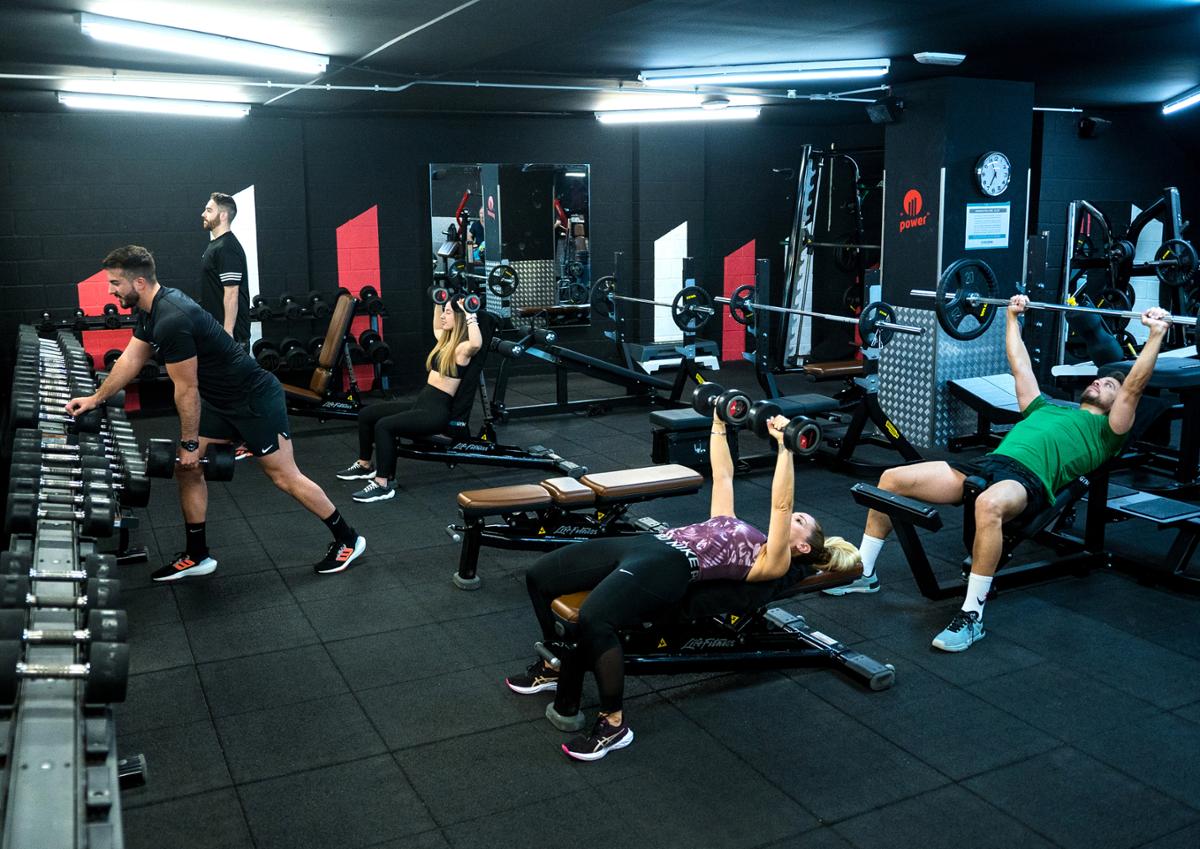
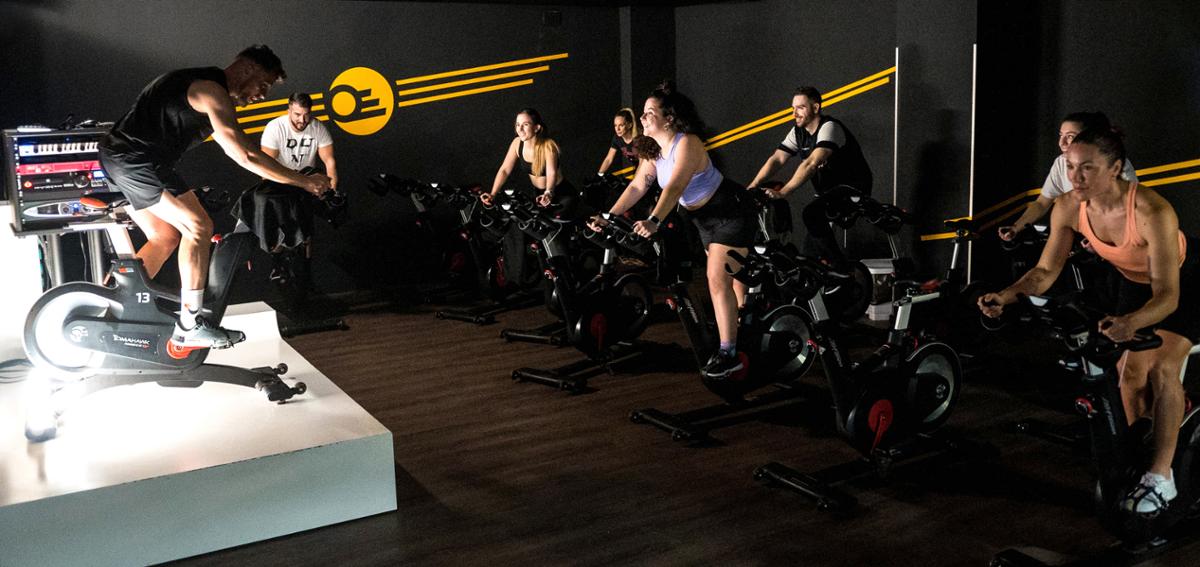
We also deliver on value, partnering with Technogym and Life Fitness to install premium equipment across all our gyms. Each club also offers 50-plus live group exercise classes a week across five categories: endurance, cross-training, dance, mind-body and cycling. All classes are signature programmes designed by our R&D department.
Our gym design and installation are incredibly high-quality, with a club-in-club feel across our distinct training zones: strength, free weights, cross-training, cardio and live classes. Each zone – and the programming offered within it – is designed to target a specific member persona, ensuring every profile and age group is catered for.
Finally, we have a very strong focus on staff training and education, so our team can support all members – especially new joiners – in getting the results they want.
What size are your clubs?
Our model is based on 1,000sq m premises, typically in urban areas, with 2,000 – 3,000 members per club. Members normally live or work within walking distance of the club.
So ours aren’t huge facilities, but we focus a lot of time and resources into optimising the layout. Efficiency Ratio is an important KPI that sits at the heart of our planning for any new club. What I mean by this is that we measure what percentage of a club’s total square meterage is devoted to fitness, looking to maximise this as far as possible. This allows us to maximise the number of members who can use the club at any one time and, in turn, maximise the EBITDA.
What are your USPs in this segment?
The value segment has grown rapidly in Spain, with ourselves, VivaGym and BasicFit the key players. However, I believe Synergym has some strong USPs.
Operationally, we can talk about the quality of our equipment and our group exercise offering. We can talk about zones and programming that target specific member personas. We can talk about our lack of contracts and joining fees. These are some of the key differentiators that allow us to believe we offer the best value for money.
If we then look from a business point of view, Synergym’s growth is 100 per cent organic. This is a very deliberate strategy on our part: we don’t do acquisitions and we don’t do franchising. Organic growth allows us to maintain the same quality across our entire chain.
In turn, this enables two things. First, it allows us to always deliver the best value and service to our members without any tweaks or improvisation. We have a clear business model that we repeat in each new location. Of course we keep learning, improving the process and the method, but at this point everything is fairly automated.
Second, it means we have the most profitable business model in the industry. We can deliver up to 50 per cent EBITDA margins in each club and even remained profitable throughout the pandemic.
In February, this profitability – along with our strong growth plans – saw us become the first value fitness chain in Spain to raise financing from the traditional, highly risk-averse banks: a €70m syndicated financing agreement led by Banco Santander.
Tell us about your growth plans.
We’re in replication mode, repeating what we know works: 1,000sq m premises in urban areas with the correct population density and so on. It’s a model that enables us to operate successfully both in the big cities such as Madrid and Barcelona and in smaller cities starting at 40,000 population.
We now operate in every region of Spain and are well-structured to grow here. While we believe our business model could work perfectly in other markets, our focus will be on Spain for the foreseeable future.
When I joined in 2018, we had 10 gyms. We now have 125 and expect to end 2025 with 160. We then plan to reach 200 locations by the end of 2026 and see plenty of white space to continue to grow by 40–50 clubs a year for the next seven or eight years.
So, we’re planning for substantial growth: we took 10 years to grow from one to 100 clubs and will take just two years to go from 100 to 200. All that said, 40 clubs a year is similar to what we’ve already achieved over the last two years. We’re well set-up for rapid growth.
Financially, we’re in a very healthy position to grow. In addition to the new support from Santander and the banking syndicate, we have very supportive shareholders. Founders Sergey Miteyko and Leonard Lvovich remain majority shareholders and are involved if not day-to-day, then week-to-week and in all major decisions. Along with our other shareholders – Growth Partner, Oxy Capital and All Seas Capital – they have supported and helped us continue to improve our business plan.
Then there’s the market opportunity in Spain, especially in the value-for-money segment – for our model, there’s huge opportunity: there are big cities in Spain, but also a lot of cities with populations of 40,000 through to 70,000 where our business model will work very well.
The key is how we leverage our strong position to take advantage of this opportunity – and that’s all about our organisation. We have a huge focus on operations. We’re results-orientated, data-driven and highly structured with clear protocols and a ‘make things happen’ culture. When we open a new club, every department and every position in the company knows exactly what needs to be done.
My expectation is that the business model and systems will just keep getting better and better, allowing us to open more clubs with better results every time.
We're forecasting growth in revenues from €49.1m at the end of 2024 to €70m by the end of 2025 and EBITDA growth from €17.1m to €25m. Our existing clubs are already mature, so while there will be some like-for-like increase, the main driver of this growth will be new openings.
How big is the opportunity in Spain?
We believe there’s space for approximately 1,500 gyms in the value segment in Spain, with only around 700 open at the moment. So, there’s a lot of white space.
This market opportunity is being driven by a number of trends, the first being the growth in fitness penetration: over recent years, we’ve seen penetration grow from 10 to 12 per cent and expect that growth to continue over the coming years.
That’s partly because people are more aware of the importance of fitness in leading a healthy life – the market will grow itself – but it’s also down to the growth of the value segment. So as long as the value for money segment grows, market penetration will also grow; if you’re new to fitness, value for money gyms will likely be your entry point.
At the moment, the value segment accounts for around 20 per cent of the Spanish fitness market, but we see that figure growing to 30 per cent in the coming months and years. It’s a winning model: it attracts newcomers to exercise, caters to people’s preferences for flexibility and affordability and even works during a recession.
Additionally, the Spanish market is currently quite fragmented and will likely follow other more mature markets in consolidating. While Synergym will continue with its organic-only growth strategy, we see the value segment as a whole benefiting from this consolidation.
Are you investing in your existing clubs?
We have a dedicated team for new openings, so we don’t ever have to divert resources from existing clubs. They are effectively separate capsules.
Our key departments – operations, product, service, training – all focus exclusively on our existing clubs. Our growth never gets in the way of evolving our business model, improving the equipment or layout in our clubs, developing our class offering or enhancing our members’ digital experiences. We continually improve the member experience in our existing clubs, with the result that our Net Promoter Score is 70.
Our main focus recently has been on enhancing our offering in strength, free weights and cross-training, creating larger and more prominent areas. There's been a real boom in interest here, not only from young people but from members of all ages. Our various programmes ensure there's something for everyone, helping our members incorporate more strength training for their health and wellbeing.
Any more secrets to success?
Our founders created a very clear business model from the outset – one that has been brilliantly executed ever since, with great agility and a culture of making things happen. Success comes from that winning combination.
Our main challenge now is to keep this up as we grow. If we're able to maintain this management style, attracting great people to HQ and to our clubs, we'll have all the ingredients we need to continue to succeed.