




GET FIT TECH
Sign up for the FREE digital edition of Fit Tech magazine and also get the Fit Tech ezine and breaking news email alerts.
Not right now, thanksclose this window I've already subscribed!
The Leisure Media Company Ltd | Fit Tech promotion
features

Interview: Greg Oliver, CEO of Australia's Fitness & Lifestyle Group

There’s a new fitness giant in Australia – and the Fitness & Lifestyle Group has plans to spread its wings even further, as its CEO explains to Kate Cracknell

Published in Health Club Management 2017 issue 3

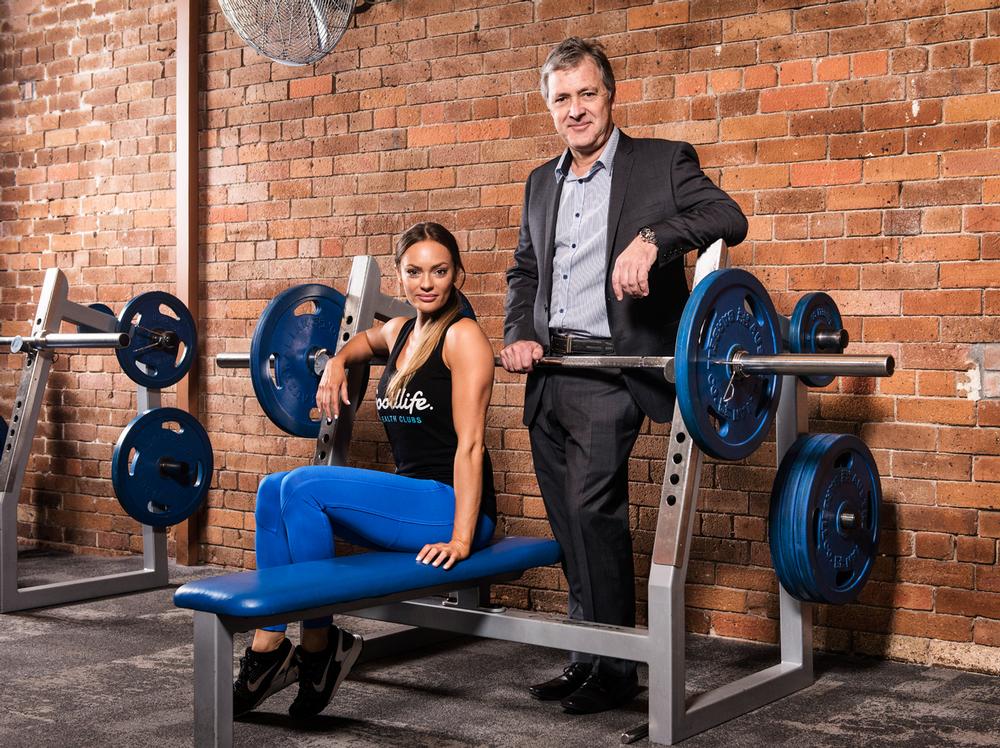
he fact that Quadrant, a well-respected private equity firm, has invested in us is a real coming of age moment – not just for us, but for the whole of the Australian fitness sector.” So says Greg Oliver, CEO of both the Fitness & Lifestyle Group and Goodlife Health Clubs, one of the group’s businesses. “It’s recognition that fitness is a worthwhile investment.”

Oliver is referring to the recent deals which, in the space of just two months last summer, saw Quadrant populate its newly created Fitness & Lifestyle Group by acquiring a number of health club brands. In August 2016, it bought Goodlife Health Clubs and its weight loss brand Hypoxi from Ardent Leisure – a deal worth AU$260m – as Ardent switched its focus to becoming an exclusively attractions and entertainment firm. Also in August, Quadrant acquired fitness franchise Jetts. Then, in September, it bought Fitness First Australia (see ‘Growing a fitness empire’, p34).

The combined group currently sits at 76 Goodlife clubs, 66 Fitness Firsts, 178 franchises and 34 corporate clubs in Jetts’ Australian estate alone, plus 19 in-house Hypoxi studios. The group is headed up by Oliver, who alongside Quadrant has been instrumental in bringing the various deals to fruition.

And Oliver has exciting plans for this combined portfolio of “highly complementary” brands: Fitness First at the premium end of the market, as it always has been in Australia; Goodlife in the mid-market; Jetts a market leader in the low-cost segment; and Hypoxi a boutique offering designed to get non-traditional gym-goers into a health club setting.

Creating USPs
“Goodlife has already evolved significantly over the last couple of years, particularly in the areas of technology and partnerships,” Oliver explains. “We were a bricks and mortar business and we saw the online fitness phenomenon emerging: people were creating their own personas and providing online programming and getting a huge audience. Most operators would have looked at that as a significant threat to the industry. I saw it as an opportunity.

“One of our key partners is now Emily Skye, one of the world’s leading online fitness personalities with 11 million followers. Emily has created group exercise programmes for us, which are already available in 63 of our 76 clubs. We’re leveraging her influence to broaden our appeal. In return, she’s able to give even more to her followers: a safe environment in which to do her workouts, with all the support and equipment they need.”

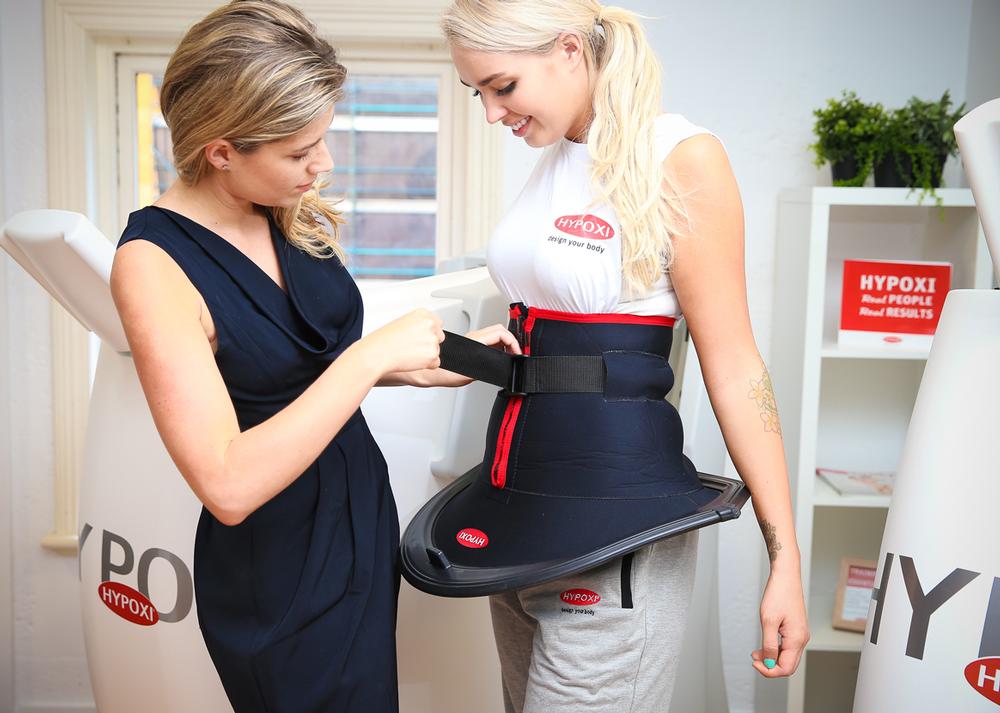
He continues: “Then, on the technology side of things, we have Hypoxi – the studio concept based on the equipment of the same name. Hypoxi combines low-impact exercise and nutritional advice with vacuum and compression technology for weight loss. It’s an in-club boutique concept, but rather than being designed for the already fit as so many boutiques are, it’s focused on figure shaping, targeting those who might otherwise be lost to the fitness industry.

“I firmly believe that, as a sector, we exist to change people’s lives and improve families and communities – so weight loss and figure shaping is something we really should be offering. But our sector has consistently failed to do so, even though the demand is there: Hypoxi is a significant contributor to the financial performance of the overall Goodlife business.

“It’s also helped broaden the appeal of our clubs – a great way to introduce people into the business. We get them results that enable them to progress into the general population of the gym.

“There are currently around 80 Hypoxi studios across Australia, of which we own 21; the rest are standalone franchises. We bought the licence for Australia and New Zealand and we support the existing network, but the key strategy in Australia is to use Hypoxi as an added service and a USP in our own clubs. It will be an important opportunity for Fitness First: we’ve already identified some 20–35 clubs where we’d like to introduce it.

“Overseas it’s another matter: we’re keen to roll it out as a franchise in the United States, for example. We’ve already launched the franchise package there, with two flagship studios open in Arizona. I think we could reach 150–200 Hypoxi sites in that market over the next five years, whether inside clubs, standalone or in partnership with other weight loss offerings.”

Open all hours
Goodlife also made a ground-breaking decision two years ago to switch to 24/7 operation. “We’d had 16 quarters in a row of constant growth between 2010 and mid-2014, but then we took a dip for a couple of quarters. That led us to re-evaluate the member proposition: where we were falling short and where the opportunity gaps lay. Convenience – and specifically 24/7 access – emerged clearly, so we got the board’s support and started to open our full-service businesses 24/7.

“I was keen to do this because it took away some of the key selling propositions from the low-cost sector. And we’ve never looked back: we’ve experienced extraordinary member growth over the last 18 months – a growth of over 30,000 members.

“We’ve converted over 50 of the Goodlife clubs already and the rest will follow. We now plan to do the same with Fitness First.”

He continues: “There’s been a huge investment in the Fitness First estate over recent years: some AU$83m of CapEx. They’re wonderful facilities. But the plans we have for the chain – 24/7 opening and the addition of Hypoxi studios – will be extremely compelling additions. And of course, for both Goodlife and Fitness First, we have the opportunity to continue to open new clubs in under-serviced areas; we’ll select the most appropriate brand for each location. It isn’t a numbers game, but the footprints will continue to grow.”

And how about Jetts – what plans for that franchise brand? “We’ll be looking at buying back some of the franchises to continue to pump up the corporate earnings. We’re already in the process of buying back all the New Zealand clubs.

“There’s also a significant opportunity in offshore franchising: it’s already underway in Asia, as well as Europe and the UK. Asia in particular is a focus for us at the moment. We want to make sure we have the right offering there, which may be a ‘Jetts Plus’ – a hybrid of Goodlife and Jetts, including some group exercise which is important in Asia. We’re working on that at the moment.”

A broader remit
Finally, the group has its sights set on acquiring other complementary businesses, as Oliver explains: “The ‘lifestyle’ element of Fitness & Lifestyle Group is very important. We don’t want to limit ourselves to the four walls of health clubs, so we’ll be looking at other opportunities… wellbeing, beauty, health-related technology. I don’t want to go into any specifics at this stage, but we’re not being closed-minded about the remit of our group.

“I’d also like to look at other adjacent areas of business. Building a relationship with insurance providers is one area I’m very interested in, for example.”

He continues: “Ultimately, the base strategy for Fitness & Lifestyle Group is taking our clubs 24/7. It’s growing Jetts in Australia and continuing to develop the brand in Asia. It’s putting Hypoxi into more of our clubs in Australia, as well as rolling it out in the US and Canada.

“But we’re well capitalised, so we have a strong opportunity to look at what ‘adjacencies’ we can add into the existing businesses to add value to our members. I’m passionate about this at a personal level – making a genuine difference to people’s lives is why I’ve been in the industry for so long, from instructor level up.

“At face value, that thinking – focusing on adding value for members above all else – might not always be aligned with conventional investment thesis. However, adding extra services doesn’t only help us serve the member better. Commercially it also creates more revenue per member, which is something the fitness sector really needs to get better at doing. At the end of the day, if you have a strong member value equation, profits really do follow.”
Sign up here to get Fit Tech's weekly ezine and every issue of Fit Tech magazine free on digital.
Gallery
More features
Editor's letter

Into the fitaverse

Fitness is already among the top three markets in the metaverse, with new technology and partnerships driving real growth and consumer engagement that looks likely to spill over into health clubs, gyms and studios
Fit Tech people

Ali Jawad

Paralympic powerlifter and founder, Accessercise
Users can easily identify which facilities in the UK are accessible to the disabled community
Fit Tech people

Hannes Sjöblad

MD, DSruptive
We want to give our users an implantable tool that allows them to collect their health data at any time and in any setting
Fit Tech people

Jamie Buck

Co-founder, Active in Time
We created a solution called AiT Voice, which turns digital data into a spoken audio timetable that connects to phone systems
Profile

Fahad Alhagbani: reinventing fitness

Let’s live in the future to improve today
Opinion

Building on the blockchain

For small sports teams looking to compete with giants, blockchain can be a secret weapon explains Lars Rensing, CEO of Protokol
Innovation

Bold move

We ended up raising US$7m in venture capital from incredible investors, including Andreessen Horowitz, Khosla Ventures, Primetime Partners, and GingerBread Capital
App analysis

Check your form

Sency’s motion analysis technology is allowing users to check their technique as they exercise. Co-founder and CEO Gal Rotman explains how
Profile

New reality

Sam Cole, CEO of FitXR, talks to Fit Tech about taking digital workouts to the next level, with an immersive, virtual reality fitness club
Profile

Sohail Rashid

35 million people a week participate in strength training. We want Brawn to help this audience achieve their goals
Ageing

Reverse Ageing

Many apps help people track their health, but Humanity founders Peter Ward and Michael Geer have put the focus on ageing, to help users to see the direct repercussions of their habits. They talk to Steph Eaves
App analysis

Going hybrid

Workout Anytime created its app in partnership with Virtuagym. Workout Anytime’s Greg Maurer and Virtuagym’s Hugo Braam explain the process behind its creation
Research

Physical activity monitors boost activity levels

Researchers at the University of Copenhagen have conducted a meta analysis of all relevant research and found that the body of evidence shows an impact
Editor's letter

Two-way coaching

Content providers have been hugely active in the fit tech market since the start of the pandemic. We expect the industry to move on from delivering these services on a ‘broadcast-only’ basis as two-way coaching becomes the new USP
Fit Tech People

Laurent Petit

Co-founder, Active Giving
The future of sports and fitness are dependent on the climate. Our goal is to positively influence the future of our planet by instilling a global vision of wellbeing and a sense of collective action
Fit Tech People

Adam Zeitsiff

CEO, Intelivideo
We don’t just create the technology and bail – we support our clients’ ongoing hybridisation efforts
Fit Tech People

Anantharaman Pattabiraman

CEO and co-founder, Auro
When you’re undertaking fitness activities, unless you’re on a stationary bike, in most cases it’s not safe or necessary to be tied to a screen, especially a small screen
Fit Tech People

Mike Hansen

Managing partner, Endorphinz
We noticed a big gap in the market – customers needed better insights but also recommendations on what to do, whether that be customer acquisition, content creation, marketing and more
More features
Perfect Gym, part of the Sport Alliance group, is a global software provider specialising in ...
Panatta's mission is to create machines that are aesthetically pleasing, functional and competitive in price ...
22-23 Sep 2026
Four Seasons Hotel Bangkok at Chao Phraya River, Bangkok , Thailand
Perfect Gym, part of the Sport Alliance group, is a global software provider specialising in ...
Panatta's mission is to create machines that are aesthetically pleasing, functional and competitive in price ...
Get Fit Tech
Sign up for the free Fit Tech ezine and breaking news alerts
Sign up
22-23 Sep 2026
Four Seasons Hotel Bangkok at Chao Phraya River, Bangkok , Thailand

latest fit tech news

Peloton has made the strategic acquisition of Pilates start-up, Skōp, to support the expansion of its strength ecosystem. As demand ...
news • 09 Jun 2026

Longevitix, a clinical platform for preventive and longevity medicine, has launched its AI-powered intelligence system to help physicians deliver continuous, ...
news • 08 Jun 2026

Fitness First UK is integrating red light therapy into its yoga and Pilates classes through a partnership with Bon Charge. ...
news • 08 Jun 2026
PureGym is encouraging people to step away from their screens and go for a walk, in a new initiative timed ...
news • 29 May 2026
Active people app, Strava, has overhauled its strength training experience, allowing gym-goers to automatically log and share their lifts from ...
news • 27 May 2026

Fitness First UK is embracing digital wellness technology by installing Kip’s tap-to-activate phone controls across its UK estate. Kip tags ...
news • 22 May 2026
The world’s first awareness ring has been launched. Designed to promote presence, focus and calm via gentle haptic vibrations, the ...
news • 13 May 2026
Center Parcs’ Aqua Sana Forest Spa, Woburn Forest, UK, has transformed an unused space into a touchless wellness area called ...
news • 12 May 2026
Gharieni Group has launched a new company, Cobotics Innovations, to create automated wellness experiences. The first solution is a robotic ...
product innovation • 07 May 2026

US-based robotics wellness company Aescape Inc has entered insolvency proceedings following the sale of substantially all of its ...

news • 06 May 2026
More fit tech news
features

Interview: Greg Oliver, CEO of Australia's Fitness & Lifestyle Group

There’s a new fitness giant in Australia – and the Fitness & Lifestyle Group has plans to spread its wings even further, as its CEO explains to Kate Cracknell

Published in Health Club Management 2017 issue 3

he fact that Quadrant, a well-respected private equity firm, has invested in us is a real coming of age moment – not just for us, but for the whole of the Australian fitness sector.” So says Greg Oliver, CEO of both the Fitness & Lifestyle Group and Goodlife Health Clubs, one of the group’s businesses. “It’s recognition that fitness is a worthwhile investment.”

Oliver is referring to the recent deals which, in the space of just two months last summer, saw Quadrant populate its newly created Fitness & Lifestyle Group by acquiring a number of health club brands. In August 2016, it bought Goodlife Health Clubs and its weight loss brand Hypoxi from Ardent Leisure – a deal worth AU$260m – as Ardent switched its focus to becoming an exclusively attractions and entertainment firm. Also in August, Quadrant acquired fitness franchise Jetts. Then, in September, it bought Fitness First Australia (see ‘Growing a fitness empire’, p34).

The combined group currently sits at 76 Goodlife clubs, 66 Fitness Firsts, 178 franchises and 34 corporate clubs in Jetts’ Australian estate alone, plus 19 in-house Hypoxi studios. The group is headed up by Oliver, who alongside Quadrant has been instrumental in bringing the various deals to fruition.

And Oliver has exciting plans for this combined portfolio of “highly complementary” brands: Fitness First at the premium end of the market, as it always has been in Australia; Goodlife in the mid-market; Jetts a market leader in the low-cost segment; and Hypoxi a boutique offering designed to get non-traditional gym-goers into a health club setting.

Creating USPs
“Goodlife has already evolved significantly over the last couple of years, particularly in the areas of technology and partnerships,” Oliver explains. “We were a bricks and mortar business and we saw the online fitness phenomenon emerging: people were creating their own personas and providing online programming and getting a huge audience. Most operators would have looked at that as a significant threat to the industry. I saw it as an opportunity.

“One of our key partners is now Emily Skye, one of the world’s leading online fitness personalities with 11 million followers. Emily has created group exercise programmes for us, which are already available in 63 of our 76 clubs. We’re leveraging her influence to broaden our appeal. In return, she’s able to give even more to her followers: a safe environment in which to do her workouts, with all the support and equipment they need.”

He continues: “Then, on the technology side of things, we have Hypoxi – the studio concept based on the equipment of the same name. Hypoxi combines low-impact exercise and nutritional advice with vacuum and compression technology for weight loss. It’s an in-club boutique concept, but rather than being designed for the already fit as so many boutiques are, it’s focused on figure shaping, targeting those who might otherwise be lost to the fitness industry.

“I firmly believe that, as a sector, we exist to change people’s lives and improve families and communities – so weight loss and figure shaping is something we really should be offering. But our sector has consistently failed to do so, even though the demand is there: Hypoxi is a significant contributor to the financial performance of the overall Goodlife business.

“It’s also helped broaden the appeal of our clubs – a great way to introduce people into the business. We get them results that enable them to progress into the general population of the gym.

“There are currently around 80 Hypoxi studios across Australia, of which we own 21; the rest are standalone franchises. We bought the licence for Australia and New Zealand and we support the existing network, but the key strategy in Australia is to use Hypoxi as an added service and a USP in our own clubs. It will be an important opportunity for Fitness First: we’ve already identified some 20–35 clubs where we’d like to introduce it.

“Overseas it’s another matter: we’re keen to roll it out as a franchise in the United States, for example. We’ve already launched the franchise package there, with two flagship studios open in Arizona. I think we could reach 150–200 Hypoxi sites in that market over the next five years, whether inside clubs, standalone or in partnership with other weight loss offerings.”

Open all hours
Goodlife also made a ground-breaking decision two years ago to switch to 24/7 operation. “We’d had 16 quarters in a row of constant growth between 2010 and mid-2014, but then we took a dip for a couple of quarters. That led us to re-evaluate the member proposition: where we were falling short and where the opportunity gaps lay. Convenience – and specifically 24/7 access – emerged clearly, so we got the board’s support and started to open our full-service businesses 24/7.

“I was keen to do this because it took away some of the key selling propositions from the low-cost sector. And we’ve never looked back: we’ve experienced extraordinary member growth over the last 18 months – a growth of over 30,000 members.

“We’ve converted over 50 of the Goodlife clubs already and the rest will follow. We now plan to do the same with Fitness First.”

He continues: “There’s been a huge investment in the Fitness First estate over recent years: some AU$83m of CapEx. They’re wonderful facilities. But the plans we have for the chain – 24/7 opening and the addition of Hypoxi studios – will be extremely compelling additions. And of course, for both Goodlife and Fitness First, we have the opportunity to continue to open new clubs in under-serviced areas; we’ll select the most appropriate brand for each location. It isn’t a numbers game, but the footprints will continue to grow.”

And how about Jetts – what plans for that franchise brand? “We’ll be looking at buying back some of the franchises to continue to pump up the corporate earnings. We’re already in the process of buying back all the New Zealand clubs.

“There’s also a significant opportunity in offshore franchising: it’s already underway in Asia, as well as Europe and the UK. Asia in particular is a focus for us at the moment. We want to make sure we have the right offering there, which may be a ‘Jetts Plus’ – a hybrid of Goodlife and Jetts, including some group exercise which is important in Asia. We’re working on that at the moment.”

A broader remit
Finally, the group has its sights set on acquiring other complementary businesses, as Oliver explains: “The ‘lifestyle’ element of Fitness & Lifestyle Group is very important. We don’t want to limit ourselves to the four walls of health clubs, so we’ll be looking at other opportunities… wellbeing, beauty, health-related technology. I don’t want to go into any specifics at this stage, but we’re not being closed-minded about the remit of our group.

“I’d also like to look at other adjacent areas of business. Building a relationship with insurance providers is one area I’m very interested in, for example.”

He continues: “Ultimately, the base strategy for Fitness & Lifestyle Group is taking our clubs 24/7. It’s growing Jetts in Australia and continuing to develop the brand in Asia. It’s putting Hypoxi into more of our clubs in Australia, as well as rolling it out in the US and Canada.

“But we’re well capitalised, so we have a strong opportunity to look at what ‘adjacencies’ we can add into the existing businesses to add value to our members. I’m passionate about this at a personal level – making a genuine difference to people’s lives is why I’ve been in the industry for so long, from instructor level up.

“At face value, that thinking – focusing on adding value for members above all else – might not always be aligned with conventional investment thesis. However, adding extra services doesn’t only help us serve the member better. Commercially it also creates more revenue per member, which is something the fitness sector really needs to get better at doing. At the end of the day, if you have a strong member value equation, profits really do follow.”
Sign up here to get Fit Tech's weekly ezine and every issue of Fit Tech magazine free on digital.
Gallery
More features
Editor's letter

Into the fitaverse

Fitness is already among the top three markets in the metaverse, with new technology and partnerships driving real growth and consumer engagement that looks likely to spill over into health clubs, gyms and studios
Fit Tech people

Ali Jawad

Paralympic powerlifter and founder, Accessercise
Users can easily identify which facilities in the UK are accessible to the disabled community
Fit Tech people

Hannes Sjöblad

MD, DSruptive
We want to give our users an implantable tool that allows them to collect their health data at any time and in any setting
Fit Tech people

Jamie Buck

Co-founder, Active in Time
We created a solution called AiT Voice, which turns digital data into a spoken audio timetable that connects to phone systems
Profile

Fahad Alhagbani: reinventing fitness

Let’s live in the future to improve today
Opinion

Building on the blockchain

For small sports teams looking to compete with giants, blockchain can be a secret weapon explains Lars Rensing, CEO of Protokol
Innovation

Bold move

We ended up raising US$7m in venture capital from incredible investors, including Andreessen Horowitz, Khosla Ventures, Primetime Partners, and GingerBread Capital
App analysis

Check your form

Sency’s motion analysis technology is allowing users to check their technique as they exercise. Co-founder and CEO Gal Rotman explains how
Profile

New reality

Sam Cole, CEO of FitXR, talks to Fit Tech about taking digital workouts to the next level, with an immersive, virtual reality fitness club
Profile

Sohail Rashid

35 million people a week participate in strength training. We want Brawn to help this audience achieve their goals
Ageing

Reverse Ageing

Many apps help people track their health, but Humanity founders Peter Ward and Michael Geer have put the focus on ageing, to help users to see the direct repercussions of their habits. They talk to Steph Eaves
App analysis

Going hybrid

Workout Anytime created its app in partnership with Virtuagym. Workout Anytime’s Greg Maurer and Virtuagym’s Hugo Braam explain the process behind its creation
Research

Physical activity monitors boost activity levels

Researchers at the University of Copenhagen have conducted a meta analysis of all relevant research and found that the body of evidence shows an impact
Editor's letter

Two-way coaching

Content providers have been hugely active in the fit tech market since the start of the pandemic. We expect the industry to move on from delivering these services on a ‘broadcast-only’ basis as two-way coaching becomes the new USP
Fit Tech People

Laurent Petit

Co-founder, Active Giving
The future of sports and fitness are dependent on the climate. Our goal is to positively influence the future of our planet by instilling a global vision of wellbeing and a sense of collective action
Fit Tech People

Adam Zeitsiff

CEO, Intelivideo
We don’t just create the technology and bail – we support our clients’ ongoing hybridisation efforts
Fit Tech People

Anantharaman Pattabiraman

CEO and co-founder, Auro
When you’re undertaking fitness activities, unless you’re on a stationary bike, in most cases it’s not safe or necessary to be tied to a screen, especially a small screen
Fit Tech People

Mike Hansen

Managing partner, Endorphinz
We noticed a big gap in the market – customers needed better insights but also recommendations on what to do, whether that be customer acquisition, content creation, marketing and more
More features