




The Leisure Media Company Ltd | Fit Tech promotion
features

Sponsored: Gymnation – Active Nations

The fitness market in the Middle East is thriving, with the low-cost sector set to gain greater traction over the next few years. GymNation’s recent report uncovers the changing consumer factors fuelling this growth

Published in Health Club Management 2025 issue 2

Interest in healthy lifestyles and getting active is growing rapidly among consumers in the Middle East, with a recent industry survey revealing that 92 per cent of respondents want to improve their health and wellness (compared to 76 and 75 per cent in the UK and US respectively).

The inaugural 2024/2025 KSA and UAE Fitness Report – commissioned by leading Middle East-based low-cost gym operator, GymNation – the largest survey of its kind in the region – reveals a fitness market that’s set for transformative growth over the next five years.

Karl Foster, CTO of GymNation, says: “We conducted this research to live up to our commitment of empowering our communities to strive for healthier, more fulfilling lives. Our goal is simple but ambitious: to democratise health and fitness for all.”

Covering topics such as consumer perceptions and behaviours, socio-economic factors, as well as barriers to entry, the report includes responses from 9,644 individuals across the Kingdom of Saudi Arabia (KSA) and the United Arab Emirates (UAE).

New entrants
Over half of new GymNation members surveyed had no membership 12 months before joining, indicating consumers are entering the market in larger numbers.

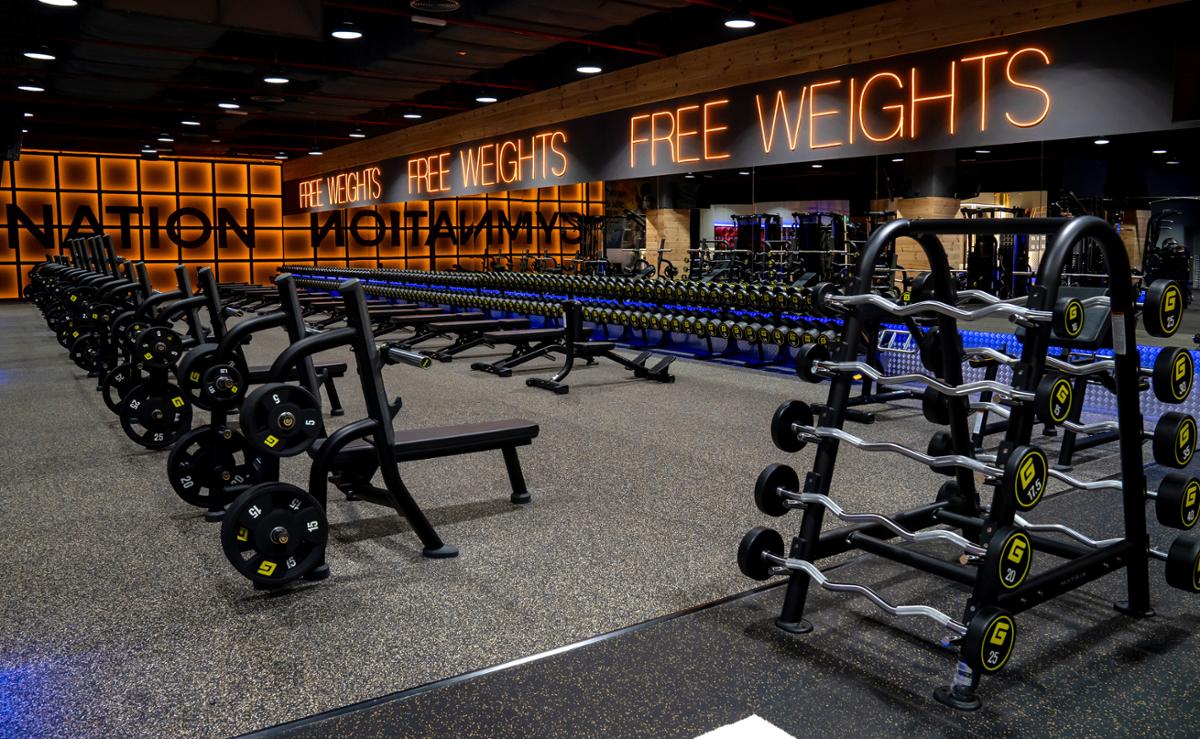
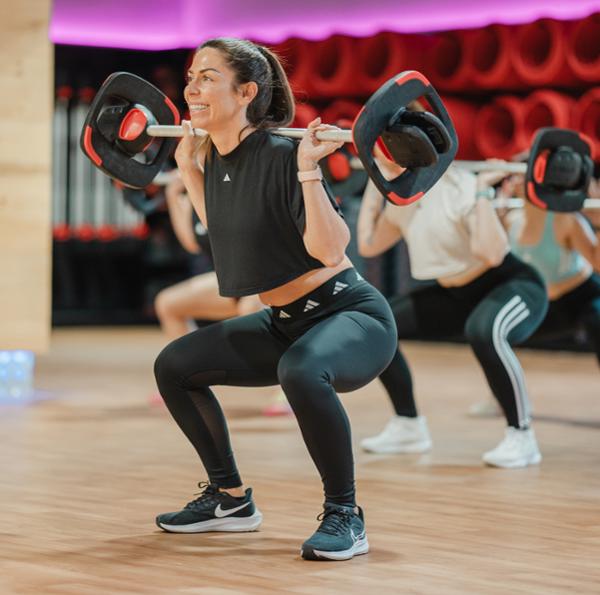
Currently, strength training is the most popular gym activity (47 per cent KSA, 52 per cent UAE), followed by running clubs, yoga and Pilates, mindfulness classes and Hyrox-style workouts.

However, for those who have yet to join a gym, cost is cited as a major barrier – perhaps not surprising considering Dubai was ranked the third most expensive city in the world for gym memberships, while Riyadh was fifth, according to Deutsche Bank Research in 2019.

The GymNation report shows that more than half of respondents (51 per cent KSA, 53 per cent UAE) believe current gym memberships are too expensive, suggesting there is much room for the expansion of lower cost offerings.

‘Gymtimidation’ was also cited as a barrier, with respondents afraid of not knowing how to use the equipment (women 75 per cent, men 50 per cent) and feeling self-conscious about exercising in public (34 per cent of both women and men).

‘Major social hubs’
For those KSA and UAE consumers who have joined the fitness crowd, interest and enthusiasm is strong and growing.

Around a quarter (27 per cent KSA, 25 per cent UAE) see their gym as a ‘major social hub’, while almost half (46 per cent KSA, 43 per cent UAE) consider the gym to be part of their social life.

A significant number of these members are planning to invest more in their health. Over half of the GymNation respondents (62 per cent KSA, 55 per cent UAE) plan to increase their wellness spending in 2025, indicating a buoyant market that’s ripe for continued expansion.

Reasons cited for this increased spending include fitness becoming more of a passion, people wanting to invest in gym clothing and wearables, as well as a desire to upgrade to premium memberships and services.

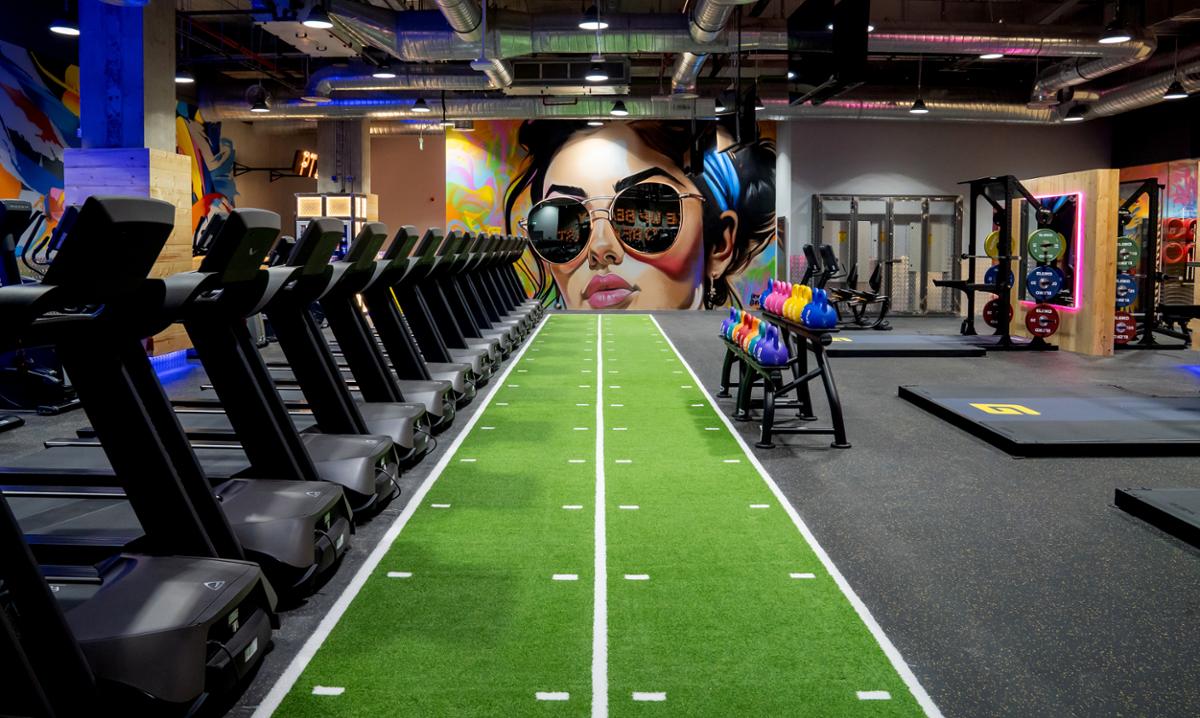
Against this robust market backdrop, GymNation has ambitious plans to improve accessibility to low cost gym memberships for consumers seeking high quality facilities and value for money.

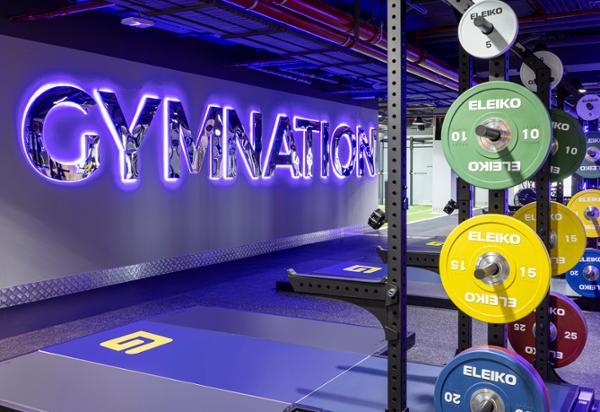
After a successful 2024, where the UAE-founded company launched six gyms in Saudi Arabia (adding to its 14 UAE locations) and surpassed 110,000 members, 2025 is shaping up to be even bigger and better.

Strong forecasts
CEO and founder of GymNation, Loren Holland, says: “The Middle East market is in the early growth phase of the low-cost fitness segment, similar to what the UK experienced in 2011 when this market began to gain traction.

“Our theory is supported by individual research from the Ministry of Investment and the Ministry of Sport (2023), which provides a five-year forecast indicating low-cost membership growth at 35-45 per cent CAGR.”

With confident predictions like these, backed up by data from the GymNation survey, the future of the Middle East fitness market – especially in the low cost sector – looks bright.

Holland continues: “We hope this research inspires action in our sector and ultimately leads us toward a more active, inclusive and health-focused future as this region continues to evolve.

“GymNation is gearing up for an even bigger year in 2025 with an ambitious strategy centred around expansion and innovation.

We’re planning 20 further locations across the UAE and KSA, while staying true to our mission of making fitness affordable and accessible to everyone.”

More: www.gymnation.com
Sign up here to get Fit Tech's weekly ezine and every issue of Fit Tech magazine free on digital.
Gallery
More features
Editor's letter

Into the fitaverse

Fitness is already among the top three markets in the metaverse, with new technology and partnerships driving real growth and consumer engagement that looks likely to spill over into health clubs, gyms and studios
Fit Tech people

Ali Jawad

Paralympic powerlifter and founder, Accessercise
Users can easily identify which facilities in the UK are accessible to the disabled community
Fit Tech people

Hannes Sjöblad

MD, DSruptive
We want to give our users an implantable tool that allows them to collect their health data at any time and in any setting
Fit Tech people

Jamie Buck

Co-founder, Active in Time
We created a solution called AiT Voice, which turns digital data into a spoken audio timetable that connects to phone systems
Profile

Fahad Alhagbani: reinventing fitness

Alexa can help you book classes, check trainers’ bios and schedules, find out opening times, and a host of other information
Opinion

Building on the blockchain

For small sports teams looking to compete with giants, blockchain can be a secret weapon explains Lars Rensing, CEO of Protokol
Innovation

Bold move

Our results showed a greater than 60 per cent reduction in falls for individuals who actively participated in Bold’s programme
App analysis

Check your form

Sency’s motion analysis technology is allowing users to check their technique as they exercise. Co-founder and CEO Gal Rotman explains how
Profile

New reality

Sam Cole, CEO of FitXR, talks to Fit Tech about taking digital workouts to the next level, with an immersive, virtual reality fitness club
Profile

Sohail Rashid

My vision was to create a platform that could improve the sport for lifters at all levels and attract more people, similar to how Strava, Peloton and Zwift have in other sports
Ageing

Reverse Ageing

Many apps help people track their health, but Humanity founders Peter Ward and Michael Geer have put the focus on ageing, to help users to see the direct repercussions of their habits. They talk to Steph Eaves
App analysis

Going hybrid

Workout Anytime created its app in partnership with Virtuagym. Workout Anytime’s Greg Maurer and Virtuagym’s Hugo Braam explain the process behind its creation
Research

Physical activity monitors boost activity levels

Researchers at the University of Copenhagen have conducted a meta analysis of all relevant research and found that the body of evidence shows an impact
Editor's letter

Two-way coaching

Content providers have been hugely active in the fit tech market since the start of the pandemic. We expect the industry to move on from delivering these services on a ‘broadcast-only’ basis as two-way coaching becomes the new USP
Fit Tech People

Laurent Petit

Co-founder, Active Giving
The future of sports and fitness are dependent on the climate. Our goal is to positively influence the future of our planet by instilling a global vision of wellbeing and a sense of collective action
Fit Tech People

Adam Zeitsiff

CEO, Intelivideo
We don’t just create the technology and bail – we support our clients’ ongoing hybridisation efforts
Fit Tech People

Anantharaman Pattabiraman

CEO and co-founder, Auro
When you’re undertaking fitness activities, unless you’re on a stationary bike, in most cases it’s not safe or necessary to be tied to a screen, especially a small screen
Fit Tech People

Mike Hansen

Managing partner, Endorphinz
We noticed a big gap in the market – customers needed better insights but also recommendations on what to do, whether that be customer acquisition, content creation, marketing and more
More features
FIBO pursues the vision of a strong and healthy society and as a global network ...
Every week, millions of people get fit in 21,000 clubs, across 100 countries with the ...
22-23 Sep 2026
Four Seasons Hotel Bangkok at Chao Phraya River, Bangkok , Thailand
FIBO pursues the vision of a strong and healthy society and as a global network ...
Every week, millions of people get fit in 21,000 clubs, across 100 countries with the ...
Get Fit Tech
Sign up for the free Fit Tech ezine and breaking news alerts
Sign up
22-23 Sep 2026
Four Seasons Hotel Bangkok at Chao Phraya River, Bangkok , Thailand

latest fit tech news

PureGym is encouraging people to step away from their screens and go for a walk, in a new initiative timed ...
news • 29 May 2026
Active people app, Strava, has overhauled its strength training experience, allowing gym-goers to automatically log and share their lifts from ...
news • 27 May 2026

Fitness First UK is embracing digital wellness technology by installing Kip’s tap-to-activate phone controls across its UK estate. Kip tags ...
news • 22 May 2026
The world’s first awareness ring has been launched. Designed to promote presence, focus and calm via gentle haptic vibrations, the ...
news • 13 May 2026
Center Parcs’ Aqua Sana Forest Spa, Woburn Forest, UK, has transformed an unused space into a touchless wellness area called ...
news • 12 May 2026
Gharieni Group has launched a new company, Cobotics Innovations, to create automated wellness experiences. The first solution is a robotic ...
product innovation • 07 May 2026

US-based robotics wellness company Aescape Inc has entered insolvency proceedings following the sale of substantially all of its ...

news • 06 May 2026
Fitness platform, Zing Coach, has teamed up with Les Mills, in a partnership that gives its users access to group ...
news • 23 Apr 2026

TMActive is launching a new Active Wellbeing Studio next month in Tonbridge, UK, specifically aimed at people who face higher ...
news • 13 Apr 2026

Indian billionaire, Deepinder Goyal, is working on a device called Temple that aims to track blood flow to the brain ...
news • 10 Apr 2026
More fit tech news
features

Sponsored: Gymnation – Active Nations

The fitness market in the Middle East is thriving, with the low-cost sector set to gain greater traction over the next few years. GymNation’s recent report uncovers the changing consumer factors fuelling this growth

Published in Health Club Management 2025 issue 2

Interest in healthy lifestyles and getting active is growing rapidly among consumers in the Middle East, with a recent industry survey revealing that 92 per cent of respondents want to improve their health and wellness (compared to 76 and 75 per cent in the UK and US respectively).

The inaugural 2024/2025 KSA and UAE Fitness Report – commissioned by leading Middle East-based low-cost gym operator, GymNation – the largest survey of its kind in the region – reveals a fitness market that’s set for transformative growth over the next five years.

Karl Foster, CTO of GymNation, says: “We conducted this research to live up to our commitment of empowering our communities to strive for healthier, more fulfilling lives. Our goal is simple but ambitious: to democratise health and fitness for all.”

Covering topics such as consumer perceptions and behaviours, socio-economic factors, as well as barriers to entry, the report includes responses from 9,644 individuals across the Kingdom of Saudi Arabia (KSA) and the United Arab Emirates (UAE).

New entrants
Over half of new GymNation members surveyed had no membership 12 months before joining, indicating consumers are entering the market in larger numbers.

Currently, strength training is the most popular gym activity (47 per cent KSA, 52 per cent UAE), followed by running clubs, yoga and Pilates, mindfulness classes and Hyrox-style workouts.

However, for those who have yet to join a gym, cost is cited as a major barrier – perhaps not surprising considering Dubai was ranked the third most expensive city in the world for gym memberships, while Riyadh was fifth, according to Deutsche Bank Research in 2019.

The GymNation report shows that more than half of respondents (51 per cent KSA, 53 per cent UAE) believe current gym memberships are too expensive, suggesting there is much room for the expansion of lower cost offerings.

‘Gymtimidation’ was also cited as a barrier, with respondents afraid of not knowing how to use the equipment (women 75 per cent, men 50 per cent) and feeling self-conscious about exercising in public (34 per cent of both women and men).

‘Major social hubs’
For those KSA and UAE consumers who have joined the fitness crowd, interest and enthusiasm is strong and growing.

Around a quarter (27 per cent KSA, 25 per cent UAE) see their gym as a ‘major social hub’, while almost half (46 per cent KSA, 43 per cent UAE) consider the gym to be part of their social life.

A significant number of these members are planning to invest more in their health. Over half of the GymNation respondents (62 per cent KSA, 55 per cent UAE) plan to increase their wellness spending in 2025, indicating a buoyant market that’s ripe for continued expansion.

Reasons cited for this increased spending include fitness becoming more of a passion, people wanting to invest in gym clothing and wearables, as well as a desire to upgrade to premium memberships and services.

Against this robust market backdrop, GymNation has ambitious plans to improve accessibility to low cost gym memberships for consumers seeking high quality facilities and value for money.

After a successful 2024, where the UAE-founded company launched six gyms in Saudi Arabia (adding to its 14 UAE locations) and surpassed 110,000 members, 2025 is shaping up to be even bigger and better.

Strong forecasts
CEO and founder of GymNation, Loren Holland, says: “The Middle East market is in the early growth phase of the low-cost fitness segment, similar to what the UK experienced in 2011 when this market began to gain traction.

“Our theory is supported by individual research from the Ministry of Investment and the Ministry of Sport (2023), which provides a five-year forecast indicating low-cost membership growth at 35-45 per cent CAGR.”

With confident predictions like these, backed up by data from the GymNation survey, the future of the Middle East fitness market – especially in the low cost sector – looks bright.

Holland continues: “We hope this research inspires action in our sector and ultimately leads us toward a more active, inclusive and health-focused future as this region continues to evolve.

“GymNation is gearing up for an even bigger year in 2025 with an ambitious strategy centred around expansion and innovation.

We’re planning 20 further locations across the UAE and KSA, while staying true to our mission of making fitness affordable and accessible to everyone.”

More: www.gymnation.com
Sign up here to get Fit Tech's weekly ezine and every issue of Fit Tech magazine free on digital.
Gallery
More features
Editor's letter

Into the fitaverse

Fitness is already among the top three markets in the metaverse, with new technology and partnerships driving real growth and consumer engagement that looks likely to spill over into health clubs, gyms and studios
Fit Tech people

Ali Jawad

Paralympic powerlifter and founder, Accessercise
Users can easily identify which facilities in the UK are accessible to the disabled community
Fit Tech people

Hannes Sjöblad

MD, DSruptive
We want to give our users an implantable tool that allows them to collect their health data at any time and in any setting
Fit Tech people

Jamie Buck

Co-founder, Active in Time
We created a solution called AiT Voice, which turns digital data into a spoken audio timetable that connects to phone systems
Profile

Fahad Alhagbani: reinventing fitness

Alexa can help you book classes, check trainers’ bios and schedules, find out opening times, and a host of other information
Opinion

Building on the blockchain

For small sports teams looking to compete with giants, blockchain can be a secret weapon explains Lars Rensing, CEO of Protokol
Innovation

Bold move

Our results showed a greater than 60 per cent reduction in falls for individuals who actively participated in Bold’s programme
App analysis

Check your form

Sency’s motion analysis technology is allowing users to check their technique as they exercise. Co-founder and CEO Gal Rotman explains how
Profile

New reality

Sam Cole, CEO of FitXR, talks to Fit Tech about taking digital workouts to the next level, with an immersive, virtual reality fitness club
Profile

Sohail Rashid

My vision was to create a platform that could improve the sport for lifters at all levels and attract more people, similar to how Strava, Peloton and Zwift have in other sports
Ageing

Reverse Ageing

Many apps help people track their health, but Humanity founders Peter Ward and Michael Geer have put the focus on ageing, to help users to see the direct repercussions of their habits. They talk to Steph Eaves
App analysis

Going hybrid

Workout Anytime created its app in partnership with Virtuagym. Workout Anytime’s Greg Maurer and Virtuagym’s Hugo Braam explain the process behind its creation
Research

Physical activity monitors boost activity levels

Researchers at the University of Copenhagen have conducted a meta analysis of all relevant research and found that the body of evidence shows an impact
Editor's letter

Two-way coaching

Content providers have been hugely active in the fit tech market since the start of the pandemic. We expect the industry to move on from delivering these services on a ‘broadcast-only’ basis as two-way coaching becomes the new USP
Fit Tech People

Laurent Petit

Co-founder, Active Giving
The future of sports and fitness are dependent on the climate. Our goal is to positively influence the future of our planet by instilling a global vision of wellbeing and a sense of collective action
Fit Tech People

Adam Zeitsiff

CEO, Intelivideo
We don’t just create the technology and bail – we support our clients’ ongoing hybridisation efforts
Fit Tech People

Anantharaman Pattabiraman

CEO and co-founder, Auro
When you’re undertaking fitness activities, unless you’re on a stationary bike, in most cases it’s not safe or necessary to be tied to a screen, especially a small screen
Fit Tech People

Mike Hansen

Managing partner, Endorphinz
We noticed a big gap in the market – customers needed better insights but also recommendations on what to do, whether that be customer acquisition, content creation, marketing and more
More features