






GET FIT TECH
Sign up for the FREE digital edition of Fit Tech magazine and also get the Fit Tech ezine and breaking news email alerts.
Not right now, thanksclose this window I've already subscribed!
features

Specifier: Data driven training

Gym goers have the power to track and analyse every aspect of their fitness journey. Steph Eaves looks at how data-driven products can improve outcomes

Published in Health Club Management 2024 issue 7

Steve Barton
Egym UK
Barton says EGYM can support health tracking and social impact analysis / photo: Egym UK

EGYM’s digital ecosystem connects a person’s entire wellbeing journey, both inside and outside their training facility. Through its open platform, EGYM collects data from EGYM Smart machines, as well as connected partner cardio equipment, management software and body analysers. Virtually everything in a facility can be connected via the EGYM Cloud. Members can also connect apps and wearables they use outside the gym – creating a single point of access for data collected from multiple sources.

Data collected is stored in the EGYM Cloud and collated to deliver an entirely bespoke training experience for everyone.

Our new AI-driven solution, EGYM Genius, aggregates data from hundreds of thousands of training sessions carried out on EGYM equipment and via connected cardio partners – including 340 million assessment data points – and generates precise recommendations for individualised training plans, optimally tailored to personal experience level and/or training goal.

How does it work?

Data is captured at all stages of a person’s wellbeing journey, from on-boarding right through to initial goal attainment and beyond. In addition to providing members with real-time feedback on the health rewards of their training efforts, EGYM Genius uses AI-powered technology to create bespoke training plans that are directly aligned to the health goals of the individual.

Through the application of EGYM Genius, training plans are continually revised in response to member behaviours, ensuring the quickest and safest possible route to success. For example, if a member records a cycle to the gym on their wearable device, this data is used to influence the prescription of in-gym activity.

Can the data be used for health tracking?

Yes, the EGYM ecosystem is designed to collect and apply data that drives health outcomes, both at individual and population levels. Through our bank of collated data we're able to provide policymakers and health care professionals with irrefutable evidence of the valuable role physical activity can play in a prevention- rather than repair-focused healthcare system.

EGYM is currently working with several UK local authorities to deliver measurable, evidence-based health interventions, for example.

And for social impact analysis?

The EGYM ecosystem delivers hundreds of thousands of data sets which measure impact. In addition to standard reports that detail collective health outcomes, workouts completed and participant engagement, we can also work with operators to extract specific data and present it in a way that is needed to contribute to a social value calculation.

We're able to provide policy- makers with evidence of the valuable role physical activity can play in a prevention-focused healthcare system
EGYM Smart machines are part of an overall ecosystem / photo: Egym UK
Leon Rudge
Myzone
photo: MyZone

Myzone is versatile and however people choose to be active, it can motivate them to move and reach their goals. A Myzone heart rate monitor, or the MZ-Open app on a smart watch, tracks the user’s heart rate and provides real-time feedback using colour to visualise effort.

We keep the data simple and relevant, because with so many measurements in the digital space, complex numbers can become meaningless to people and act as a barrier to entry.

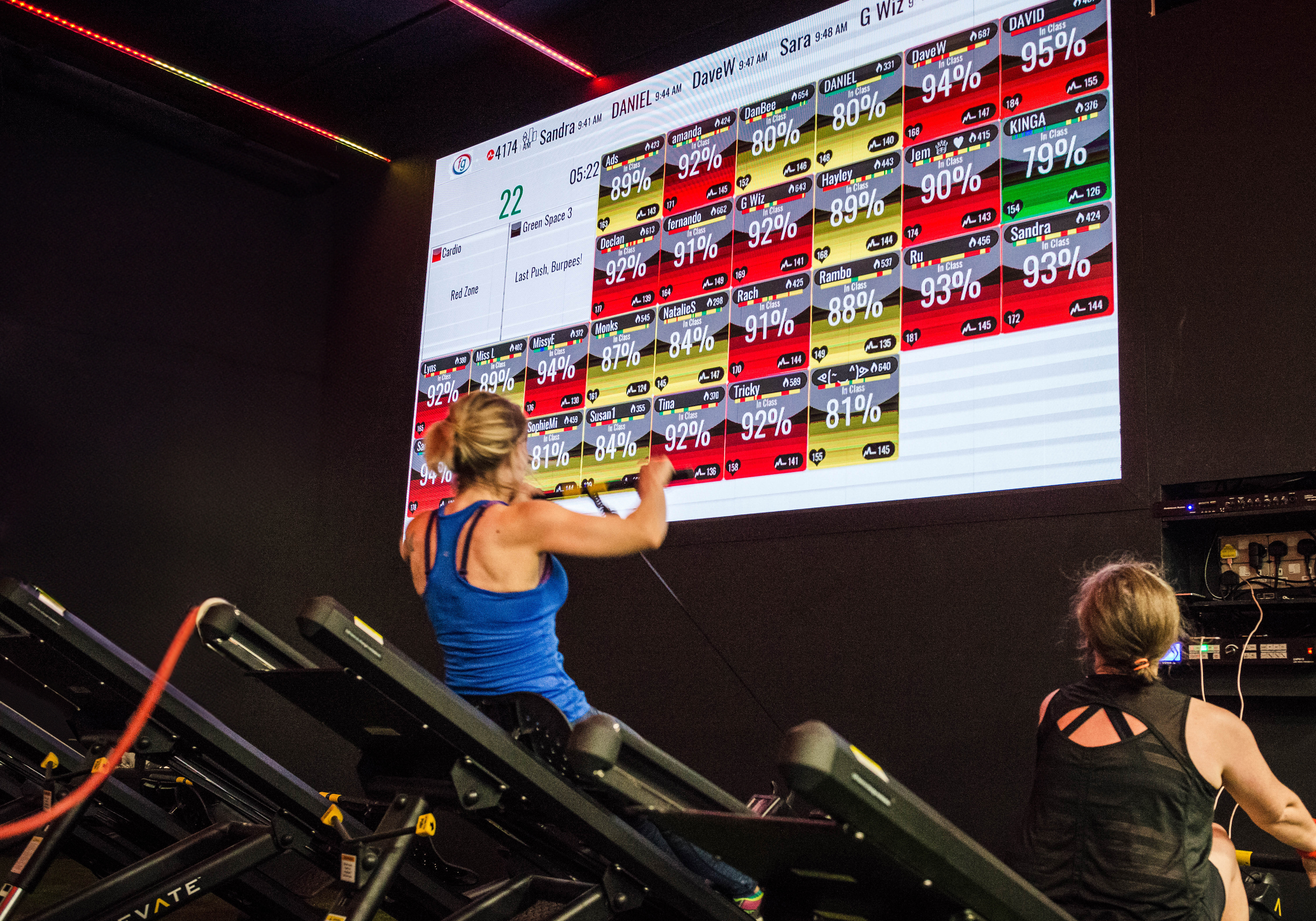
Fitness professionals can coach by colour, usually via screens in the gym or studio, while Myzone's classes and challenges provide built-in support to lighten their workload. Users can also analyse their performance during and after activity in the Myzone app.

With Myzone Effort Points (MEPs), the more people put in, the more they earn. Users are tasked with achieving 1,300 MEPs a month in line with the World Health Organization’s physical activity guidelines and are rewarded with status rankings.

How does it work?

Myzone continuously reads the user’s heart rate using ECG (when worn on the chest) or PPG (on the wrist and arm). We use that data to calculate the percentage of effort using maximum heart rate. It’s this personalisation that makes Myzone powerful. It doesn’t matter if you’re an Olympic athlete or deconditioned, the effort put in is the same.

My personal Yellow Zone, for example – which is 80-90 per cent of my max heart rate – is the same as everyone else’s Yellow Zone, so Myzone creates a level playing field for everyone.

How is the data used to direct workouts?

We convert heart rate into a coloured tile which is visualised in Myzone apps or on large screens. This provides real-time feedback that can be used to coach users, physically or digitally.

Users can pick activities such as fitness tests, set personal goals or take on a Zone Match that directs them to be in particular heart rate zones and scores their accuracy during and after the workout. They can also take part in live and on-demand classes where a coach guides them through a workout using colour.

In a facility, coaches can create classes based on colour. They can use one of over 1,300 exercise videos to guide users, groups or classes through a workout. With real-time feedback coaches can motivate users via zone colour and other data points such as effort percentage, calories and MEPs.

Can it be used for social impact analysis?

Absolutely. We work with several private and public organisations in this area. Myzone can support a desired health outcome by prompting changes in the activity behaviours of the user.

We build communities using social features such as connections, likes, comments, challenges and chat. All these metrics can be reported on, meaning we can use health, activity, social and other metrics, individually or combined, to evidence social impact.

Can data also be used for health tracking?

As Myzone partners with many other apps and exercise equipment. Users can connect Myzone to Apple Health or Google Fit and then share data with their preferred health tracking app.

Myzone can support a desired health outcome by prompting changes in the activity behaviours of the end user
Myzone reads the user's heart rate on the wrist using PPG / photo: MyZone
Myzone uses telemetry to show data as colour-coded tiles / photo: MyZone / CAPakes
Nerio Alessandri
Technogym
Alessandri has built a total ecosystem / photo: Technogym

Technogym is delivering a workout builder via its new product – Checkup – an assessment station which uses AI to personalise training programmes in order to create more effective workouts.

Checkup scans body composition, checks balance, mobility and cognitive abilities, as well as analysing strength from workouts on resistance equipment within the Technogym Ecosystem. The data is combined to create a Wellness Age metric.

The Technogym Coach function then prescribes a set of training protocols before following the training evolution of each individual, enabling operators to create a clustering of club users – based on workout preferences, habits and patterns – which can inform interventions to boost retention, challenges, promotions while also creating upselling opportunities.

Technogym Ecosystem is an open platform that integrates software applications, fitness equipment, payment methods and members’ consumer apps and wearables to provide a seamless experience for club members.

How will Checkup support the sector?

The aim of Technogym’s digital ecosystem is to grow the industry, making it more attractive to end users and more credible in the eyes of institutional stakeholders, such as insurance companies, health professionals and the wider medical world.

Technogym Checkup scans body composition and checks balance, mobility and cognitive abilities, as well as analysing strength
Technogym Checkup is a complete assessment station / photo: Technogym
Sohail Rashid
Brawn
Rashid is currently working with PureGym / photo: Brawn

Brawn captures data to enhance member fitness. Firstly, demographic data such as age, height, weight and gender is collected to create a comprehensive profile. Then specific lifting data is captured. This includes details about training frequency, the specific movements performed, and the weights lifted during workouts. This information helps to track and analyse progress over time.

The app also allows users to provide insights on who they train with within their small group training sessions, which helps us better understand the dynamics and interactions within our fitness communities. Lastly, the data enables us to specify the personal trainer each member works with, providing information for tracking training routines and ensuring personalised guidance.

Session content is loaded onto our platform before each session, allowing users to review the exercises and techniques in advance. This empowers them to arrive well-prepared and ready to make the most of their training experience. During training sessions, users are asked to log the weights they use for each exercise.

How is the data used to direct workouts?

The data captured – including lifting data and demographic information – is used to design four-week training blocks. These are carefully curated to target specific areas of improvement and enhance overall fitness. Within each block, a suggested order of movements is provided, indicating the most effective sequence for users to follow during their workouts. Additionally, our algorithm is able to gauge performance in terms of reps and loads.

Based on this information, we suggest the progression or regression of exercises for the following weeks. This ensures a gradual and appropriate level of challenge, allowing each member to progress and avoid plateaus.

Data is used to determine the progression and regression of exercise
Brawn supports personal trainers in gyms to deliver with data / photo: Brawn
Sean Johnson
Orangetheory Fitness
Sean Johnson is international fitness educator at Orangetheory / photo: Orangetheory Fitness

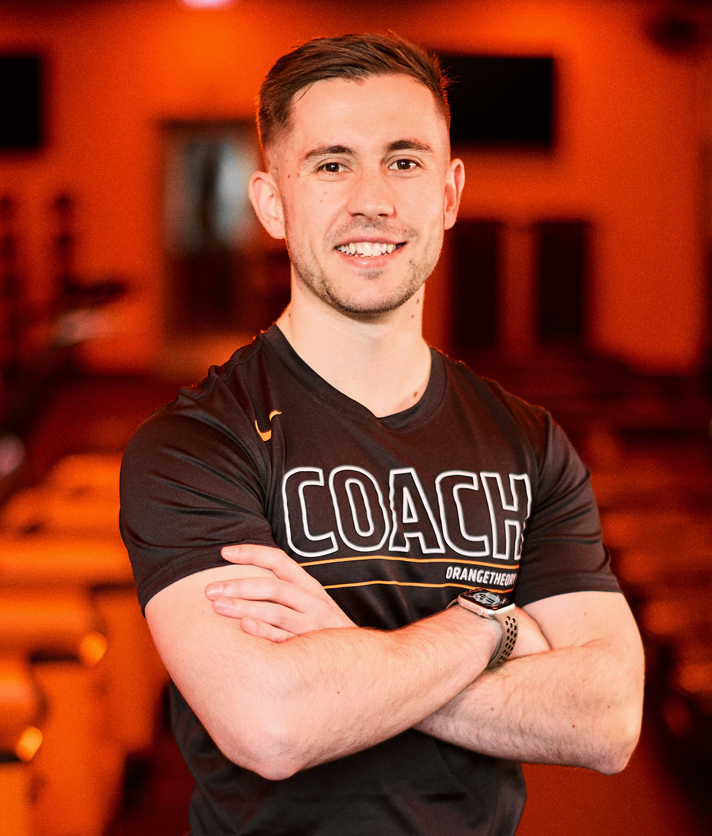
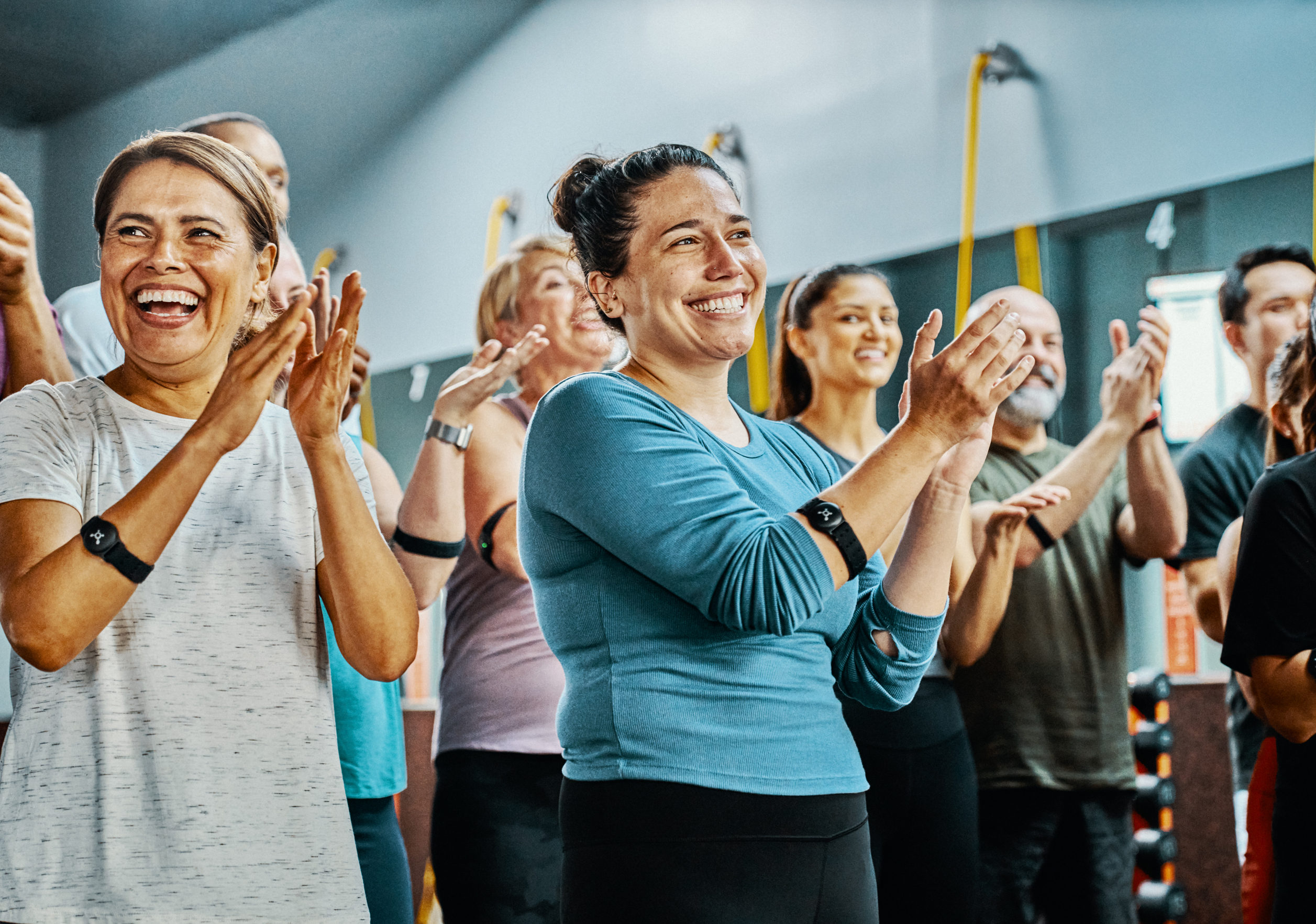
The Orangetheory workout is heart rate-based interval training. Each participant is set up with a heart rate monitor, projecting their real-time statistics – including calories, average heart rate, percentage of max heart rate, heart rate zone and Splat Points – onto the in-studio screens, while OTConnects link up to every treadmill and rower (OTConnects are tablets attached to the equipment providing personal view of physiology).

Coaches guide users through the five different heart rate zones: resting (grey), easy (blue), challenging but doable (green), uncomfortable (orange) and all out (red), telling you when to push harder and when to pull back for recovery. The goal is to spend 12 to 20 minutes with your heart rate elevated in the orange zone to supercharge your metabolism and improve cardiorespiratory health. The live data displayed in the workouts allows our coaches to ensure our members don't over- or under-train. This is vital in preventing injury and providing a base for consistency for our members.

What's the user experience like?

The user experience is based on convenience, comfort and having access to accurate real-time data that creates a world-class coaching experience. From the first instance a member puts on one of our monitors they’re guided to feel safe, looked after and results-driven. Our OTBeat system will start to learn our members over time, making their journey at Orangetheory more personal as time goes on. After just five sessions it will be able to update a member’s max heart rate after every class. This is done by collating all the data from their session to provide a more accurate max heart rate, in turn adjusting their heart rate zones and ability to achieve a Splat Point.

Can the data be used for health tracking?

Our app stores data from workouts, displays trends, gives ‘all-time’ data, stores physiological data, provides a segmental analysis and also tracks users' benchmark workouts; for example, it will show what their fastest one-mile time has been or their fastest 2,000 metre row time.

The live data displayed in the workouts allows our coaches to ensure our members don't over or under-train
Orangetheory workouts are driven by data gathered by wearables and kit / photo: Orangetheory Fitness
360-degree data
EMS operator Feel Electric has implemented a data-driven journey for clients, as Jon Wright, founder and CEO, explains
Jon Wright has built the Feel Electric EMS offering on data / photo: feel electric / STOTT+ATKINSON

We’ve created a bespoke software platform that helps us offer a data-driven approach to improving fitness and wellbeing, with every step of the customer journey enhanced through carefully collected and utilised data points.

As a client, before you step into a studio, you’ll have filled out a short questionnaire and with that information our personal trainer will greet you with the correct programme for your needs.

Following this, you’ll receive a body composition analysis scan which records 200 data points converted into 45 metrics about your body composition, including weight, skeletal muscle mass, cellular health, body fat percentages, extracellular water ratios, protein and mineral levels and visceral fat levels.

Your trainer will give a detailed walkthrough of each metric and what it means for you and a scan at each session enables continuous progression by identifying plateau points or core areas for improvement as your fitness journey progresses.

Data-led training

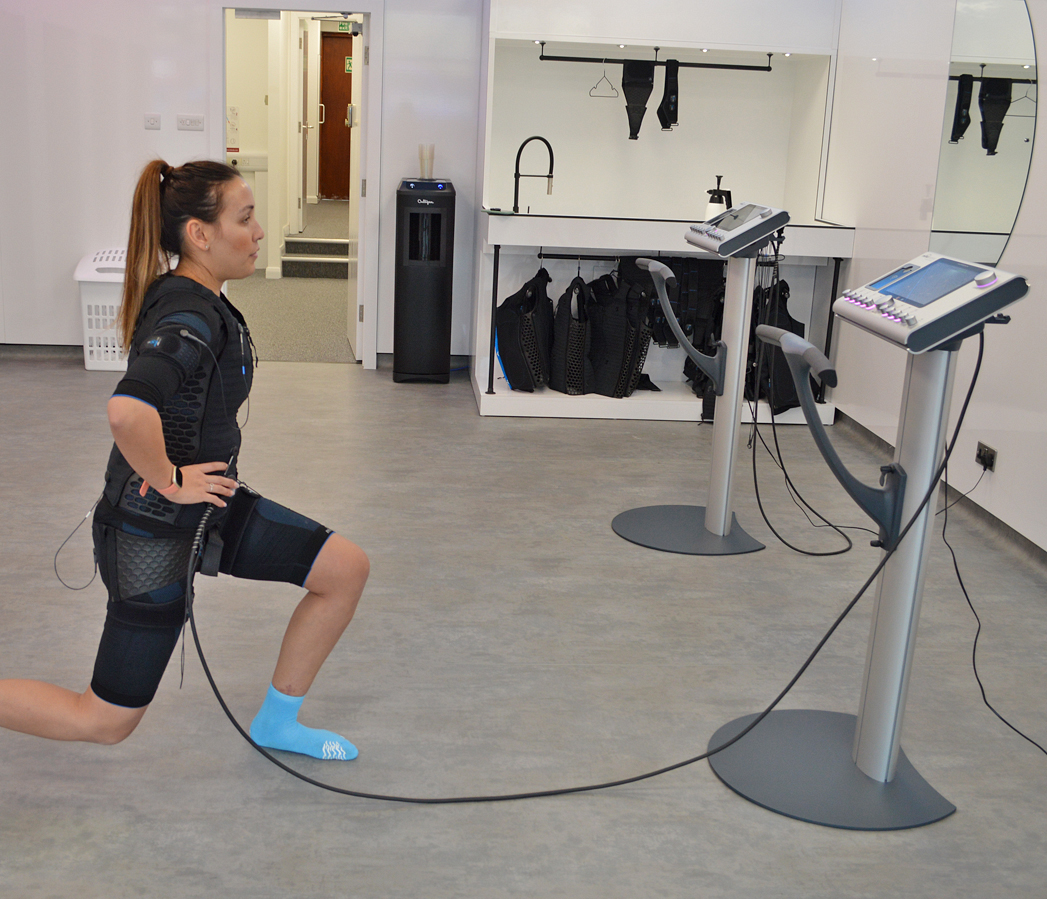
Our EMS (Electrical Muscle Stimulation) training utilises the data from the body scan, so trainers know where to increase the electrical currents to get the results clients want. The levels of impulse are logged and tracked so they can be improved on and to demonstrate progression to clients.

All this data further serves to inform our nutritional programme. Our nutritionist accesses the client’s health data to accurately calculate and prescribe meal plans and dietary advice. Through this data analysis, clients can be certain their recommended calories and macronutrient intakes are as accurate as possible. Clients then log their food intake on our website, so our nutritionist can track progress to ensure the best outcomes.

We plan to enhance these offerings with data collection through wearables that can access data such as heart rate, blood pressure and calories burned through exercise outside our studios to provide an all-encompassing fitness offering.

Feel Electric now has three studios in the UK / photo: feel electric
Sign up here to get Fit Tech's weekly ezine and every issue of Fit Tech magazine free on digital.
More features
Editor's letter

Into the fitaverse

Fitness is already among the top three markets in the metaverse, with new technology and partnerships driving real growth and consumer engagement that looks likely to spill over into health clubs, gyms and studios
Fit Tech people

Ali Jawad

Paralympic powerlifter and founder, Accessercise
Users can easily identify which facilities in the UK are accessible to the disabled community
Fit Tech people

Hannes Sjöblad

MD, DSruptive
We want to give our users an implantable tool that allows them to collect their health data at any time and in any setting
Fit Tech people

Jamie Buck

Co-founder, Active in Time
We created a solution called AiT Voice, which turns digital data into a spoken audio timetable that connects to phone systems
Profile

Fahad Alhagbani: reinventing fitness

Alexa can help you book classes, check trainers’ bios and schedules, find out opening times, and a host of other information
Opinion

Building on the blockchain

For small sports teams looking to compete with giants, blockchain can be a secret weapon explains Lars Rensing, CEO of Protokol
Innovation

Bold move

We ended up raising US$7m in venture capital from incredible investors, including Andreessen Horowitz, Khosla Ventures, Primetime Partners, and GingerBread Capital
App analysis

Check your form

Sency’s motion analysis technology is allowing users to check their technique as they exercise. Co-founder and CEO Gal Rotman explains how
Profile

New reality

Sam Cole, CEO of FitXR, talks to Fit Tech about taking digital workouts to the next level, with an immersive, virtual reality fitness club
Profile

Sohail Rashid

The app is free and it’s $40 to participate in one of our virtual events
Ageing

Reverse Ageing

Many apps help people track their health, but Humanity founders Peter Ward and Michael Geer have put the focus on ageing, to help users to see the direct repercussions of their habits. They talk to Steph Eaves
App analysis

Going hybrid

Workout Anytime created its app in partnership with Virtuagym. Workout Anytime’s Greg Maurer and Virtuagym’s Hugo Braam explain the process behind its creation
Research

Physical activity monitors boost activity levels

Researchers at the University of Copenhagen have conducted a meta analysis of all relevant research and found that the body of evidence shows an impact
Editor's letter

Two-way coaching

Content providers have been hugely active in the fit tech market since the start of the pandemic. We expect the industry to move on from delivering these services on a ‘broadcast-only’ basis as two-way coaching becomes the new USP
Fit Tech People

Laurent Petit

Co-founder, Active Giving
The future of sports and fitness are dependent on the climate. Our goal is to positively influence the future of our planet by instilling a global vision of wellbeing and a sense of collective action
Fit Tech People

Adam Zeitsiff

CEO, Intelivideo
We don’t just create the technology and bail – we support our clients’ ongoing hybridisation efforts
Fit Tech People

Anantharaman Pattabiraman

CEO and co-founder, Auro
When you’re undertaking fitness activities, unless you’re on a stationary bike, in most cases it’s not safe or necessary to be tied to a screen, especially a small screen
Fit Tech People

Mike Hansen

Managing partner, Endorphinz
We noticed a big gap in the market – customers needed better insights but also recommendations on what to do, whether that be customer acquisition, content creation, marketing and more
More features
CET have developed ice baths specifically for the fitness and wellness sectors in addition to ...
Power Plate's range of products include whole body vibration platforms, targeted vibration products and the ...
22-23 Sep 2026
Four Seasons Hotel Bangkok at Chao Phraya River, Bangkok , Thailand
CET have developed ice baths specifically for the fitness and wellness sectors in addition to ...
Power Plate's range of products include whole body vibration platforms, targeted vibration products and the ...
Get Fit Tech
Sign up for the free Fit Tech ezine and breaking news alerts
Sign up
22-23 Sep 2026
Four Seasons Hotel Bangkok at Chao Phraya River, Bangkok , Thailand

latest fit tech news

Preventive healthcare company Neko Health has added body composition analysis to its full-body health scan and launched a new mobile ...
news • 24 Jun 2026

A new brain clinic has opened in London, which uses non-invasive brain stimulation to treat chronic pain, anxiety and burnout ...
news • 22 Jun 2026

Samsung has unveiled a suite of AI-powered health features for its Galaxy Watch range, as the technology giant ...

news • 22 Jun 2026

Elevate Arena is underway at London's Excel and the hot topic of AI was the first point of discussion on ...
news • 18 Jun 2026
Peloton has made the strategic acquisition of Pilates start-up, Skōp, to support the expansion of its strength ecosystem. As demand ...
news • 09 Jun 2026

Longevitix, a clinical platform for preventive and longevity medicine, has launched its AI-powered intelligence system to help physicians deliver continuous, ...
news • 08 Jun 2026

Fitness First UK is integrating red light therapy into its yoga and Pilates classes through a partnership with Bon Charge. ...
news • 08 Jun 2026
PureGym is encouraging people to step away from their screens and go for a walk, in a new initiative timed ...
news • 29 May 2026
Active people app, Strava, has overhauled its strength training experience, allowing gym-goers to automatically log and share their lifts from ...
news • 27 May 2026

Fitness First UK is embracing digital wellness technology by installing Kip’s tap-to-activate phone controls across its UK estate. Kip tags ...
news • 22 May 2026
More fit tech news
features

Specifier: Data driven training

Gym goers have the power to track and analyse every aspect of their fitness journey. Steph Eaves looks at how data-driven products can improve outcomes

Published in Health Club Management 2024 issue 7

Steve Barton
Egym UK
Barton says EGYM can support health tracking and social impact analysis / photo: Egym UK

EGYM’s digital ecosystem connects a person’s entire wellbeing journey, both inside and outside their training facility. Through its open platform, EGYM collects data from EGYM Smart machines, as well as connected partner cardio equipment, management software and body analysers. Virtually everything in a facility can be connected via the EGYM Cloud. Members can also connect apps and wearables they use outside the gym – creating a single point of access for data collected from multiple sources.

Data collected is stored in the EGYM Cloud and collated to deliver an entirely bespoke training experience for everyone.

Our new AI-driven solution, EGYM Genius, aggregates data from hundreds of thousands of training sessions carried out on EGYM equipment and via connected cardio partners – including 340 million assessment data points – and generates precise recommendations for individualised training plans, optimally tailored to personal experience level and/or training goal.

How does it work?

Data is captured at all stages of a person’s wellbeing journey, from on-boarding right through to initial goal attainment and beyond. In addition to providing members with real-time feedback on the health rewards of their training efforts, EGYM Genius uses AI-powered technology to create bespoke training plans that are directly aligned to the health goals of the individual.

Through the application of EGYM Genius, training plans are continually revised in response to member behaviours, ensuring the quickest and safest possible route to success. For example, if a member records a cycle to the gym on their wearable device, this data is used to influence the prescription of in-gym activity.

Can the data be used for health tracking?

Yes, the EGYM ecosystem is designed to collect and apply data that drives health outcomes, both at individual and population levels. Through our bank of collated data we're able to provide policymakers and health care professionals with irrefutable evidence of the valuable role physical activity can play in a prevention- rather than repair-focused healthcare system.

EGYM is currently working with several UK local authorities to deliver measurable, evidence-based health interventions, for example.

And for social impact analysis?

The EGYM ecosystem delivers hundreds of thousands of data sets which measure impact. In addition to standard reports that detail collective health outcomes, workouts completed and participant engagement, we can also work with operators to extract specific data and present it in a way that is needed to contribute to a social value calculation.

We're able to provide policy- makers with evidence of the valuable role physical activity can play in a prevention-focused healthcare system
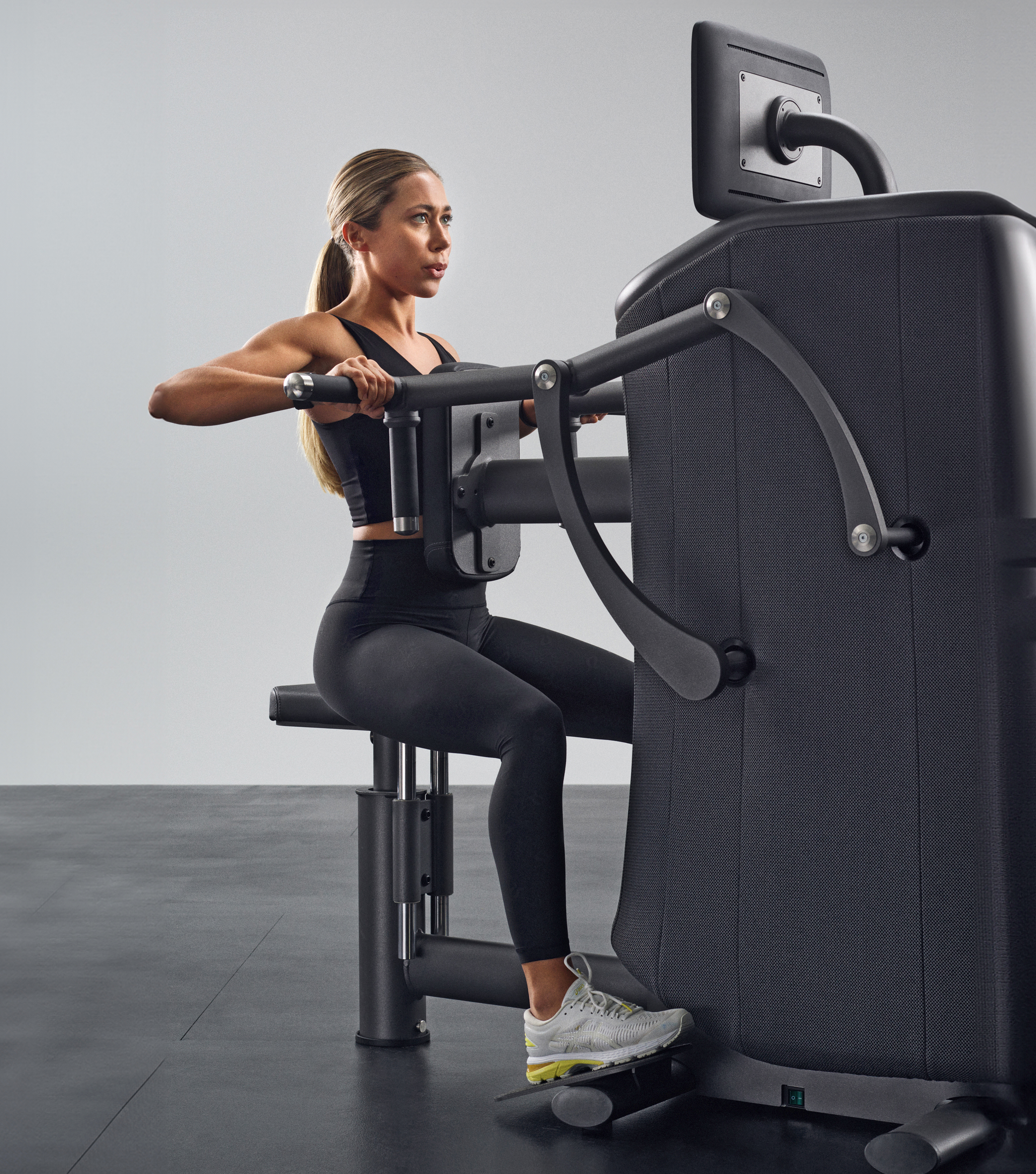
EGYM Smart machines are part of an overall ecosystem / photo: Egym UK
Leon Rudge
Myzone
photo: MyZone

Myzone is versatile and however people choose to be active, it can motivate them to move and reach their goals. A Myzone heart rate monitor, or the MZ-Open app on a smart watch, tracks the user’s heart rate and provides real-time feedback using colour to visualise effort.

We keep the data simple and relevant, because with so many measurements in the digital space, complex numbers can become meaningless to people and act as a barrier to entry.

Fitness professionals can coach by colour, usually via screens in the gym or studio, while Myzone's classes and challenges provide built-in support to lighten their workload. Users can also analyse their performance during and after activity in the Myzone app.

With Myzone Effort Points (MEPs), the more people put in, the more they earn. Users are tasked with achieving 1,300 MEPs a month in line with the World Health Organization’s physical activity guidelines and are rewarded with status rankings.

How does it work?

Myzone continuously reads the user’s heart rate using ECG (when worn on the chest) or PPG (on the wrist and arm). We use that data to calculate the percentage of effort using maximum heart rate. It’s this personalisation that makes Myzone powerful. It doesn’t matter if you’re an Olympic athlete or deconditioned, the effort put in is the same.

My personal Yellow Zone, for example – which is 80-90 per cent of my max heart rate – is the same as everyone else’s Yellow Zone, so Myzone creates a level playing field for everyone.

How is the data used to direct workouts?

We convert heart rate into a coloured tile which is visualised in Myzone apps or on large screens. This provides real-time feedback that can be used to coach users, physically or digitally.

Users can pick activities such as fitness tests, set personal goals or take on a Zone Match that directs them to be in particular heart rate zones and scores their accuracy during and after the workout. They can also take part in live and on-demand classes where a coach guides them through a workout using colour.

In a facility, coaches can create classes based on colour. They can use one of over 1,300 exercise videos to guide users, groups or classes through a workout. With real-time feedback coaches can motivate users via zone colour and other data points such as effort percentage, calories and MEPs.

Can it be used for social impact analysis?

Absolutely. We work with several private and public organisations in this area. Myzone can support a desired health outcome by prompting changes in the activity behaviours of the user.

We build communities using social features such as connections, likes, comments, challenges and chat. All these metrics can be reported on, meaning we can use health, activity, social and other metrics, individually or combined, to evidence social impact.

Can data also be used for health tracking?

As Myzone partners with many other apps and exercise equipment. Users can connect Myzone to Apple Health or Google Fit and then share data with their preferred health tracking app.
Myzone can support a desired health outcome by prompting changes in the activity behaviours of the end user
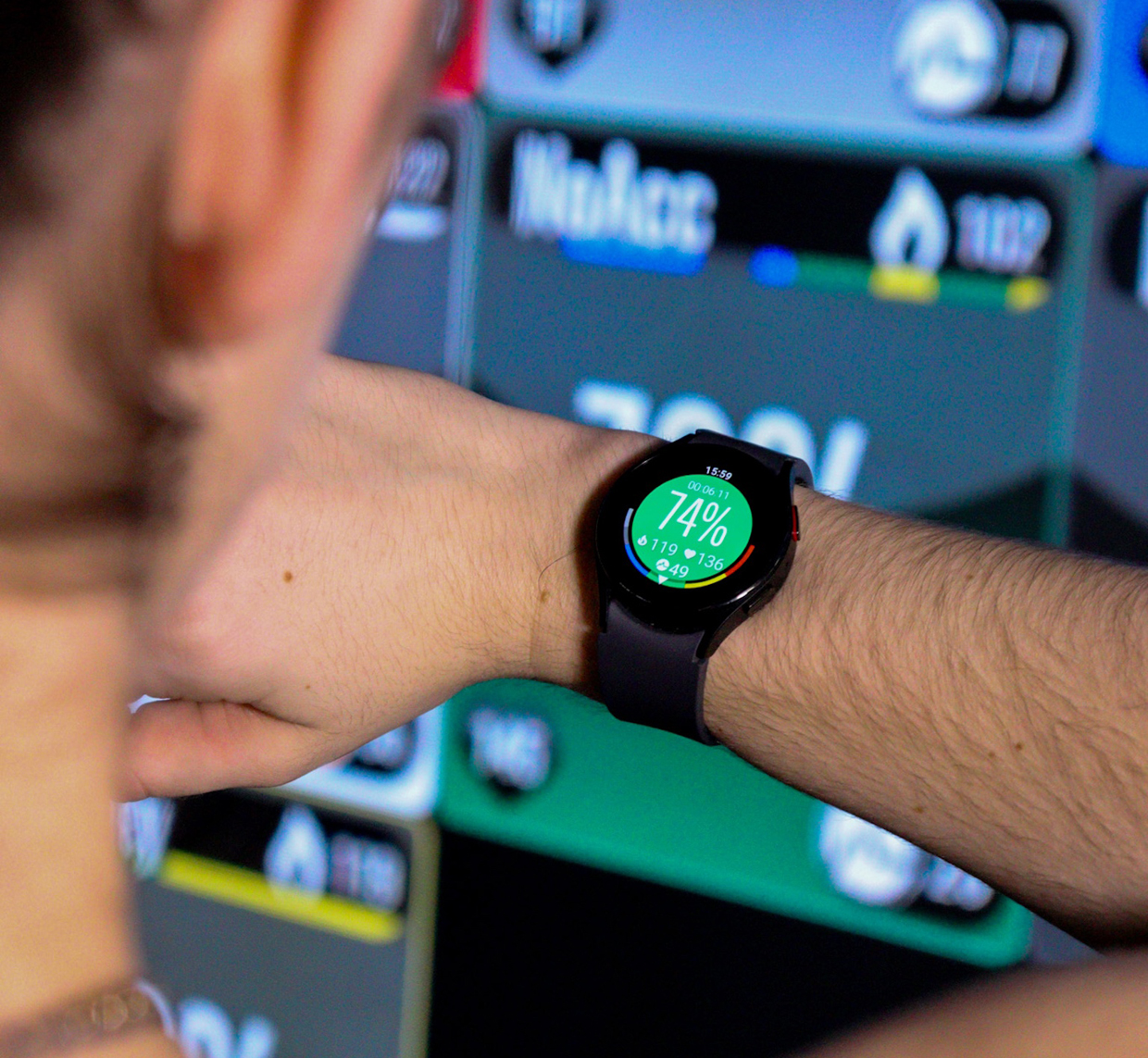
Myzone reads the user's heart rate on the wrist using PPG / photo: MyZone
Myzone uses telemetry to show data as colour-coded tiles / photo: MyZone / CAPakes
Nerio Alessandri
Technogym
Alessandri has built a total ecosystem / photo: Technogym

Technogym is delivering a workout builder via its new product – Checkup – an assessment station which uses AI to personalise training programmes in order to create more effective workouts.

Checkup scans body composition, checks balance, mobility and cognitive abilities, as well as analysing strength from workouts on resistance equipment within the Technogym Ecosystem. The data is combined to create a Wellness Age metric.

The Technogym Coach function then prescribes a set of training protocols before following the training evolution of each individual, enabling operators to create a clustering of club users – based on workout preferences, habits and patterns – which can inform interventions to boost retention, challenges, promotions while also creating upselling opportunities.

Technogym Ecosystem is an open platform that integrates software applications, fitness equipment, payment methods and members’ consumer apps and wearables to provide a seamless experience for club members.

How will Checkup support the sector?

The aim of Technogym’s digital ecosystem is to grow the industry, making it more attractive to end users and more credible in the eyes of institutional stakeholders, such as insurance companies, health professionals and the wider medical world.
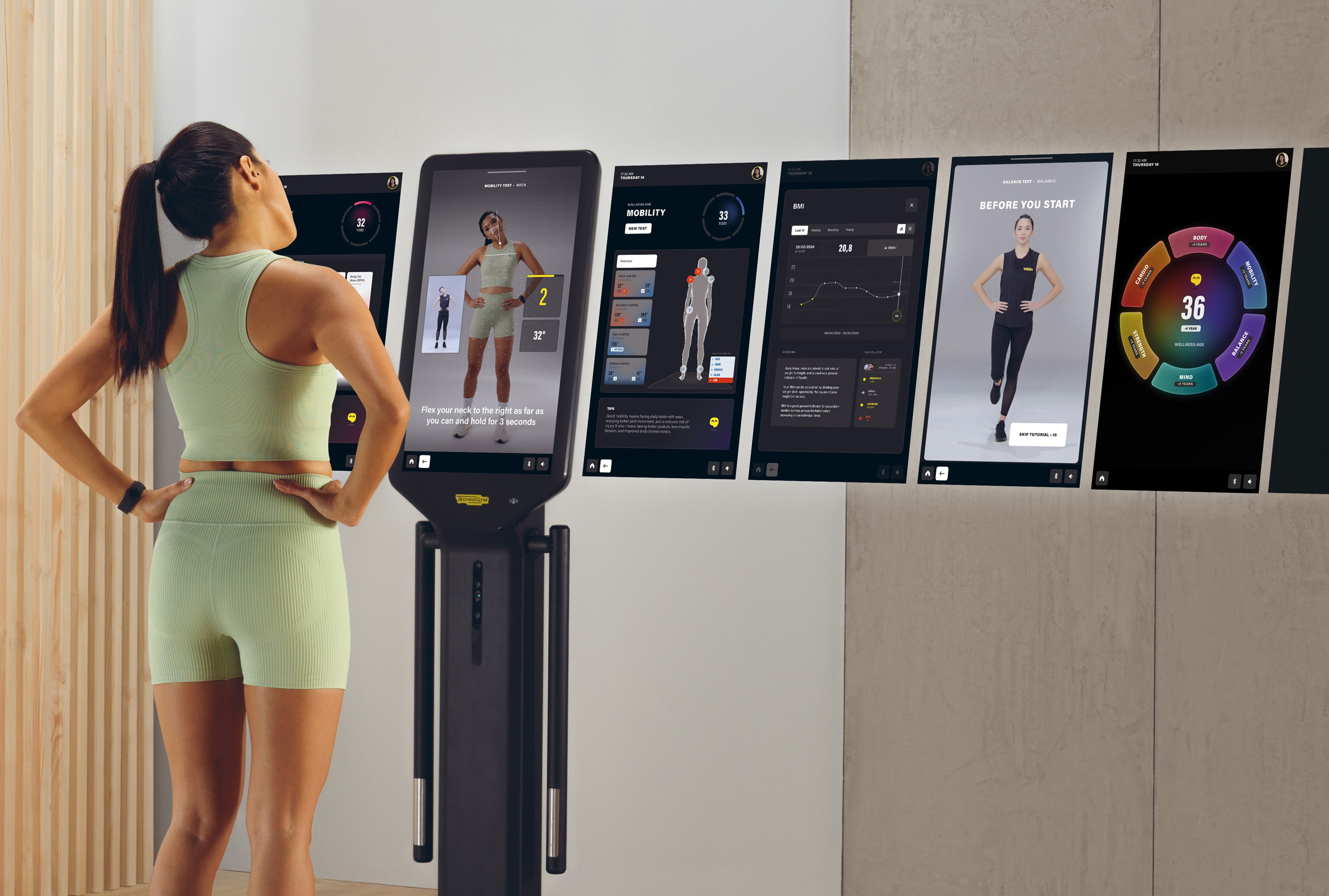

Technogym Checkup scans body composition and checks balance, mobility and cognitive abilities, as well as analysing strength
Technogym Checkup is a complete assessment station / photo: Technogym
Sohail Rashid
Brawn
Rashid is currently working with PureGym / photo: Brawn

Brawn captures data to enhance member fitness. Firstly, demographic data such as age, height, weight and gender is collected to create a comprehensive profile. Then specific lifting data is captured. This includes details about training frequency, the specific movements performed, and the weights lifted during workouts. This information helps to track and analyse progress over time.

The app also allows users to provide insights on who they train with within their small group training sessions, which helps us better understand the dynamics and interactions within our fitness communities. Lastly, the data enables us to specify the personal trainer each member works with, providing information for tracking training routines and ensuring personalised guidance.

Session content is loaded onto our platform before each session, allowing users to review the exercises and techniques in advance. This empowers them to arrive well-prepared and ready to make the most of their training experience. During training sessions, users are asked to log the weights they use for each exercise.

How is the data used to direct workouts?

The data captured – including lifting data and demographic information – is used to design four-week training blocks. These are carefully curated to target specific areas of improvement and enhance overall fitness. Within each block, a suggested order of movements is provided, indicating the most effective sequence for users to follow during their workouts. Additionally, our algorithm is able to gauge performance in terms of reps and loads.

Based on this information, we suggest the progression or regression of exercises for the following weeks. This ensures a gradual and appropriate level of challenge, allowing each member to progress and avoid plateaus.
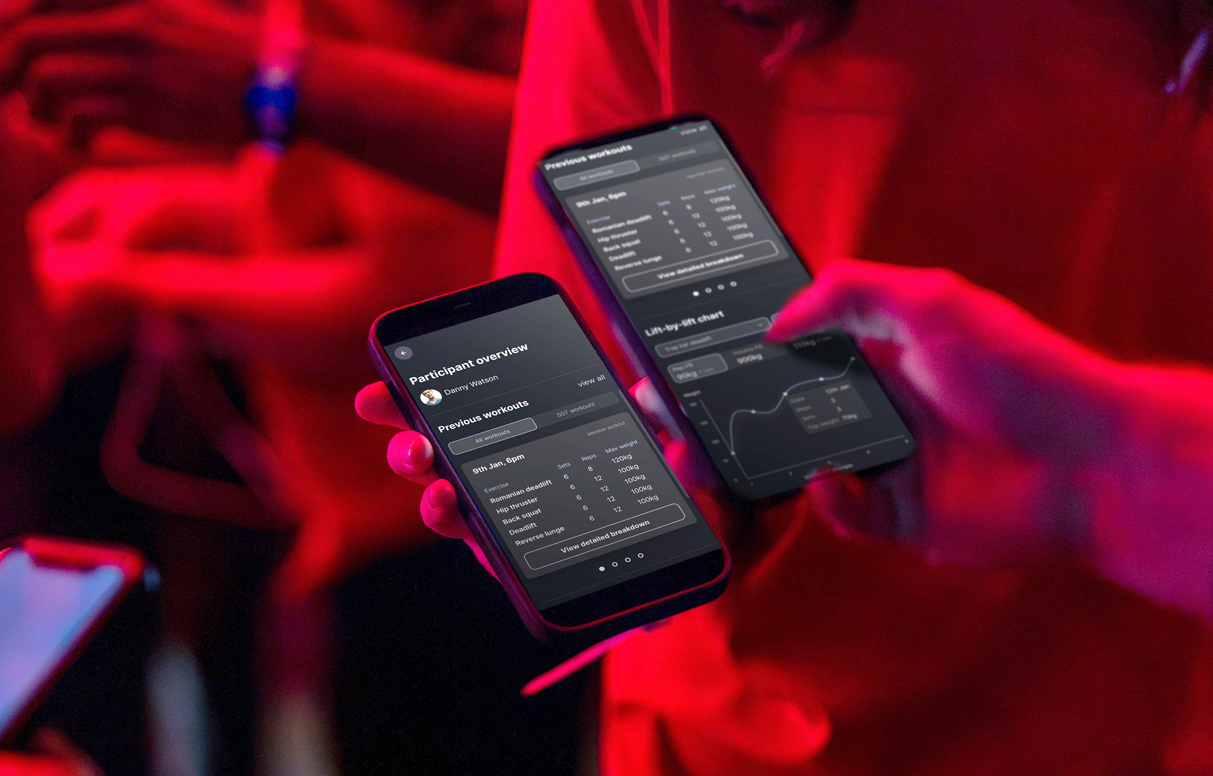
Data is used to determine the progression and regression of exercise
Brawn supports personal trainers in gyms to deliver with data / photo: Brawn
Sean Johnson
Orangetheory Fitness
Sean Johnson is international fitness educator at Orangetheory / photo: Orangetheory Fitness

The Orangetheory workout is heart rate-based interval training. Each participant is set up with a heart rate monitor, projecting their real-time statistics – including calories, average heart rate, percentage of max heart rate, heart rate zone and Splat Points – onto the in-studio screens, while OTConnects link up to every treadmill and rower (OTConnects are tablets attached to the equipment providing personal view of physiology).

Coaches guide users through the five different heart rate zones: resting (grey), easy (blue), challenging but doable (green), uncomfortable (orange) and all out (red), telling you when to push harder and when to pull back for recovery. The goal is to spend 12 to 20 minutes with your heart rate elevated in the orange zone to supercharge your metabolism and improve cardiorespiratory health. The live data displayed in the workouts allows our coaches to ensure our members don't over- or under-train. This is vital in preventing injury and providing a base for consistency for our members.

What's the user experience like?

The user experience is based on convenience, comfort and having access to accurate real-time data that creates a world-class coaching experience. From the first instance a member puts on one of our monitors they’re guided to feel safe, looked after and results-driven. Our OTBeat system will start to learn our members over time, making their journey at Orangetheory more personal as time goes on. After just five sessions it will be able to update a member’s max heart rate after every class. This is done by collating all the data from their session to provide a more accurate max heart rate, in turn adjusting their heart rate zones and ability to achieve a Splat Point.

Can the data be used for health tracking?

Our app stores data from workouts, displays trends, gives ‘all-time’ data, stores physiological data, provides a segmental analysis and also tracks users' benchmark workouts; for example, it will show what their fastest one-mile time has been or their fastest 2,000 metre row time.
The live data displayed in the workouts allows our coaches to ensure our members don't over or under-train
Orangetheory workouts are driven by data gathered by wearables and kit / photo: Orangetheory Fitness
360-degree data
EMS operator Feel Electric has implemented a data-driven journey for clients, as Jon Wright, founder and CEO, explains
Jon Wright has built the Feel Electric EMS offering on data / photo: feel electric / STOTT+ATKINSON

We’ve created a bespoke software platform that helps us offer a data-driven approach to improving fitness and wellbeing, with every step of the customer journey enhanced through carefully collected and utilised data points.

As a client, before you step into a studio, you’ll have filled out a short questionnaire and with that information our personal trainer will greet you with the correct programme for your needs.

Following this, you’ll receive a body composition analysis scan which records 200 data points converted into 45 metrics about your body composition, including weight, skeletal muscle mass, cellular health, body fat percentages, extracellular water ratios, protein and mineral levels and visceral fat levels.

Your trainer will give a detailed walkthrough of each metric and what it means for you and a scan at each session enables continuous progression by identifying plateau points or core areas for improvement as your fitness journey progresses.

Data-led training

Our EMS (Electrical Muscle Stimulation) training utilises the data from the body scan, so trainers know where to increase the electrical currents to get the results clients want. The levels of impulse are logged and tracked so they can be improved on and to demonstrate progression to clients.

All this data further serves to inform our nutritional programme. Our nutritionist accesses the client’s health data to accurately calculate and prescribe meal plans and dietary advice. Through this data analysis, clients can be certain their recommended calories and macronutrient intakes are as accurate as possible. Clients then log their food intake on our website, so our nutritionist can track progress to ensure the best outcomes.

We plan to enhance these offerings with data collection through wearables that can access data such as heart rate, blood pressure and calories burned through exercise outside our studios to provide an all-encompassing fitness offering.

Feel Electric now has three studios in the UK / photo: feel electric
Sign up here to get Fit Tech's weekly ezine and every issue of Fit Tech magazine free on digital.
More features
Editor's letter

Into the fitaverse

Fitness is already among the top three markets in the metaverse, with new technology and partnerships driving real growth and consumer engagement that looks likely to spill over into health clubs, gyms and studios
Fit Tech people

Ali Jawad

Paralympic powerlifter and founder, Accessercise
Users can easily identify which facilities in the UK are accessible to the disabled community
Fit Tech people

Hannes Sjöblad

MD, DSruptive
We want to give our users an implantable tool that allows them to collect their health data at any time and in any setting
Fit Tech people

Jamie Buck

Co-founder, Active in Time
We created a solution called AiT Voice, which turns digital data into a spoken audio timetable that connects to phone systems
Profile

Fahad Alhagbani: reinventing fitness

Alexa can help you book classes, check trainers’ bios and schedules, find out opening times, and a host of other information
Opinion

Building on the blockchain

For small sports teams looking to compete with giants, blockchain can be a secret weapon explains Lars Rensing, CEO of Protokol
Innovation

Bold move

We ended up raising US$7m in venture capital from incredible investors, including Andreessen Horowitz, Khosla Ventures, Primetime Partners, and GingerBread Capital
App analysis

Check your form

Sency’s motion analysis technology is allowing users to check their technique as they exercise. Co-founder and CEO Gal Rotman explains how
Profile

New reality

Sam Cole, CEO of FitXR, talks to Fit Tech about taking digital workouts to the next level, with an immersive, virtual reality fitness club
Profile

Sohail Rashid

The app is free and it’s $40 to participate in one of our virtual events
Ageing

Reverse Ageing

Many apps help people track their health, but Humanity founders Peter Ward and Michael Geer have put the focus on ageing, to help users to see the direct repercussions of their habits. They talk to Steph Eaves
App analysis

Going hybrid

Workout Anytime created its app in partnership with Virtuagym. Workout Anytime’s Greg Maurer and Virtuagym’s Hugo Braam explain the process behind its creation
Research

Physical activity monitors boost activity levels

Researchers at the University of Copenhagen have conducted a meta analysis of all relevant research and found that the body of evidence shows an impact
Editor's letter

Two-way coaching

Content providers have been hugely active in the fit tech market since the start of the pandemic. We expect the industry to move on from delivering these services on a ‘broadcast-only’ basis as two-way coaching becomes the new USP
Fit Tech People

Laurent Petit

Co-founder, Active Giving
The future of sports and fitness are dependent on the climate. Our goal is to positively influence the future of our planet by instilling a global vision of wellbeing and a sense of collective action
Fit Tech People

Adam Zeitsiff

CEO, Intelivideo
We don’t just create the technology and bail – we support our clients’ ongoing hybridisation efforts
Fit Tech People

Anantharaman Pattabiraman

CEO and co-founder, Auro
When you’re undertaking fitness activities, unless you’re on a stationary bike, in most cases it’s not safe or necessary to be tied to a screen, especially a small screen
Fit Tech People

Mike Hansen

Managing partner, Endorphinz
We noticed a big gap in the market – customers needed better insights but also recommendations on what to do, whether that be customer acquisition, content creation, marketing and more
More features