



The Leisure Media Company Ltd | Fit Tech promotion
features

HCM People: Mark Tweedie

Associate, Miova

I’d love to see a national wellness service working hand in glove with NHS primary care

Published in Health Club Management 2024 issue 5

Brimhams Active has been a short-lived but transformational organisation – tell us about its work
I was fortunate to take a new role at Brimhams Active on behalf of Harrogate Borough Council in 2020, to help set up their new local authority-owned trading company, before stepping in as MD to run the company from its launch.

The council wanted to create a commercially-effective service that also delivered remarkable social value through improving the health and wellbeing of its communities.

It was the dream role because of the seamless vision set by the council and the buy-in to a transformational journey from the staff and local partners.

The council created the conditions for success by injecting nearly £50 million to renew facilities on an invest-to-save basis and by setting up an arms-length company in the form of Brimhams Active that could provide the agility and accountability necessary to accelerate change and succeed commercially in a very competitive trading environment.

We embarked on developing and delivering a business growth strategy that had customer retention at its heart, achieved by offering bespoke support to people to meet their health and wellbeing needs, wherever they were on their movement and health journey. We called this our Five Ways to Wellness approach.

What did you learn during your time with Brimhams Active?
That we can be ambitious in extending conventional leisure services more broadly and deeply into the wider domains of health and wellbeing, thereby being a fundamental service when it comes to reducing demand in the primary and social care systems.

Leisure professionals have a strong will to improve lives and the sector’s workforce has the potential to become very highly skilled and work alongside allied health professionals.

With capital investment to upgrade facilities, revenue to develop the workforce and the creation of a high-quality holistic wellness service, revenues and impact can be maximised to produce a sustainable service that can ultimately create significant savings in the wider primary and social care systems.

You’re taking up a new role at Miova. Tell us all about it
I’ve joined the team at Miova, a values-based, progressive consultancy company, founded in 2022, that’s a trailblazer in the design and delivery of systems-based leadership methodology and professional development.

The Miova team works with councils and partner organisations in the UK to reimagine what physical activity strategy, programmes and initiatives could look like in order to be more impactful. They’ve ventured into supporting councils to support what’s now being commonly termed the pivot to active wellbeing.

Several of the team are also trained coaches providing personal development support to leaders via strengths-based coaching.

What lies behind the move?
My role at Brimhams Active had no future, owing to the newly-formed North Yorkshire Council deciding to transfer all its leisure services in-house and close down the organisation.

I’ve got a fairly broad range of experience working in a variety of roles over my 32-year career and this decision provided me with the opportunity to make a positive move and scratch my itch for consultancy work. This will afford me an opportunity to help organisations and leaders be their best selves in what I believe is a very challenging environment, but one that’s full of progressive opportunities.

I’ve known Ken Masser, founder of Miova, since he started as CEO of Rossendale Leisure Trust, and I also know other Miova directors, Cate Atwater and Andy King. They’re wonderful people, incredibly capable and values-driven, so the opportunity to work alongside them and others at this stage in my career is very compelling.

What will your work entail and what will your priorities be?
My skills and experience align to workshop delivery, which I’m starting in Q3 this year as part of the Miova systems-based leadership programme. I’m also a qualified and practicing executive coach, so I’d like to support Miova and its clients in this regard. I’ve got experience of strategy production and leading strategy into action, so I think I can assist with this, specifically around the pivot to active wellbeing.

You’ve said collaboration is key to avoiding agencies competing for the same resources
While competition is seen as beneficial in a free market economy when it comes to driving innovation and efficiency, it doesn’t always work that way in the public sector, where services arguably need to be focussed on addressing inequalities, thereby supporting those communities and people most in need.

Social change expert, Sir Michael Marmot, talks about this as being ‘Proportionate Universalism’ – the resourcing and delivering of universal services at a scale and intensity proportionate to the degree of need.

Poor health through avoidable lifestyle-related disease and health inequalities is worsening and contemporary thinking is that we need a ‘whole systems approach’ to turn the dial in the right direction.

We’ve had decades of competitive tendering in public leisure and fixed-term competitive grant funding and arguably this has not worked when it comes to reducing inactivity and improving health outcomes.

If we want a whole systems approach that’s geared for deep and meaningful values-based collaboration, I would argue we need a funding approach that promotes collaboration, avoids duplication and drives the scaling of what works.

I suggest the solution also needs to include common – and better – accountability involving benchmarking, in relation not only to outputs, but also to the outcomes achieved.

What’s the key to doing more with less?
Adopting a whole system approach to collaboration, whereby shared objectives are agreed by agencies working nationally and resources are pooled and targeted with precision and accountability to achieve agreed objectives. Added to this, the recognition that investing in one part of the system will achieve savings in another, ie, the prevention versus treatment cost-saving argument.

Do those who need to do so, understand the principle of a systems-based approach?
The term systems-based approach can seem complex. But with some research or even better, taking part in a systems-based leadership courses, it’s reasonably straightforward to understandable.

It starts with seeking a deep understanding of the barriers people face to adopting healthier lifestyles and moving more, before moving on to learn how organisations and groups can optimise collaboration to better meet needs – considering all barriers.

Leaders must achieve deep knowledge of the psychological dynamics of leadership and also appreciate the importance of understanding the core values of both self and others in order to collaborate effectively.

How can we measure success?
There’s a social value calculator called the Wellby, which measures the wellbeing experienced by a person over the period of one year (www.HCMmag.com/wellby) to create a score and I see this becoming a key metric in determining the long-term success of place-based collaborations that create the conditions for a healthier society.

Where do you hope we’ll be as a sector in 20 years’ time?
I’d love to see a national wellness service working hand in glove with NHS primary care services, whereby every community has a welcoming front door that people can walk through without fear of judgement to receive the support they require to start and maintain a healthy lifestyle.

Given the number of leisure assets across the UK and the scale of the workforce, it’s reasonable to suggest that with a national strategy and plan, public leisure could become this partner to the NHS.

What are your personal goals?
I’m driven by a purpose to bring the benefits of living a healthy lifestyle to more people. So by working across a wider geographic area with a range of agencies and people, I want to share my learning and ideas and also work with enthusiastic, capable people to effect the change required, so public sector resources can be deployed to achieve more to improve lives.

The United Nations says access to leisure is a basic human right. Do you agree?
For good health and wellbeing, people need a balance in life between work, recovery and activities which provide enrichment, including connecting with family and friends, leisure and culture and lifelong learning.

In this regard I agree with the UN, but I’d go further and suggest that to justify public spending on leisure facilities and services, a better approach is required to ensure the quality of provision is consistent and opportunities are optimised to enable people to achieve measurable improvements to health and wellbeing. For me, this is the essence of the pivot to active wellbeing.
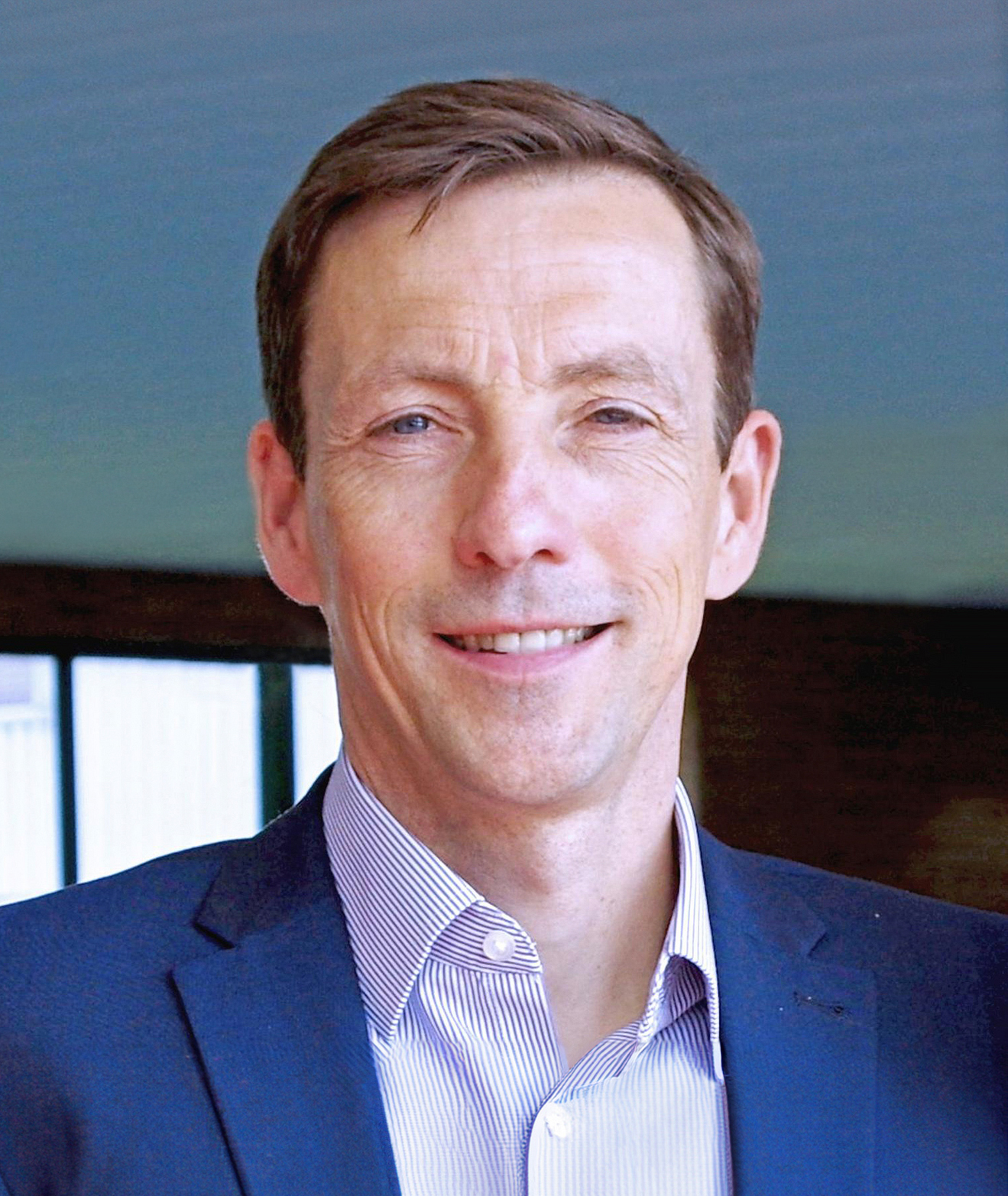
Tweedie is driving change with the team at Miova / photo: Mark tweedie

"Every community needs a welcoming front door people can walk through without fear of judgement to receive the support they require to start and maintain a healthy lifestyle"

Sign up here to get Fit Tech's weekly ezine and every issue of Fit Tech magazine free on digital.
Gallery
More features
Editor's letter

Into the fitaverse

Fitness is already among the top three markets in the metaverse, with new technology and partnerships driving real growth and consumer engagement that looks likely to spill over into health clubs, gyms and studios
Fit Tech people

Ali Jawad

Paralympic powerlifter and founder, Accessercise
Users can easily identify which facilities in the UK are accessible to the disabled community
Fit Tech people

Hannes Sjöblad

MD, DSruptive
We want to give our users an implantable tool that allows them to collect their health data at any time and in any setting
Fit Tech people

Jamie Buck

Co-founder, Active in Time
We created a solution called AiT Voice, which turns digital data into a spoken audio timetable that connects to phone systems
Profile

Fahad Alhagbani: reinventing fitness

The team is young and ambitious, and the awareness of technology is very high. We share trends and out-of-the-box ideas almost every day
Opinion

Building on the blockchain

For small sports teams looking to compete with giants, blockchain can be a secret weapon explains Lars Rensing, CEO of Protokol
Innovation

Bold move

We ended up raising US$7m in venture capital from incredible investors, including Andreessen Horowitz, Khosla Ventures, Primetime Partners, and GingerBread Capital
App analysis

Check your form

Sency’s motion analysis technology is allowing users to check their technique as they exercise. Co-founder and CEO Gal Rotman explains how
Profile

New reality

Sam Cole, CEO of FitXR, talks to Fit Tech about taking digital workouts to the next level, with an immersive, virtual reality fitness club
Profile

Sohail Rashid

35 million people a week participate in strength training. We want Brawn to help this audience achieve their goals
Ageing

Reverse Ageing

Many apps help people track their health, but Humanity founders Peter Ward and Michael Geer have put the focus on ageing, to help users to see the direct repercussions of their habits. They talk to Steph Eaves
App analysis

Going hybrid

Workout Anytime created its app in partnership with Virtuagym. Workout Anytime’s Greg Maurer and Virtuagym’s Hugo Braam explain the process behind its creation
Research

Physical activity monitors boost activity levels

Researchers at the University of Copenhagen have conducted a meta analysis of all relevant research and found that the body of evidence shows an impact
Editor's letter

Two-way coaching

Content providers have been hugely active in the fit tech market since the start of the pandemic. We expect the industry to move on from delivering these services on a ‘broadcast-only’ basis as two-way coaching becomes the new USP
Fit Tech People

Laurent Petit

Co-founder, Active Giving
The future of sports and fitness are dependent on the climate. Our goal is to positively influence the future of our planet by instilling a global vision of wellbeing and a sense of collective action
Fit Tech People

Adam Zeitsiff

CEO, Intelivideo
We don’t just create the technology and bail – we support our clients’ ongoing hybridisation efforts
Fit Tech People

Anantharaman Pattabiraman

CEO and co-founder, Auro
When you’re undertaking fitness activities, unless you’re on a stationary bike, in most cases it’s not safe or necessary to be tied to a screen, especially a small screen
Fit Tech People

Mike Hansen

Managing partner, Endorphinz
We noticed a big gap in the market – customers needed better insights but also recommendations on what to do, whether that be customer acquisition, content creation, marketing and more
More features
FIBO pursues the vision of a strong and healthy society and as a global network ...
ABC Fitness is the #1 software provider for fitness businesses of any size, all around ...
22-23 Sep 2026
Four Seasons Hotel Bangkok at Chao Phraya River, Bangkok , Thailand
FIBO pursues the vision of a strong and healthy society and as a global network ...
ABC Fitness is the #1 software provider for fitness businesses of any size, all around ...
Get Fit Tech
Sign up for the free Fit Tech ezine and breaking news alerts
Sign up
22-23 Sep 2026
Four Seasons Hotel Bangkok at Chao Phraya River, Bangkok , Thailand

latest fit tech news

PureGym is encouraging people to step away from their screens and go for a walk, in a new initiative timed ...
news • 29 May 2026
Active people app, Strava, has overhauled its strength training experience, allowing gym-goers to automatically log and share their lifts from ...
news • 27 May 2026

Fitness First UK is embracing digital wellness technology by installing Kip’s tap-to-activate phone controls across its UK estate. Kip tags ...
news • 22 May 2026
The world’s first awareness ring has been launched. Designed to promote presence, focus and calm via gentle haptic vibrations, the ...
news • 13 May 2026
Center Parcs’ Aqua Sana Forest Spa, Woburn Forest, UK, has transformed an unused space into a touchless wellness area called ...
news • 12 May 2026
Gharieni Group has launched a new company, Cobotics Innovations, to create automated wellness experiences. The first solution is a robotic ...
product innovation • 07 May 2026

US-based robotics wellness company Aescape Inc has entered insolvency proceedings following the sale of substantially all of its ...

news • 06 May 2026
Fitness platform, Zing Coach, has teamed up with Les Mills, in a partnership that gives its users access to group ...
news • 23 Apr 2026

TMActive is launching a new Active Wellbeing Studio next month in Tonbridge, UK, specifically aimed at people who face higher ...
news • 13 Apr 2026

Indian billionaire, Deepinder Goyal, is working on a device called Temple that aims to track blood flow to the brain ...
news • 10 Apr 2026
More fit tech news
features

HCM People: Mark Tweedie

Associate, Miova

I’d love to see a national wellness service working hand in glove with NHS primary care

Published in Health Club Management 2024 issue 5

Brimhams Active has been a short-lived but transformational organisation – tell us about its work
I was fortunate to take a new role at Brimhams Active on behalf of Harrogate Borough Council in 2020, to help set up their new local authority-owned trading company, before stepping in as MD to run the company from its launch.

The council wanted to create a commercially-effective service that also delivered remarkable social value through improving the health and wellbeing of its communities.

It was the dream role because of the seamless vision set by the council and the buy-in to a transformational journey from the staff and local partners.

The council created the conditions for success by injecting nearly £50 million to renew facilities on an invest-to-save basis and by setting up an arms-length company in the form of Brimhams Active that could provide the agility and accountability necessary to accelerate change and succeed commercially in a very competitive trading environment.

We embarked on developing and delivering a business growth strategy that had customer retention at its heart, achieved by offering bespoke support to people to meet their health and wellbeing needs, wherever they were on their movement and health journey. We called this our Five Ways to Wellness approach.

What did you learn during your time with Brimhams Active?
That we can be ambitious in extending conventional leisure services more broadly and deeply into the wider domains of health and wellbeing, thereby being a fundamental service when it comes to reducing demand in the primary and social care systems.

Leisure professionals have a strong will to improve lives and the sector’s workforce has the potential to become very highly skilled and work alongside allied health professionals.

With capital investment to upgrade facilities, revenue to develop the workforce and the creation of a high-quality holistic wellness service, revenues and impact can be maximised to produce a sustainable service that can ultimately create significant savings in the wider primary and social care systems.

You’re taking up a new role at Miova. Tell us all about it
I’ve joined the team at Miova, a values-based, progressive consultancy company, founded in 2022, that’s a trailblazer in the design and delivery of systems-based leadership methodology and professional development.

The Miova team works with councils and partner organisations in the UK to reimagine what physical activity strategy, programmes and initiatives could look like in order to be more impactful. They’ve ventured into supporting councils to support what’s now being commonly termed the pivot to active wellbeing.

Several of the team are also trained coaches providing personal development support to leaders via strengths-based coaching.

What lies behind the move?
My role at Brimhams Active had no future, owing to the newly-formed North Yorkshire Council deciding to transfer all its leisure services in-house and close down the organisation.

I’ve got a fairly broad range of experience working in a variety of roles over my 32-year career and this decision provided me with the opportunity to make a positive move and scratch my itch for consultancy work. This will afford me an opportunity to help organisations and leaders be their best selves in what I believe is a very challenging environment, but one that’s full of progressive opportunities.

I’ve known Ken Masser, founder of Miova, since he started as CEO of Rossendale Leisure Trust, and I also know other Miova directors, Cate Atwater and Andy King. They’re wonderful people, incredibly capable and values-driven, so the opportunity to work alongside them and others at this stage in my career is very compelling.

What will your work entail and what will your priorities be?
My skills and experience align to workshop delivery, which I’m starting in Q3 this year as part of the Miova systems-based leadership programme. I’m also a qualified and practicing executive coach, so I’d like to support Miova and its clients in this regard. I’ve got experience of strategy production and leading strategy into action, so I think I can assist with this, specifically around the pivot to active wellbeing.

You’ve said collaboration is key to avoiding agencies competing for the same resources
While competition is seen as beneficial in a free market economy when it comes to driving innovation and efficiency, it doesn’t always work that way in the public sector, where services arguably need to be focussed on addressing inequalities, thereby supporting those communities and people most in need.

Social change expert, Sir Michael Marmot, talks about this as being ‘Proportionate Universalism’ – the resourcing and delivering of universal services at a scale and intensity proportionate to the degree of need.

Poor health through avoidable lifestyle-related disease and health inequalities is worsening and contemporary thinking is that we need a ‘whole systems approach’ to turn the dial in the right direction.

We’ve had decades of competitive tendering in public leisure and fixed-term competitive grant funding and arguably this has not worked when it comes to reducing inactivity and improving health outcomes.

If we want a whole systems approach that’s geared for deep and meaningful values-based collaboration, I would argue we need a funding approach that promotes collaboration, avoids duplication and drives the scaling of what works.

I suggest the solution also needs to include common – and better – accountability involving benchmarking, in relation not only to outputs, but also to the outcomes achieved.

What’s the key to doing more with less?
Adopting a whole system approach to collaboration, whereby shared objectives are agreed by agencies working nationally and resources are pooled and targeted with precision and accountability to achieve agreed objectives. Added to this, the recognition that investing in one part of the system will achieve savings in another, ie, the prevention versus treatment cost-saving argument.

Do those who need to do so, understand the principle of a systems-based approach?
The term systems-based approach can seem complex. But with some research or even better, taking part in a systems-based leadership courses, it’s reasonably straightforward to understandable.

It starts with seeking a deep understanding of the barriers people face to adopting healthier lifestyles and moving more, before moving on to learn how organisations and groups can optimise collaboration to better meet needs – considering all barriers.

Leaders must achieve deep knowledge of the psychological dynamics of leadership and also appreciate the importance of understanding the core values of both self and others in order to collaborate effectively.

How can we measure success?
There’s a social value calculator called the Wellby, which measures the wellbeing experienced by a person over the period of one year (www.HCMmag.com/wellby) to create a score and I see this becoming a key metric in determining the long-term success of place-based collaborations that create the conditions for a healthier society.

Where do you hope we’ll be as a sector in 20 years’ time?
I’d love to see a national wellness service working hand in glove with NHS primary care services, whereby every community has a welcoming front door that people can walk through without fear of judgement to receive the support they require to start and maintain a healthy lifestyle.

Given the number of leisure assets across the UK and the scale of the workforce, it’s reasonable to suggest that with a national strategy and plan, public leisure could become this partner to the NHS.

What are your personal goals?
I’m driven by a purpose to bring the benefits of living a healthy lifestyle to more people. So by working across a wider geographic area with a range of agencies and people, I want to share my learning and ideas and also work with enthusiastic, capable people to effect the change required, so public sector resources can be deployed to achieve more to improve lives.

The United Nations says access to leisure is a basic human right. Do you agree?
For good health and wellbeing, people need a balance in life between work, recovery and activities which provide enrichment, including connecting with family and friends, leisure and culture and lifelong learning.

In this regard I agree with the UN, but I’d go further and suggest that to justify public spending on leisure facilities and services, a better approach is required to ensure the quality of provision is consistent and opportunities are optimised to enable people to achieve measurable improvements to health and wellbeing. For me, this is the essence of the pivot to active wellbeing.
Tweedie is driving change with the team at Miova / photo: Mark tweedie

"Every community needs a welcoming front door people can walk through without fear of judgement to receive the support they require to start and maintain a healthy lifestyle"

Sign up here to get Fit Tech's weekly ezine and every issue of Fit Tech magazine free on digital.
Gallery
More features
Editor's letter

Into the fitaverse

Fitness is already among the top three markets in the metaverse, with new technology and partnerships driving real growth and consumer engagement that looks likely to spill over into health clubs, gyms and studios
Fit Tech people

Ali Jawad

Paralympic powerlifter and founder, Accessercise
Users can easily identify which facilities in the UK are accessible to the disabled community
Fit Tech people

Hannes Sjöblad

MD, DSruptive
We want to give our users an implantable tool that allows them to collect their health data at any time and in any setting
Fit Tech people

Jamie Buck

Co-founder, Active in Time
We created a solution called AiT Voice, which turns digital data into a spoken audio timetable that connects to phone systems
Profile

Fahad Alhagbani: reinventing fitness

The team is young and ambitious, and the awareness of technology is very high. We share trends and out-of-the-box ideas almost every day
Opinion

Building on the blockchain

For small sports teams looking to compete with giants, blockchain can be a secret weapon explains Lars Rensing, CEO of Protokol
Innovation

Bold move

We ended up raising US$7m in venture capital from incredible investors, including Andreessen Horowitz, Khosla Ventures, Primetime Partners, and GingerBread Capital
App analysis

Check your form

Sency’s motion analysis technology is allowing users to check their technique as they exercise. Co-founder and CEO Gal Rotman explains how
Profile

New reality

Sam Cole, CEO of FitXR, talks to Fit Tech about taking digital workouts to the next level, with an immersive, virtual reality fitness club
Profile

Sohail Rashid

35 million people a week participate in strength training. We want Brawn to help this audience achieve their goals
Ageing

Reverse Ageing

Many apps help people track their health, but Humanity founders Peter Ward and Michael Geer have put the focus on ageing, to help users to see the direct repercussions of their habits. They talk to Steph Eaves
App analysis

Going hybrid

Workout Anytime created its app in partnership with Virtuagym. Workout Anytime’s Greg Maurer and Virtuagym’s Hugo Braam explain the process behind its creation
Research

Physical activity monitors boost activity levels

Researchers at the University of Copenhagen have conducted a meta analysis of all relevant research and found that the body of evidence shows an impact
Editor's letter

Two-way coaching

Content providers have been hugely active in the fit tech market since the start of the pandemic. We expect the industry to move on from delivering these services on a ‘broadcast-only’ basis as two-way coaching becomes the new USP
Fit Tech People

Laurent Petit

Co-founder, Active Giving
The future of sports and fitness are dependent on the climate. Our goal is to positively influence the future of our planet by instilling a global vision of wellbeing and a sense of collective action
Fit Tech People

Adam Zeitsiff

CEO, Intelivideo
We don’t just create the technology and bail – we support our clients’ ongoing hybridisation efforts
Fit Tech People

Anantharaman Pattabiraman

CEO and co-founder, Auro
When you’re undertaking fitness activities, unless you’re on a stationary bike, in most cases it’s not safe or necessary to be tied to a screen, especially a small screen
Fit Tech People

Mike Hansen

Managing partner, Endorphinz
We noticed a big gap in the market – customers needed better insights but also recommendations on what to do, whether that be customer acquisition, content creation, marketing and more
More features