
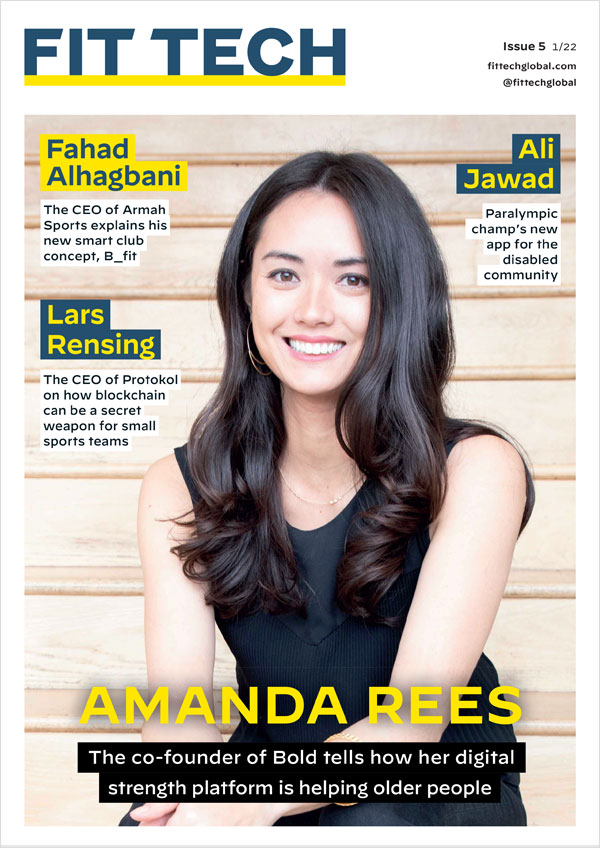





The Leisure Media Company Ltd | Fit Tech promotion
features

Coronavirus: In this together

As clubs were ordered to close, one logical response was to freeze memberships, despite the financial difficulties it would cause. However, many operators found their community was willing to support them, as Kath Hudson reports

Published in Health Club Management 2020 issue 4

Prime Minister Boris Johnson’s announcement on that all health and fitness operators – along with much of normal life - should shut up shop, with immediate effect, caused many operators to implement an immediate membership freeze.

It made sense: if people couldn’t go to the clubs they shouldn’t have to pay and a membership freeze was better than mass cancellations. Especially as lots of people are facing uncertain times financially and will be assessing their outgoings.

“We took the decision to freeze for all, as it was the fair and the right thing to do,” says Holly Ainger, director of marketing and digital at Nuffield Health. “Giving online classes is what we should be doing, to say thank you for not cancelling.”

However, Nuffield Health is in the unusual position of being able to redeploy its staff to its healthcare division, which was renting hospitals to the NHS. Most other operators – who run with tighter margins and without another lucrative business to act as a safety net – needed to call on their community.

Those who did were amazed and humbled by the response of their tribes, who were keen to ensure the club is still there when the crisis is over and that the staff and freelancers will be supported through the crisis.

Many operators, for example SLL, initially froze memberships, but a week later went back to members and asked them to consider an optional delayed membership freeze. This gave members the option of paying during the closure and having the equivalent time for free once the clubs were re-opened, as well as one month extra as a thank you.

Torfaen Leisure Trust, in Wales, was forward thinking enough to have pandemic cover in place, which mitigated a financial crisis and protected the staff. However, according to CEO, Angharad Collins, so many members got in touch saying they would like to continue paying their memberships to support the staff, that the trust set up a Just Giving page, which will support local sports clubs and groups.

We talk to some operators about their experience of mobilising their tribe to keep some income rolling in through the lockdown. If you haven’t already done it, it’s not too late.


Hans Muench
Fitness industry consultant, author, speaker
Although many clubs have chosen to freeze memberships in order to show good faith, we should not assume everyone will automatically want to cancel their membership.

If a club has done a good job serving its clients, a high proportion are likely to be sympathetic to the situation in the short-term and, if they’re still receiving their own wages, will likely want to support the club and the staff, especially if the club is offering other forms of engagement.

In these difficult times, I’ve been amazed at how quickly operators have adopted digital technology, which can replace the in-club experiences and provide incentives for members who offer to continue paying. For example, free access to online tools or trainers’ online supervision, or group PT. Online portals such as Zoom, VAHA and Mirror are being used to enhance other activities, including meditation, mental training or nutrition counselling. While some operators are offering this content for free, some boutiques are charging for access to their rock star instructors and live PT.
Differentiate communication with members – start with those who refer the most prospects
Furthermore, if a club provides additional services to its membership or community, such as shopping for the elderly, or loaning equipment, there are additional justifications to keeping the payments running.

During this time, communicate multiple times and via multiple channels, making sure it’s proactive and positive. Differentiating communication with members is also recommended: start with your regular users, those who refer the most prospects and are the most active on social media (analytics can help you with this) and particularly the elderly in your membership base, who may be very grateful for the offer of help.
Stuart Martin
Managing director, Active Nation
we adopted a blanket freeze on subscriptions, but also sent out a letter to all of our supporters emphasising how the donations they provide are the lifeline of our charity, allowing us to pay our 800 strong team and providing public benefit to communities nationwide.

We asked those who could afford it to continue paying their subscription and gave another option of donating 50 per cent.

We told our members that we know it’s a big ask to donate to the charity while the venues are closed, but explained this vital support would allow us to continue providing digital home workouts with their favourite instructors, run the Active Nation app which provides more than 100 free workouts, as well as supporting our teams to still be there for them when they return.
Our supporters want to see us come out of the other side and continue our great work
The response was both surprising and heartening. To date we’ve received a 30 per cent return rate, with around 30 per cent continuing to make a donation and they continue to come in.

It has been enough to allow me to give my team full pay while waiting for the government schemes to kick in and I think shows that we have real engagement with our supporters. We’re still paying our freelancers to stream live classes. They’re not getting as much work as they usually would, but at least we can still give them something.

Our supporters want to see us come out of the other side and continue our great work. In turn, we gave back to the community by donating £20,000 of food and beverage stock to the NHS and food banks.
Gemma Bonnett-Kolakowska
Managing director, Bonska Consultancy
From a marketing point of view, digital strategy is absolutely key. Organisations and companies should look at how they communicate with members who are not able to come into the club.

Empowering them through utilising wearable tech to monitor their progress will ensure that a proportion do not simply cancel their membership. The product that’s offered should be more than just the gym and the creation of a virtual community will become very important to customers.
The creation of virtual communities has become very important to customers
There are many ways you can develop virtual content using trainers and this should be investigated. This will, in turn, help to raise the profile of the brand outside your catchment area; important for recruitment and retention of good employees, as well as meaning you will be seen as a thought leader.

You need to develop the digital community and set a clear strategy of action if you haven’t already done so.

Long term this will also support revenue flow and help to differentiate those facilities that truly believe in community and accessibility. It will also open the door to those who may not be able to get to a facility on a regular basis.
Duncan Jefford
Director, Everyone Active
When the closure was announced we got to work putting together a suite of online workout solutions, so we could keep engaging with our community and support their physical and mental wellbeing during this crisis.

We were very proud of the online solution we put together with Les Mills on Demand and Gympass, which is worth £45 a month.
The groundswell of support on social media has been encouraging and heartening
We then went back to our membership with three options: to have their membership credited for the amount of time that we are closed; to sign up to the online membership for £9.99 a month; or to continue paying their full membership, and Everyone Active will donate half to Prince William’s charity, National Emergencies Trust, which will help those impacted by the coronavirus.

We had a good response, with more than 7,000 members coming back to us within the first few days and we anticipate this will grow in May as the lockdown continues. The groundswell of support on social media has been encouraging and heartening, showing how much our members value our service.
Sign up here to get Fit Tech's weekly ezine and every issue of Fit Tech magazine free on digital.
More features
Editor's letter

Into the fitaverse

Fitness is already among the top three markets in the metaverse, with new technology and partnerships driving real growth and consumer engagement that looks likely to spill over into health clubs, gyms and studios
Fit Tech people

Ali Jawad

Paralympic powerlifter and founder, Accessercise
Users can easily identify which facilities in the UK are accessible to the disabled community
Fit Tech people

Hannes Sjöblad

MD, DSruptive
We want to give our users an implantable tool that allows them to collect their health data at any time and in any setting
Fit Tech people

Jamie Buck

Co-founder, Active in Time
We created a solution called AiT Voice, which turns digital data into a spoken audio timetable that connects to phone systems
Profile

Fahad Alhagbani: reinventing fitness

Let’s live in the future to improve today
Opinion

Building on the blockchain

For small sports teams looking to compete with giants, blockchain can be a secret weapon explains Lars Rensing, CEO of Protokol
Innovation

Bold move

Our results showed a greater than 60 per cent reduction in falls for individuals who actively participated in Bold’s programme
App analysis

Check your form

Sency’s motion analysis technology is allowing users to check their technique as they exercise. Co-founder and CEO Gal Rotman explains how
Profile

New reality

Sam Cole, CEO of FitXR, talks to Fit Tech about taking digital workouts to the next level, with an immersive, virtual reality fitness club
Profile

Sohail Rashid

My vision was to create a platform that could improve the sport for lifters at all levels and attract more people, similar to how Strava, Peloton and Zwift have in other sports
Ageing

Reverse Ageing

Many apps help people track their health, but Humanity founders Peter Ward and Michael Geer have put the focus on ageing, to help users to see the direct repercussions of their habits. They talk to Steph Eaves
App analysis

Going hybrid

Workout Anytime created its app in partnership with Virtuagym. Workout Anytime’s Greg Maurer and Virtuagym’s Hugo Braam explain the process behind its creation
Research

Physical activity monitors boost activity levels

Researchers at the University of Copenhagen have conducted a meta analysis of all relevant research and found that the body of evidence shows an impact
Editor's letter

Two-way coaching

Content providers have been hugely active in the fit tech market since the start of the pandemic. We expect the industry to move on from delivering these services on a ‘broadcast-only’ basis as two-way coaching becomes the new USP
Fit Tech People

Laurent Petit

Co-founder, Active Giving
The future of sports and fitness are dependent on the climate. Our goal is to positively influence the future of our planet by instilling a global vision of wellbeing and a sense of collective action
Fit Tech People

Adam Zeitsiff

CEO, Intelivideo
We don’t just create the technology and bail – we support our clients’ ongoing hybridisation efforts
Fit Tech People

Anantharaman Pattabiraman

CEO and co-founder, Auro
When you’re undertaking fitness activities, unless you’re on a stationary bike, in most cases it’s not safe or necessary to be tied to a screen, especially a small screen
Fit Tech People

Mike Hansen

Managing partner, Endorphinz
We noticed a big gap in the market – customers needed better insights but also recommendations on what to do, whether that be customer acquisition, content creation, marketing and more
More features
EGYM partners with companies to improve employee health by providing access to fitness and health ...
The UK's largest annual trade event dedicated to physical activity, health, and performance...
22-23 Sep 2026
Four Seasons Hotel Bangkok at Chao Phraya River, Bangkok , Thailand
EGYM partners with companies to improve employee health by providing access to fitness and health ...
The UK's largest annual trade event dedicated to physical activity, health, and performance...
Get Fit Tech
Sign up for the free Fit Tech ezine and breaking news alerts
Sign up
22-23 Sep 2026
Four Seasons Hotel Bangkok at Chao Phraya River, Bangkok , Thailand

latest fit tech news

PureGym is encouraging people to step away from their screens and go for a walk, in a new initiative timed ...
news • 29 May 2026
Active people app, Strava, has overhauled its strength training experience, allowing gym-goers to automatically log and share their lifts from ...
news • 27 May 2026

Fitness First UK is embracing digital wellness technology by installing Kip’s tap-to-activate phone controls across its UK estate. Kip tags ...
news • 22 May 2026
The world’s first awareness ring has been launched. Designed to promote presence, focus and calm via gentle haptic vibrations, the ...
news • 13 May 2026
Center Parcs’ Aqua Sana Forest Spa, Woburn Forest, UK, has transformed an unused space into a touchless wellness area called ...
news • 12 May 2026
Gharieni Group has launched a new company, Cobotics Innovations, to create automated wellness experiences. The first solution is a robotic ...
product innovation • 07 May 2026

US-based robotics wellness company Aescape Inc has entered insolvency proceedings following the sale of substantially all of its ...

news • 06 May 2026
Fitness platform, Zing Coach, has teamed up with Les Mills, in a partnership that gives its users access to group ...
news • 23 Apr 2026

TMActive is launching a new Active Wellbeing Studio next month in Tonbridge, UK, specifically aimed at people who face higher ...
news • 13 Apr 2026

Indian billionaire, Deepinder Goyal, is working on a device called Temple that aims to track blood flow to the brain ...
news • 10 Apr 2026
More fit tech news
features

Coronavirus: In this together

As clubs were ordered to close, one logical response was to freeze memberships, despite the financial difficulties it would cause. However, many operators found their community was willing to support them, as Kath Hudson reports

Published in Health Club Management 2020 issue 4

Prime Minister Boris Johnson’s announcement on that all health and fitness operators – along with much of normal life - should shut up shop, with immediate effect, caused many operators to implement an immediate membership freeze.

It made sense: if people couldn’t go to the clubs they shouldn’t have to pay and a membership freeze was better than mass cancellations. Especially as lots of people are facing uncertain times financially and will be assessing their outgoings.

“We took the decision to freeze for all, as it was the fair and the right thing to do,” says Holly Ainger, director of marketing and digital at Nuffield Health. “Giving online classes is what we should be doing, to say thank you for not cancelling.”

However, Nuffield Health is in the unusual position of being able to redeploy its staff to its healthcare division, which was renting hospitals to the NHS. Most other operators – who run with tighter margins and without another lucrative business to act as a safety net – needed to call on their community.

Those who did were amazed and humbled by the response of their tribes, who were keen to ensure the club is still there when the crisis is over and that the staff and freelancers will be supported through the crisis.

Many operators, for example SLL, initially froze memberships, but a week later went back to members and asked them to consider an optional delayed membership freeze. This gave members the option of paying during the closure and having the equivalent time for free once the clubs were re-opened, as well as one month extra as a thank you.

Torfaen Leisure Trust, in Wales, was forward thinking enough to have pandemic cover in place, which mitigated a financial crisis and protected the staff. However, according to CEO, Angharad Collins, so many members got in touch saying they would like to continue paying their memberships to support the staff, that the trust set up a Just Giving page, which will support local sports clubs and groups.

We talk to some operators about their experience of mobilising their tribe to keep some income rolling in through the lockdown. If you haven’t already done it, it’s not too late.

Hans Muench
Fitness industry consultant, author, speaker
Although many clubs have chosen to freeze memberships in order to show good faith, we should not assume everyone will automatically want to cancel their membership.

If a club has done a good job serving its clients, a high proportion are likely to be sympathetic to the situation in the short-term and, if they’re still receiving their own wages, will likely want to support the club and the staff, especially if the club is offering other forms of engagement.

In these difficult times, I’ve been amazed at how quickly operators have adopted digital technology, which can replace the in-club experiences and provide incentives for members who offer to continue paying. For example, free access to online tools or trainers’ online supervision, or group PT. Online portals such as Zoom, VAHA and Mirror are being used to enhance other activities, including meditation, mental training or nutrition counselling. While some operators are offering this content for free, some boutiques are charging for access to their rock star instructors and live PT.
Differentiate communication with members – start with those who refer the most prospects
Furthermore, if a club provides additional services to its membership or community, such as shopping for the elderly, or loaning equipment, there are additional justifications to keeping the payments running.

During this time, communicate multiple times and via multiple channels, making sure it’s proactive and positive. Differentiating communication with members is also recommended: start with your regular users, those who refer the most prospects and are the most active on social media (analytics can help you with this) and particularly the elderly in your membership base, who may be very grateful for the offer of help.
Stuart Martin
Managing director, Active Nation
we adopted a blanket freeze on subscriptions, but also sent out a letter to all of our supporters emphasising how the donations they provide are the lifeline of our charity, allowing us to pay our 800 strong team and providing public benefit to communities nationwide.

We asked those who could afford it to continue paying their subscription and gave another option of donating 50 per cent.

We told our members that we know it’s a big ask to donate to the charity while the venues are closed, but explained this vital support would allow us to continue providing digital home workouts with their favourite instructors, run the Active Nation app which provides more than 100 free workouts, as well as supporting our teams to still be there for them when they return.
Our supporters want to see us come out of the other side and continue our great work
The response was both surprising and heartening. To date we’ve received a 30 per cent return rate, with around 30 per cent continuing to make a donation and they continue to come in.

It has been enough to allow me to give my team full pay while waiting for the government schemes to kick in and I think shows that we have real engagement with our supporters. We’re still paying our freelancers to stream live classes. They’re not getting as much work as they usually would, but at least we can still give them something.

Our supporters want to see us come out of the other side and continue our great work. In turn, we gave back to the community by donating £20,000 of food and beverage stock to the NHS and food banks.
Gemma Bonnett-Kolakowska
Managing director, Bonska Consultancy
From a marketing point of view, digital strategy is absolutely key. Organisations and companies should look at how they communicate with members who are not able to come into the club.

Empowering them through utilising wearable tech to monitor their progress will ensure that a proportion do not simply cancel their membership. The product that’s offered should be more than just the gym and the creation of a virtual community will become very important to customers.
The creation of virtual communities has become very important to customers
There are many ways you can develop virtual content using trainers and this should be investigated. This will, in turn, help to raise the profile of the brand outside your catchment area; important for recruitment and retention of good employees, as well as meaning you will be seen as a thought leader.

You need to develop the digital community and set a clear strategy of action if you haven’t already done so.

Long term this will also support revenue flow and help to differentiate those facilities that truly believe in community and accessibility. It will also open the door to those who may not be able to get to a facility on a regular basis.
Duncan Jefford
Director, Everyone Active
When the closure was announced we got to work putting together a suite of online workout solutions, so we could keep engaging with our community and support their physical and mental wellbeing during this crisis.

We were very proud of the online solution we put together with Les Mills on Demand and Gympass, which is worth £45 a month.
The groundswell of support on social media has been encouraging and heartening
We then went back to our membership with three options: to have their membership credited for the amount of time that we are closed; to sign up to the online membership for £9.99 a month; or to continue paying their full membership, and Everyone Active will donate half to Prince William’s charity, National Emergencies Trust, which will help those impacted by the coronavirus.

We had a good response, with more than 7,000 members coming back to us within the first few days and we anticipate this will grow in May as the lockdown continues. The groundswell of support on social media has been encouraging and heartening, showing how much our members value our service.
Sign up here to get Fit Tech's weekly ezine and every issue of Fit Tech magazine free on digital.
More features
Editor's letter

Into the fitaverse

Fitness is already among the top three markets in the metaverse, with new technology and partnerships driving real growth and consumer engagement that looks likely to spill over into health clubs, gyms and studios
Fit Tech people

Ali Jawad

Paralympic powerlifter and founder, Accessercise
Users can easily identify which facilities in the UK are accessible to the disabled community
Fit Tech people

Hannes Sjöblad

MD, DSruptive
We want to give our users an implantable tool that allows them to collect their health data at any time and in any setting
Fit Tech people

Jamie Buck

Co-founder, Active in Time
We created a solution called AiT Voice, which turns digital data into a spoken audio timetable that connects to phone systems
Profile

Fahad Alhagbani: reinventing fitness

Let’s live in the future to improve today
Opinion

Building on the blockchain

For small sports teams looking to compete with giants, blockchain can be a secret weapon explains Lars Rensing, CEO of Protokol
Innovation

Bold move

Our results showed a greater than 60 per cent reduction in falls for individuals who actively participated in Bold’s programme
App analysis

Check your form

Sency’s motion analysis technology is allowing users to check their technique as they exercise. Co-founder and CEO Gal Rotman explains how
Profile

New reality

Sam Cole, CEO of FitXR, talks to Fit Tech about taking digital workouts to the next level, with an immersive, virtual reality fitness club
Profile

Sohail Rashid

My vision was to create a platform that could improve the sport for lifters at all levels and attract more people, similar to how Strava, Peloton and Zwift have in other sports
Ageing

Reverse Ageing

Many apps help people track their health, but Humanity founders Peter Ward and Michael Geer have put the focus on ageing, to help users to see the direct repercussions of their habits. They talk to Steph Eaves
App analysis

Going hybrid

Workout Anytime created its app in partnership with Virtuagym. Workout Anytime’s Greg Maurer and Virtuagym’s Hugo Braam explain the process behind its creation
Research

Physical activity monitors boost activity levels

Researchers at the University of Copenhagen have conducted a meta analysis of all relevant research and found that the body of evidence shows an impact
Editor's letter

Two-way coaching

Content providers have been hugely active in the fit tech market since the start of the pandemic. We expect the industry to move on from delivering these services on a ‘broadcast-only’ basis as two-way coaching becomes the new USP
Fit Tech People

Laurent Petit

Co-founder, Active Giving
The future of sports and fitness are dependent on the climate. Our goal is to positively influence the future of our planet by instilling a global vision of wellbeing and a sense of collective action

Fit Tech People

Adam Zeitsiff

CEO, Intelivideo
We don’t just create the technology and bail – we support our clients’ ongoing hybridisation efforts
Fit Tech People

Anantharaman Pattabiraman

CEO and co-founder, Auro
When you’re undertaking fitness activities, unless you’re on a stationary bike, in most cases it’s not safe or necessary to be tied to a screen, especially a small screen
Fit Tech People

Mike Hansen

Managing partner, Endorphinz
We noticed a big gap in the market – customers needed better insights but also recommendations on what to do, whether that be customer acquisition, content creation, marketing and more
More features