




features

Research: Not so smart watch

Researchers at Leiden University found smartwatches failed to differentiate between excitement and stress

Published in Health Club Management 2025 issue 8

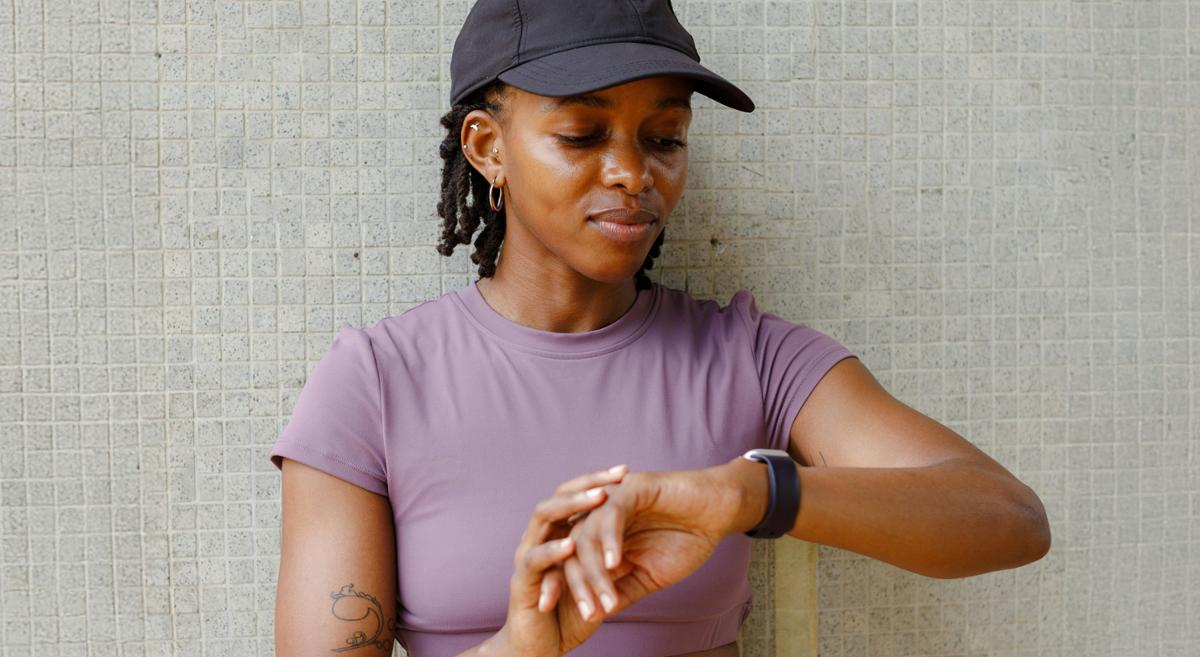
Smartwatches are consumer gadgets, not medical tools, say researchers from Leiden University, Netherlands, after a study found that some wearables can’t tell the difference between stress and excitement.

Published in the Journal of Psychopathology and Clinical Science, the study – Associations between ecological momentary assessment and passive sensor data in a large student sample – set out to establish whether smartwatches could be used to replace self-reporting as a means of gathering data on factors impacting mental health.

The aim was to establish whether it would be possible to build a warning system for depression in students using smartwatches.

Key areas of study
Sleep, tiredness and stress were assessed, as they all impact the state of mental health.

Almost 800 students wore smartwatches while answering EMA surveys on how they were feeling for three months.

The study found that while self-report and wearable measures of sleep-related variables showed robust associations, the associations for tiredness were weaker and measures of stress didn’t overlap for most individuals.

For the majority of individuals in the sample, the self-report and physiological measures of stress showed ‘very weak’ to ‘no’ associations, suggesting that excitement might get flagged up as something negative.

Opposite results
“The data showed no meaningful correlation between self-reported stress and smartwatch readings – in a quarter of cases, the watch gave the opposite result,” said Eiko Fried, lead author and associate professor in the department of clinical psychology at Leiden University.

“The devices’ reliance on heart rate as a stress indicator proved misleading, as elevated heart rate can occur during both positive and negative experiences,” he said.

“While body battery and sleep tracking were somewhat more accurate, these are consumer gadgets, not medical tools and should be treated accordingly.”

More: www.hcmmag.com/smart

Sign up here to get Fit Tech's weekly ezine and every issue of Fit Tech magazine free on digital.
More features
Editor's letter

Into the fitaverse

Fitness is already among the top three markets in the metaverse, with new technology and partnerships driving real growth and consumer engagement that looks likely to spill over into health clubs, gyms and studios
Fit Tech people

Ali Jawad

Paralympic powerlifter and founder, Accessercise
Users can easily identify which facilities in the UK are accessible to the disabled community
Fit Tech people

Hannes Sjöblad

MD, DSruptive
We want to give our users an implantable tool that allows them to collect their health data at any time and in any setting
Fit Tech people

Jamie Buck

Co-founder, Active in Time
We created a solution called AiT Voice, which turns digital data into a spoken audio timetable that connects to phone systems
Profile

Fahad Alhagbani: reinventing fitness

The team is young and ambitious, and the awareness of technology is very high. We share trends and out-of-the-box ideas almost every day
Opinion

Building on the blockchain

For small sports teams looking to compete with giants, blockchain can be a secret weapon explains Lars Rensing, CEO of Protokol
Innovation

Bold move

Our results showed a greater than 60 per cent reduction in falls for individuals who actively participated in Bold’s programme
App analysis

Check your form

Sency’s motion analysis technology is allowing users to check their technique as they exercise. Co-founder and CEO Gal Rotman explains how
Profile

New reality

Sam Cole, CEO of FitXR, talks to Fit Tech about taking digital workouts to the next level, with an immersive, virtual reality fitness club
Profile

Sohail Rashid

My vision was to create a platform that could improve the sport for lifters at all levels and attract more people, similar to how Strava, Peloton and Zwift have in other sports
Ageing

Reverse Ageing

Many apps help people track their health, but Humanity founders Peter Ward and Michael Geer have put the focus on ageing, to help users to see the direct repercussions of their habits. They talk to Steph Eaves
App analysis

Going hybrid

Workout Anytime created its app in partnership with Virtuagym. Workout Anytime’s Greg Maurer and Virtuagym’s Hugo Braam explain the process behind its creation
Research

Physical activity monitors boost activity levels

Researchers at the University of Copenhagen have conducted a meta analysis of all relevant research and found that the body of evidence shows an impact
Editor's letter

Two-way coaching

Content providers have been hugely active in the fit tech market since the start of the pandemic. We expect the industry to move on from delivering these services on a ‘broadcast-only’ basis as two-way coaching becomes the new USP
Fit Tech People

Laurent Petit

Co-founder, Active Giving
The future of sports and fitness are dependent on the climate. Our goal is to positively influence the future of our planet by instilling a global vision of wellbeing and a sense of collective action
Fit Tech People

Adam Zeitsiff

CEO, Intelivideo
We don’t just create the technology and bail – we support our clients’ ongoing hybridisation efforts
Fit Tech People

Anantharaman Pattabiraman

CEO and co-founder, Auro
When you’re undertaking fitness activities, unless you’re on a stationary bike, in most cases it’s not safe or necessary to be tied to a screen, especially a small screen
Fit Tech People

Mike Hansen

Managing partner, Endorphinz
We noticed a big gap in the market – customers needed better insights but also recommendations on what to do, whether that be customer acquisition, content creation, marketing and more
More features
Technogym provides a complete Ecosystem made of connected smart fitness equipment, digital services and training ...
Wattbike’s mission is to make Wattbike the ultimate training partner for improving health and performance. ...
22-23 Sep 2026
Four Seasons Hotel Bangkok at Chao Phraya River, Bangkok , Thailand
Technogym provides a complete Ecosystem made of connected smart fitness equipment, digital services and training ...
Wattbike’s mission is to make Wattbike the ultimate training partner for improving health and performance. ...
Get Fit Tech
Sign up for the free Fit Tech ezine and breaking news alerts
Sign up
22-23 Sep 2026
Four Seasons Hotel Bangkok at Chao Phraya River, Bangkok , Thailand

latest fit tech news

Preventive healthcare company Neko Health has added body composition analysis to its full-body health scan and launched a new mobile ...
news • 24 Jun 2026

A new brain clinic has opened in London, which uses non-invasive brain stimulation to treat chronic pain, anxiety and burnout ...
news • 22 Jun 2026

Samsung has unveiled a suite of AI-powered health features for its Galaxy Watch range, as the technology giant ...

news • 22 Jun 2026

Elevate Arena is underway at London's Excel and the hot topic of AI was the first point of discussion on ...
news • 18 Jun 2026
Peloton has made the strategic acquisition of Pilates start-up, Skōp, to support the expansion of its strength ecosystem. As demand ...
news • 09 Jun 2026

Longevitix, a clinical platform for preventive and longevity medicine, has launched its AI-powered intelligence system to help physicians deliver continuous, ...
news • 08 Jun 2026

Fitness First UK is integrating red light therapy into its yoga and Pilates classes through a partnership with Bon Charge. ...
news • 08 Jun 2026
PureGym is encouraging people to step away from their screens and go for a walk, in a new initiative timed ...
news • 29 May 2026
Active people app, Strava, has overhauled its strength training experience, allowing gym-goers to automatically log and share their lifts from ...
news • 27 May 2026

Fitness First UK is embracing digital wellness technology by installing Kip’s tap-to-activate phone controls across its UK estate. Kip tags ...
news • 22 May 2026
More fit tech news
features

Research: Not so smart watch

Researchers at Leiden University found smartwatches failed to differentiate between excitement and stress

Published in Health Club Management 2025 issue 8

Smartwatches are consumer gadgets, not medical tools, say researchers from Leiden University, Netherlands, after a study found that some wearables can’t tell the difference between stress and excitement.

Published in the Journal of Psychopathology and Clinical Science, the study – Associations between ecological momentary assessment and passive sensor data in a large student sample – set out to establish whether smartwatches could be used to replace self-reporting as a means of gathering data on factors impacting mental health.

The aim was to establish whether it would be possible to build a warning system for depression in students using smartwatches.

Key areas of study
Sleep, tiredness and stress were assessed, as they all impact the state of mental health.

Almost 800 students wore smartwatches while answering EMA surveys on how they were feeling for three months.

The study found that while self-report and wearable measures of sleep-related variables showed robust associations, the associations for tiredness were weaker and measures of stress didn’t overlap for most individuals.

For the majority of individuals in the sample, the self-report and physiological measures of stress showed ‘very weak’ to ‘no’ associations, suggesting that excitement might get flagged up as something negative.

Opposite results
“The data showed no meaningful correlation between self-reported stress and smartwatch readings – in a quarter of cases, the watch gave the opposite result,” said Eiko Fried, lead author and associate professor in the department of clinical psychology at Leiden University.

“The devices’ reliance on heart rate as a stress indicator proved misleading, as elevated heart rate can occur during both positive and negative experiences,” he said.

“While body battery and sleep tracking were somewhat more accurate, these are consumer gadgets, not medical tools and should be treated accordingly.”

More: www.hcmmag.com/smart

Sign up here to get Fit Tech's weekly ezine and every issue of Fit Tech magazine free on digital.
More features
Editor's letter

Into the fitaverse

Fitness is already among the top three markets in the metaverse, with new technology and partnerships driving real growth and consumer engagement that looks likely to spill over into health clubs, gyms and studios
Fit Tech people

Ali Jawad

Paralympic powerlifter and founder, Accessercise
Users can easily identify which facilities in the UK are accessible to the disabled community
Fit Tech people

Hannes Sjöblad

MD, DSruptive
We want to give our users an implantable tool that allows them to collect their health data at any time and in any setting
Fit Tech people

Jamie Buck

Co-founder, Active in Time
We created a solution called AiT Voice, which turns digital data into a spoken audio timetable that connects to phone systems
Profile

Fahad Alhagbani: reinventing fitness

The team is young and ambitious, and the awareness of technology is very high. We share trends and out-of-the-box ideas almost every day
Opinion

Building on the blockchain

For small sports teams looking to compete with giants, blockchain can be a secret weapon explains Lars Rensing, CEO of Protokol
Innovation

Bold move

Our results showed a greater than 60 per cent reduction in falls for individuals who actively participated in Bold’s programme
App analysis

Check your form

Sency’s motion analysis technology is allowing users to check their technique as they exercise. Co-founder and CEO Gal Rotman explains how
Profile

New reality

Sam Cole, CEO of FitXR, talks to Fit Tech about taking digital workouts to the next level, with an immersive, virtual reality fitness club
Profile

Sohail Rashid

My vision was to create a platform that could improve the sport for lifters at all levels and attract more people, similar to how Strava, Peloton and Zwift have in other sports
Ageing

Reverse Ageing

Many apps help people track their health, but Humanity founders Peter Ward and Michael Geer have put the focus on ageing, to help users to see the direct repercussions of their habits. They talk to Steph Eaves
App analysis

Going hybrid

Workout Anytime created its app in partnership with Virtuagym. Workout Anytime’s Greg Maurer and Virtuagym’s Hugo Braam explain the process behind its creation
Research

Physical activity monitors boost activity levels

Researchers at the University of Copenhagen have conducted a meta analysis of all relevant research and found that the body of evidence shows an impact
Editor's letter

Two-way coaching

Content providers have been hugely active in the fit tech market since the start of the pandemic. We expect the industry to move on from delivering these services on a ‘broadcast-only’ basis as two-way coaching becomes the new USP
Fit Tech People

Laurent Petit

Co-founder, Active Giving
The future of sports and fitness are dependent on the climate. Our goal is to positively influence the future of our planet by instilling a global vision of wellbeing and a sense of collective action
Fit Tech People

Adam Zeitsiff

CEO, Intelivideo
We don’t just create the technology and bail – we support our clients’ ongoing hybridisation efforts
Fit Tech People

Anantharaman Pattabiraman

CEO and co-founder, Auro
When you’re undertaking fitness activities, unless you’re on a stationary bike, in most cases it’s not safe or necessary to be tied to a screen, especially a small screen
Fit Tech People

Mike Hansen

Managing partner, Endorphinz
We noticed a big gap in the market – customers needed better insights but also recommendations on what to do, whether that be customer acquisition, content creation, marketing and more
More features