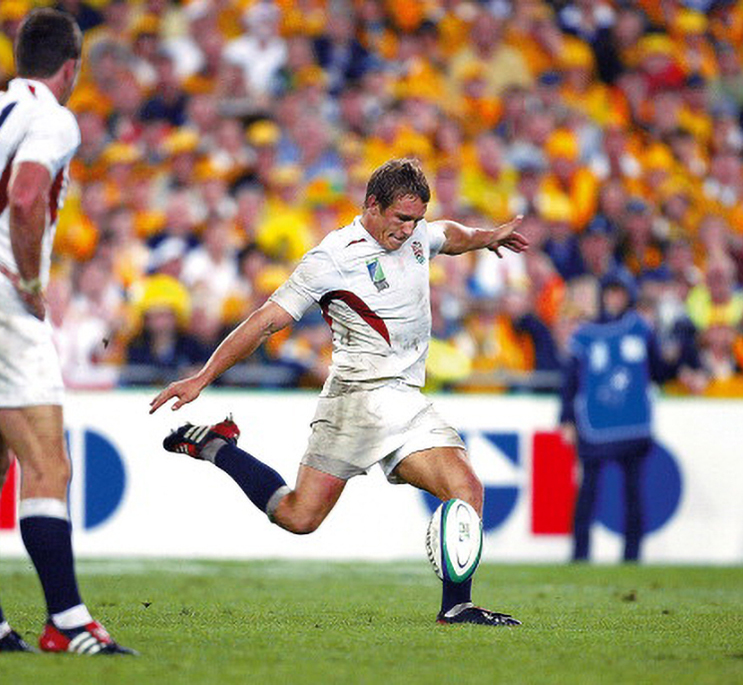











Talk us through how it felt to score that World Cup winning drop goal
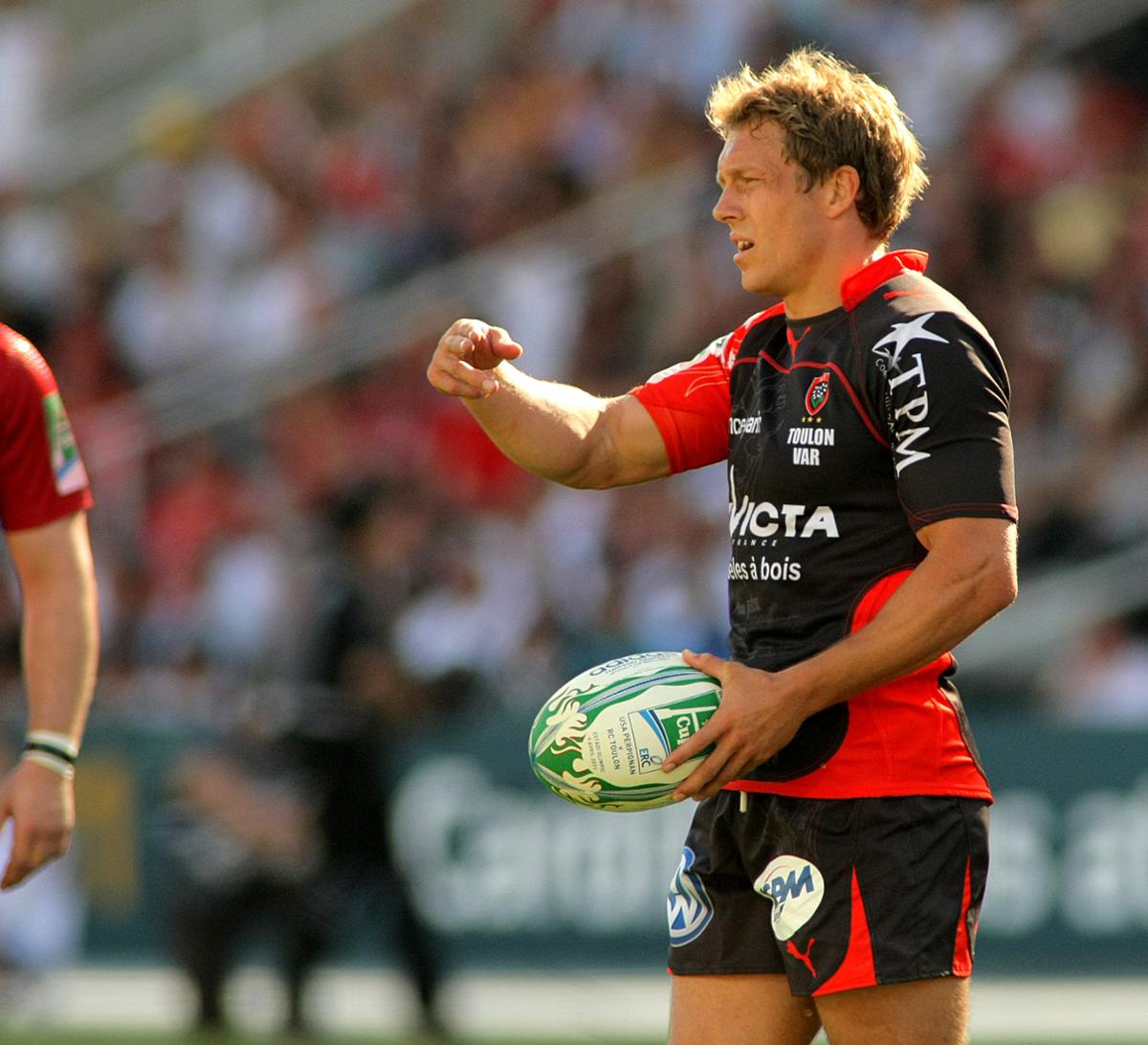
My body took over. In that moment I was in the zone and allowed the magic to happen. The muscle memory of the 100,000 times I’d practised that kick took over and I had this experience of being out of body and witnessing the ball drop and a feeling of absolute presence, freedom and fullness.
How did it feel afterwards?
Things wore off very quickly. Going on the big tour holding the cup was an uncomfortable experience for me and left me feeling confused with a feeling of emptiness. I didn’t handle being celebrated very well and was desperate to get back on the field to satisfy my warrior-saviour-martyr archetype.
With success and recognition I got caught up believing I’d become someone special and as a result I started to believe I had more to lose than to gain. I felt more pressure and more fear of failure.
Before that kick, when I was far more open and willing to explore, I enjoyed my rugby and surprised myself a lot more on the field.
A few weeks after the World Cup I played a match for my club, Newcastle, and took a big hit on my already damaged neck, which meant spinal surgery and a long time out the game, but once I left hospital I couldn’t seem to switch off and allow myself to heal – the day after my operation I was back hammering away on the exercise bike, trying to prove myself again and hang on to who I was, as it felt as though this was disappearing fast.
Without rugby I was lost. I was spending seven to eight hours a day in the gym and on the pitch, even though I knew I wouldn’t be playing for nine months. It led to me suffering from over-training syndrome.
Within two or three months, my body was in a mess. The non-stop stress of being single-focused and not allowing myself any recovery time meant I broke down physically and mentally. It was sheer frustration, followed by panic, followed by anxiety, grief and depression. Over the next four-and-a-half years I managed only a total six months without injury.
Such an overloaded approach inevitably led to break down. My body was letting me know that it needed to heal and if I wasn’t going to support its recovery then it would end up forcing me to do so. As a result of that, I look back and appreciate that rest and relaxation is a huge part of performance. The more recovered and balanced we are, the more capable we are.
Did you achieve your dream too early?
When we get too caught up in the outcomes we’re striving for, I feel we can sacrifice the awesomeness of the here and now. We end up believing that our successes will pay us back later down the line, only to realise that this just isn’t the case.
When you get what you want, you don’t gain anything you didn’t already have, because our happiness is in our nature – in who we are.
I actually think it’s great to achieve your dream as early as possible, because then you see through this illusion and have more time in your life to devote to exploring what truly matters.
Having passion for something and a purpose in life is a beautiful, powerful and privileged thing. I’ve found that the most potent performance mindset is to have a strong vision for what you want and an unshakable drive to go after it, but to have no real insistence when it comes to how things turn out. It’s a subtle and tricky balance, but this way we can accept and let go of everything that happens to us in order to be fully present for what and where the opportunity really is.
When I came back from all my injuries I vowed to myself that I would make the most of every moment. I meant it but it can be easy to slip back into old habits. Deep beliefs die hard.
What lies behind this for you?
I grew up consumed by fear as a young child and came to the conclusion that the antidote to this horrible sense of doom was perfection and success. I loved rugby deeply, so if I wanted to play the sport, then according to my value system, it had to be at the highest level, I had to be the kicker and had to work harder than everyone else. I couldn’t let people down, in fact, I believed that it was my responsibility to save them – whatever that meant.
When things didn’t go according to plan, I allowed it to hurt so badly. It’s amazing how these conclusions I came to dominated my journey. They brought about such urgency and intensity, which got the job done, but they also caused a lot of issues and a heck of a lot of stress.
I was convinced that the answer to my own salvation was going to be through winning everything and being recognised as the best. My mind simply followed this instruction. It went looking for every possible threat, competing at every opportunity, never switching off. I begged for some space and respite but it was only doing what I was asking it to do.
How did you go about changing your approach?
It was all about developing awareness of how I was being and how I really wanted to be. The key was becoming more aware of my mental and emotional state and not confusing that awareness with analysis.
I’ve spent my life following my mind and trying to appease it, not understanding that it was actually following me. I was stuck in a limiting cycle and had to get some distance between me and my feelings and thoughts – to learn to just be with them and not get lost in them. I had to get some choices back.
The second opportunity was to recognise a safe space, then trust and relax into it.
The strong nervous energy that creeps into your body leading up to a game, is undoubtedly a performance enhancer, but it’s intense and can easily be mistaken for a danger signal. If we don’t recognise, embrace and allow the feeling, then we end up reacting to it.
Before you know it, the thing you’ve spent your life dreaming about and preparing for becomes the thing that you will do almost anything to avoid!
I would sit in the changing rooms before a game and turn over every stone of the forthcoming match. ‘What if they do this?’ ‘What if we lose?’ ‘What if I miss and it’s all my fault?’, then I’d see other players standing looking relaxed – they looked different; balanced and content – and I’d ask if they were ready and they’d just shrug and say: “Yeah. I’ve done my training.” Their attitude was: ‘I’m ready, let’s see how it goes.’ This was inspiring to me, but seemed massively out of my reach.
What was going on in your head?
The bombardment in my mind was lack of trust. I was crying out to feel calm.
When you follow things intuitively with trust and openness, then you feel guided by something bigger, but having this level of faith was a challenge for me.
The intuitive voice comes from a place of curiosity, and exploration, rather than a place where you’re trying to control everything. When I felt good, it was awesome, so really I knew all the answers to the questions I was torturing myself with, but I wasn’t trusting my gift. I wasn’t able to relax and just express and celebrate myself. I ‘believed away’ my creativity, my surprise, my joy, the magic – all the bits you talk about after the match.
The negative voices would tend to stop as soon as I was on the field and the whistle went. But after a while the whistle would go and I would still be thinking. That’s when I knew I’d crossed the line. I was running around trying to think my way through a game, against great competitors who were playing intuitively. There was only going to be one winner in that battle, because feel beats thought and creative mode beats survival mode every time.
Trust is the difference between logic and magic. Magic comes in those moments like the World Cup drop kick, when you let go and go all in. And you don’t have to be a rugby player to experience magic, it’s available right here and now for everyone, everywhere.
When we follow our passions, we live true and that’s how we serve the deepest, but when we put the focus on the outcome, that’s when we start to create discord and chaos. If you’re passionate, open, humble and willing then you’re living more authentically I feel.
How did that experience lead on to what you’re doing now with One Living?
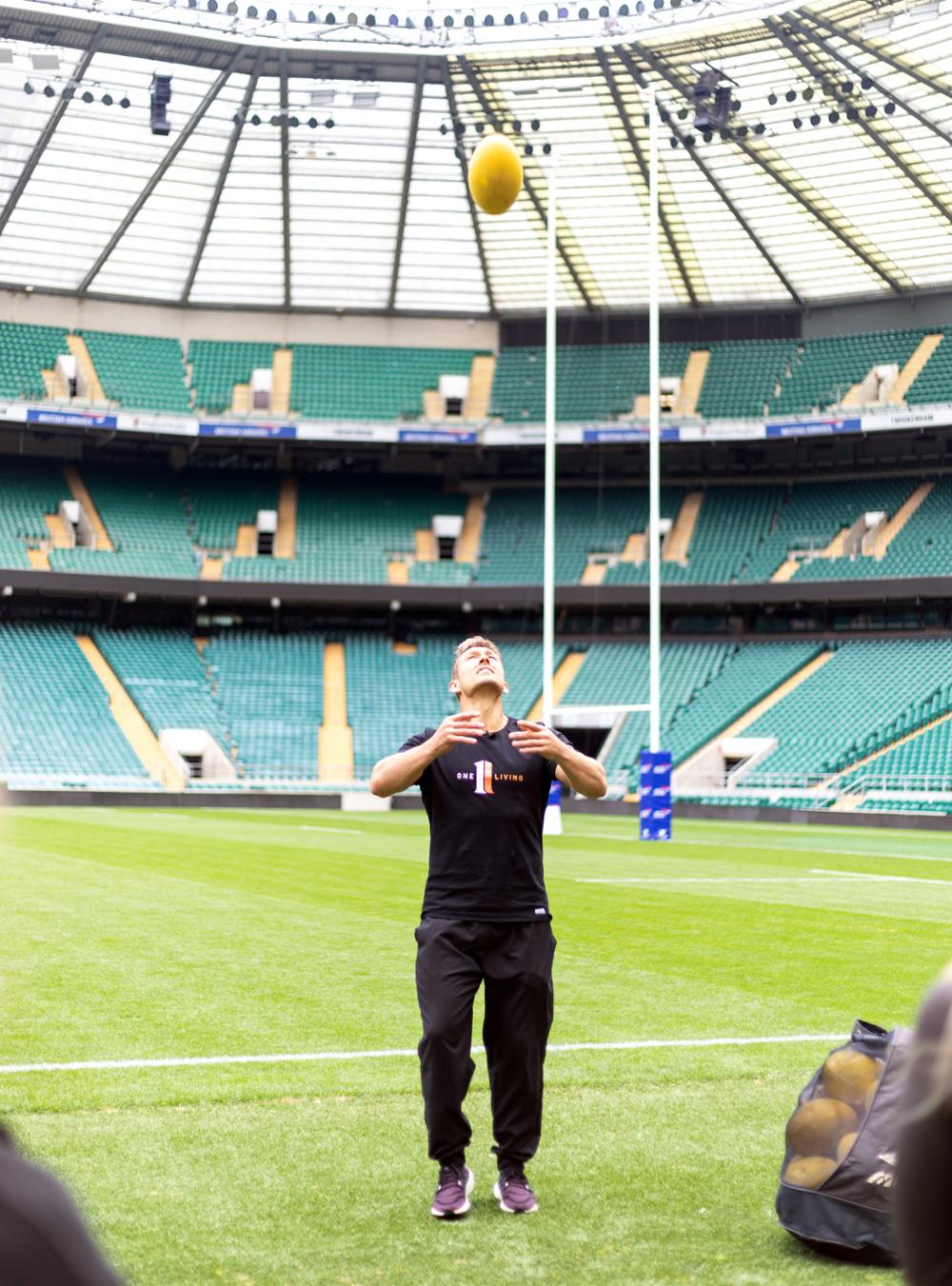
While working in professional sport I’d seen so much laboratory-esque food – almost space aged – and met many people who were living on it and were fit, but not healthy. I was definitely one of them, so I started looking into nutrition and its impact on mental and emotional health.
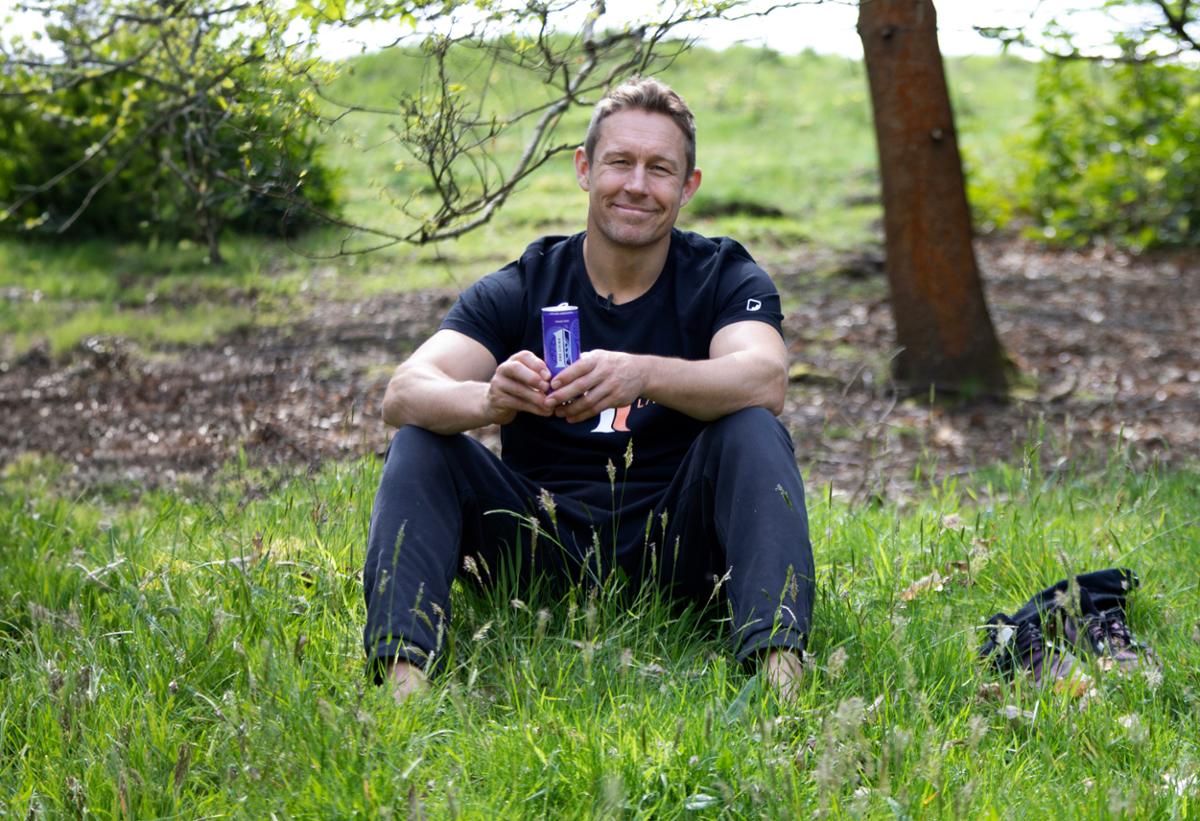
At the same time my wife was doing a master’s degree in nutrition and exploring gut health and advanced nutrition. It was a really interesting and revelatory time: we started making living foods at home, such as kimchi, sauerkraut, sourdough bread, kefir and yogurt. When then moved on to kombucha, which at that time was only available in niche stores. We wanted to make it as accessible, affordable and as good tasting as possible.
That desire to make living drinks with the utmost integrity – so what was in the bottle at the end was as close as possible to how it began and still living and growing – became our number one journey.
What difference did it make to your health when you discovered living food?
Ease and effortlessness. The bacteria in living foods support and enhance the communication pathways between the brain and gut, which lends an effortlessness and wholeness to living that’s unobtainable when your energies are being drawn towards imbalance and stress.
The connection between the gut and the brain brings you into balance, so you become one with everything, working together. When you feel whole and in balance, that’s what sports people call the zone, and that’s when your performance takes off.
Living bacteria and gut health weren’t on the radar a few years ago, but now they are it presents us all with a great opportunity to optimise our health.
You started as No 1 Living and now – six years later – you’ve rebranded to One Living. Why?
The ‘Number One’ part got in the way of the mental, emotional and physical health journey we believe in, which is not about competing or comparing yourself with anyone else. It’s not about being number one but about feeling at one: being connected with yourself, with others and with your environment. The name change reflects that purpose.
The first five years was about education, because we were way ahead of the curve – the reason kombucha wasn’t readily available was because the market wasn’t ready and there was a lot of education to do. That has been a challenge, but now we’re at the point of being able to fully express who we are.
The market is also more established and consumers are starting to explore living foods and as a result, we’ve reviewed everything we’re doing and our messaging.
The ambition and the vision has always been about impact and trying to make a difference and the rebrand speaks that language, with the organisation now having three branches from the same trunk. These are called One Living, One Giving and One Wellbeing.
One Living is the product range which aims to positively impact the health of all who consume it; One Giving is our connection with mental health charities and every purchase directly funds these organisations in their drive to make a difference to people who are suffering. One Wellbeing is our own wellbeing messaging and content which people can connect to via the website or a QR code.
Through sharing my experience in this way I would love to create a community and the conditions for it to thrive, connect and inspire. For it to be a safe and exciting space for people to explore perspectives and practices for unlocking new possibility in their lives.
Content includes self-regulating and heart opening techniques, such as shaking, sighing, grounding and box breathing, to name a few.
We’re looking to expand our base of people creating the content, so it becomes a daily diet of food, information and energy. There’s also a feedback opportunity, so people can share their transformations and inspire others.
There are multiple ways people can access this material, we’re just doing our part in sharing what’s already there and our experience and our version of it. We’re trying to reawaken another dimension in people and share with vulnerability, truth and honesty.
Tell us about your first charity collaboration
The first charity we’re partnering with is the Mental Health Foundation, because of the huge amount the team there has been doing in this space for many years, they’re making a heck of a difference.
I’m ambassador for the charity and we’ve been inspired by their work and seeing how much goes on behind the curtain of their organisation. We’ll also be looking to support a further four to six charities this year.
Was it a deliberate decision not to put your picture on One Living products?
I think the message is important, not the person. With people there are limits, but a message can be limitless and I’m just the messenger.
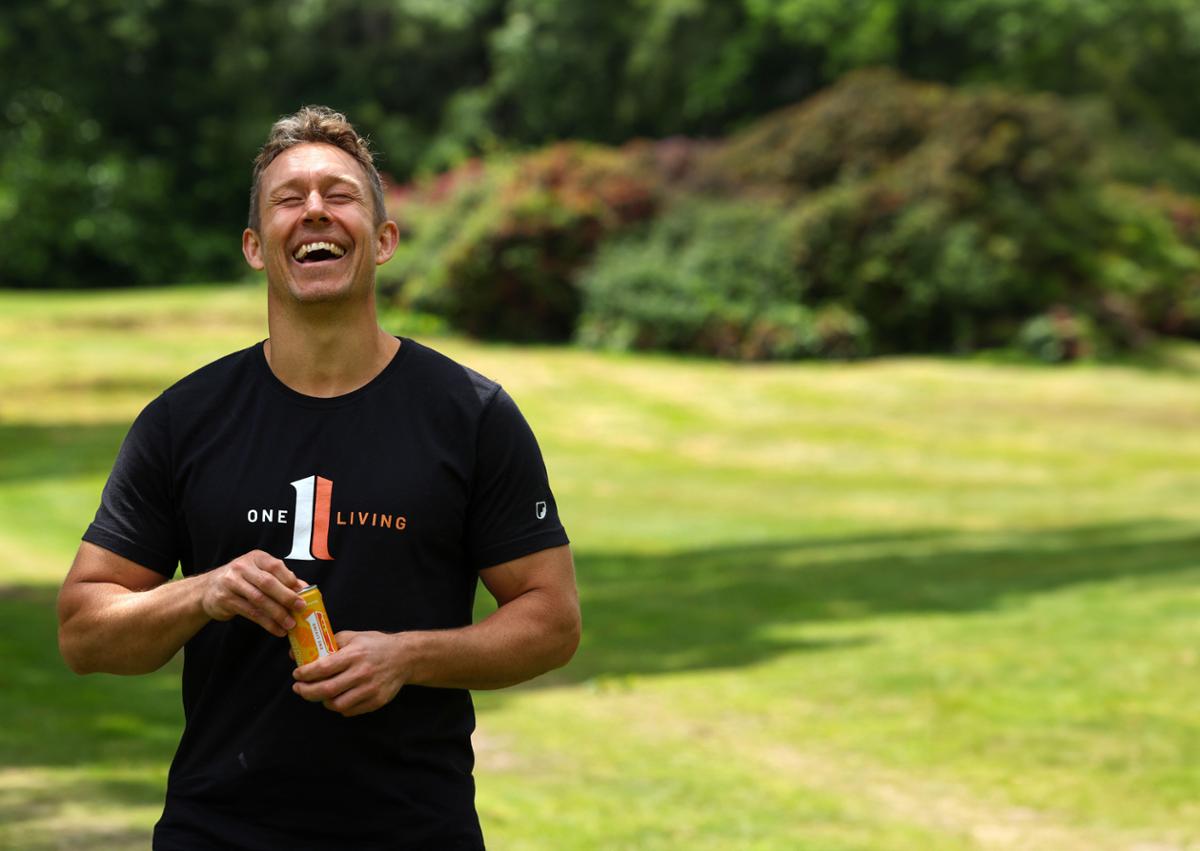
It’s important to me that people understand the brand and what it stands for and feel they can trust it. I don’t want to be that smiling face so people think we’re saying, ‘buy this and be like him’.
We didn’t just want to put a drink out there and say, ‘Try this. It’s brilliant’. We wanted to say ‘this is the spirit of where it’s come from, this is the heart and there’s more to this health and wellbeing journey for you to discover’. Everything we do is about transparency, honesty and authenticity.
Also, we don’t want people to drink the kombucha as though it’s another pill. When you bring the mental, emotional and physical together as one and find balance, it can connect you to the magical and drop you into a new dimension you never knew was possible.
Does this feel like achieving a dream?
I thought I’d achieved everything I ever wanted at the age of 24 and then realised that’s just not how it works. You think that once you get what you want, you’ll be free and full, but successes don’t resolve our problems or heal our core wounds.
My potential is hidden by my struggles and to uncover it I have to turn to face my inner challenges, look after myself and become responsible for my own mind, body and balance. I have to open up space for joy and freedom and for living in the moment.
As you can tell, I’m kind of into it. This is my truth and it pervades everything I do.
You’re getting an idea of what it was like for my teammates. Non-stop, very focused and intense!