




features

First person: Stacked for impact

Lisa Starr tries the Ammortal Chamber to see whether layering 10 modalities into one experience really delivers more

Published in Health Club Management 2026 issue 6

With the current focus on longevity and healthspan, the market is being bombarded with equipment that promises rejuvenation. 

Ammortal Chamber, available in more than 40 locations across the US – and with a European rollout planned later this year – claims to deliver 10 proven, non-invasive technologies in one go. 

It’s been designed to “deliver hours of restorative modalities in just one session”, with the layered offering combining near-infrared and red light therapy, PEMF, molecular hydrogen inhalation, vibroacoustic sound, oxygen and ozone therapy, with voice-guided breathwork and meditation to deliver a greater effect than they would individually. 

As it’s been billed as “the ultimate mind-body experience”, I was keen to see if it could make a difference in such a short amount of time – and if it’s worth the US$159,500 (€137,426, £121,234) price tag. 

I experienced Ammortal Chamber at very different facilities in Pennsylvania: firstly, Modern Behaviour, a psychiatrist-owned health centre and then Revive Hive, a touchless wellness business.

A receptionist shows me how to operate the chamber, which is quite simple, with a touch screen for use before and during the treatment. There’s a range of seven pre-programmed calming and awakening ‘journeys’ and a printout detailing what they entail to help me choose. 

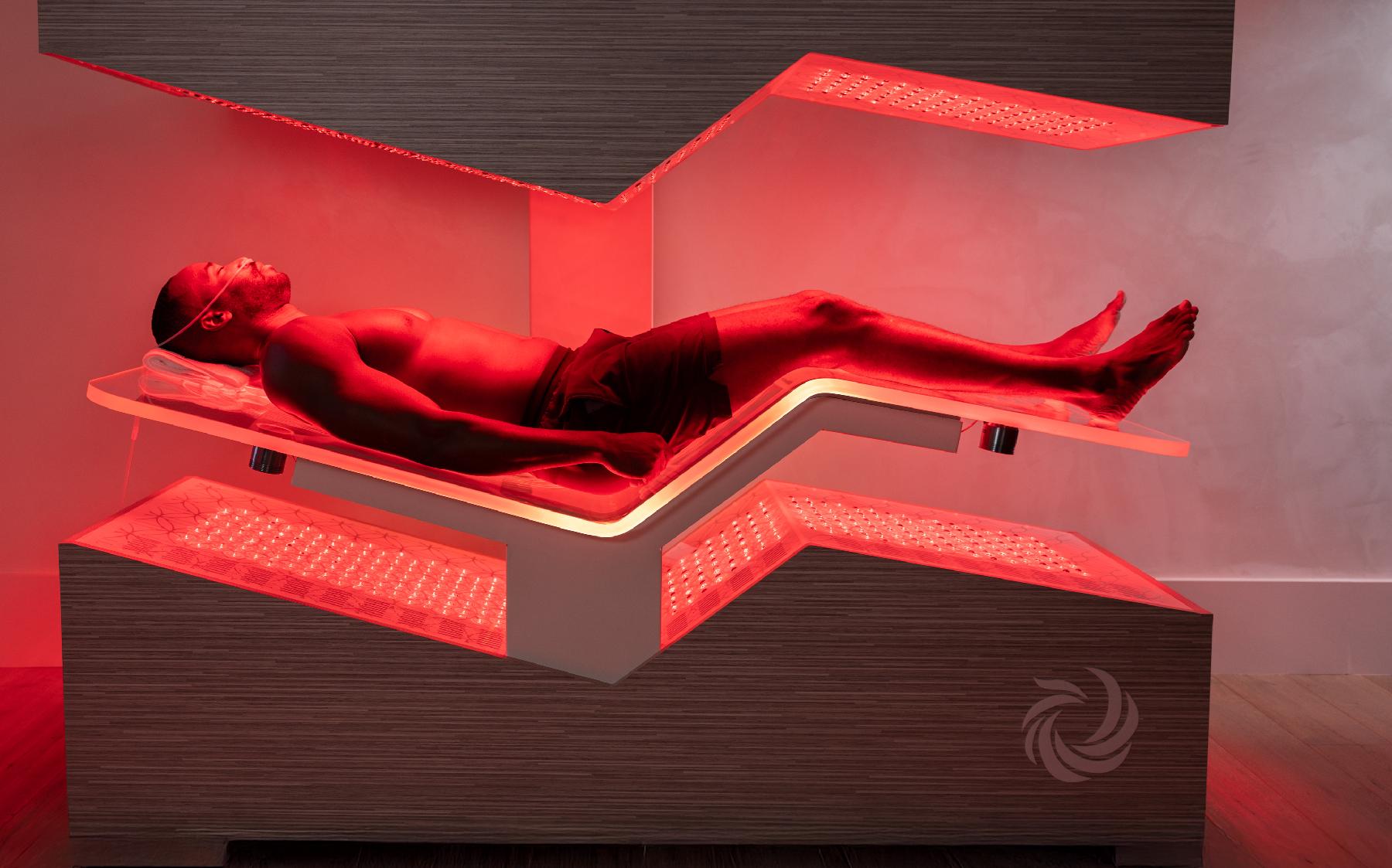
Ammortal recommends wearing underwear or a swimsuit so skin is exposed to the LED lights and there’s a nasal cannula to deliver the molecular hydrogen.

Users can pick from two male or female voices to guide the experience, which can last 15-, 20- or 25-minutes. 

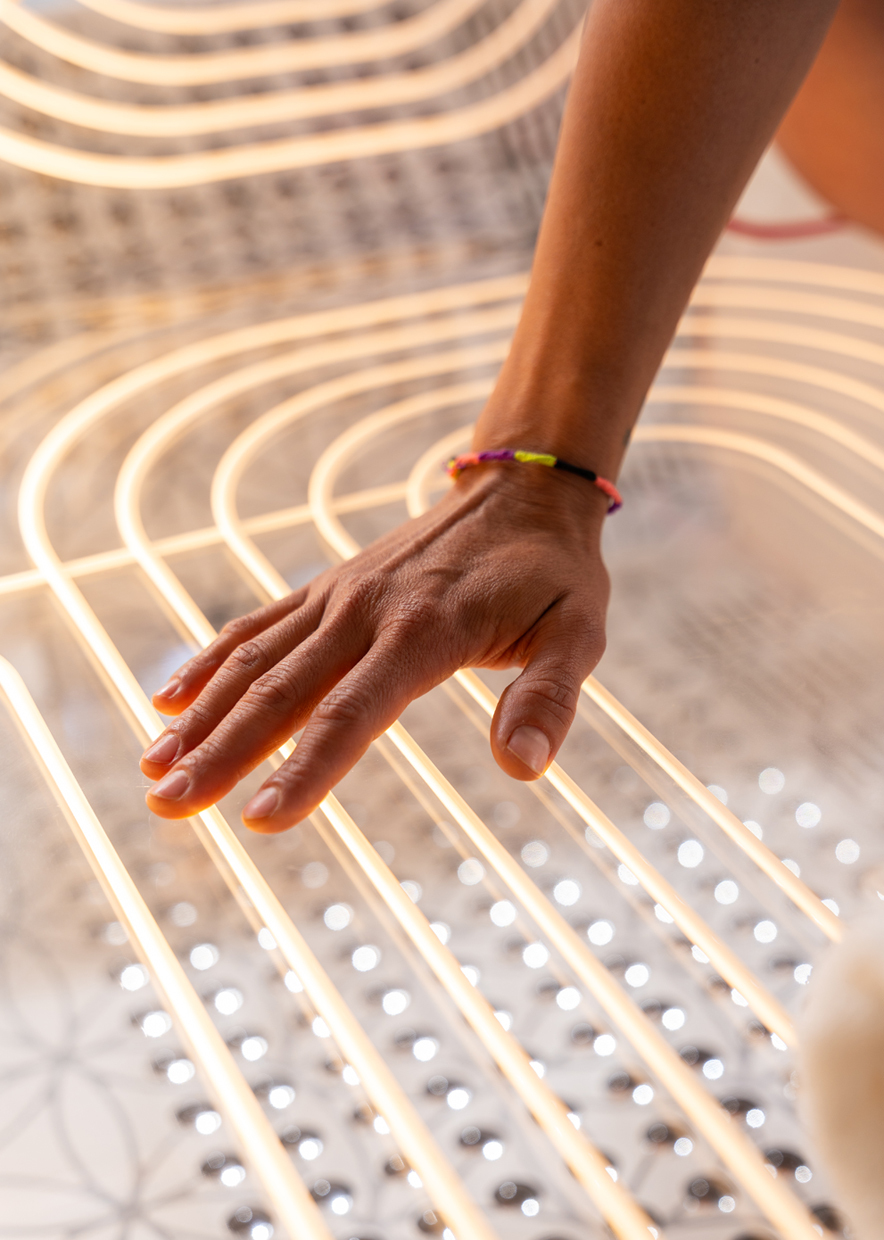
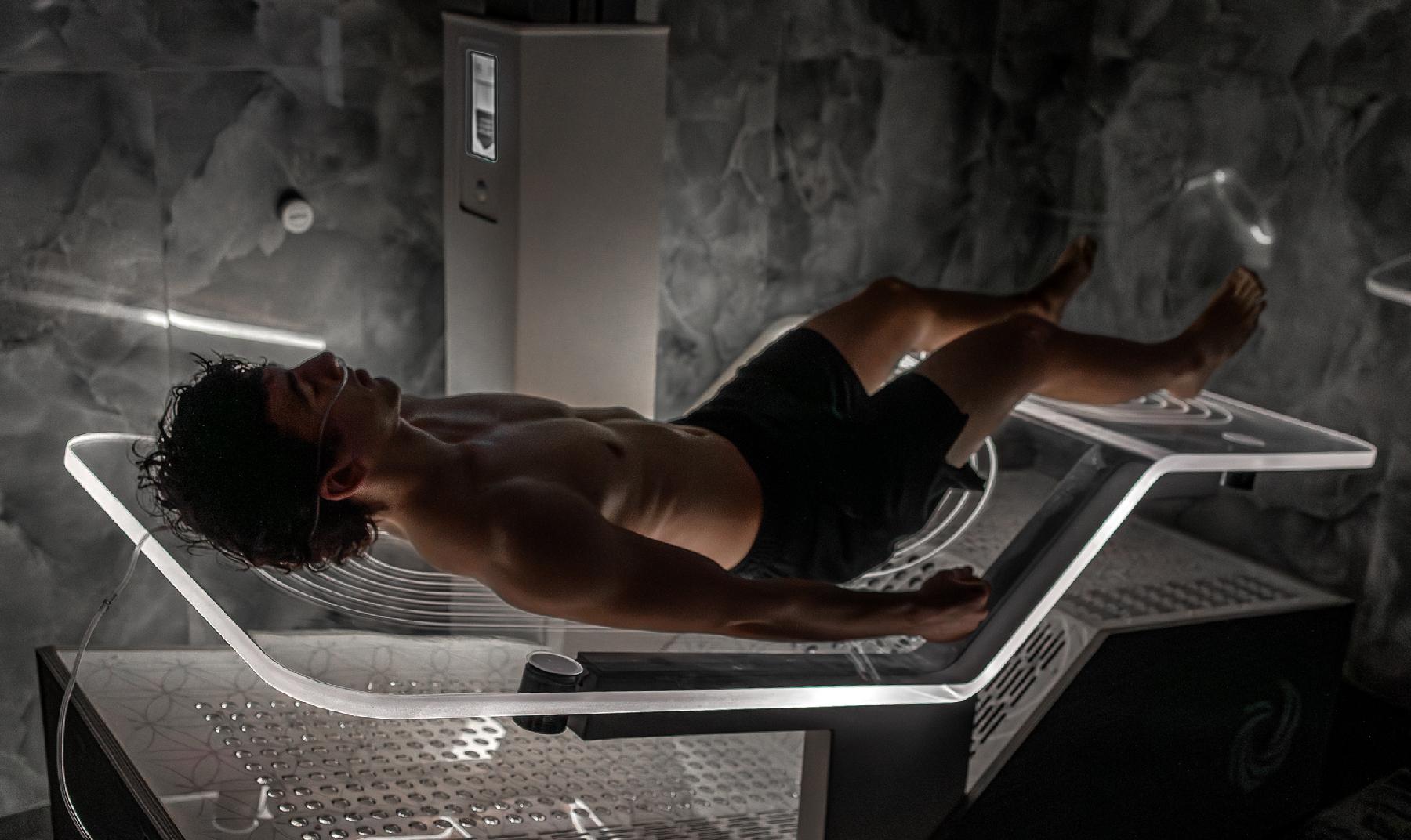
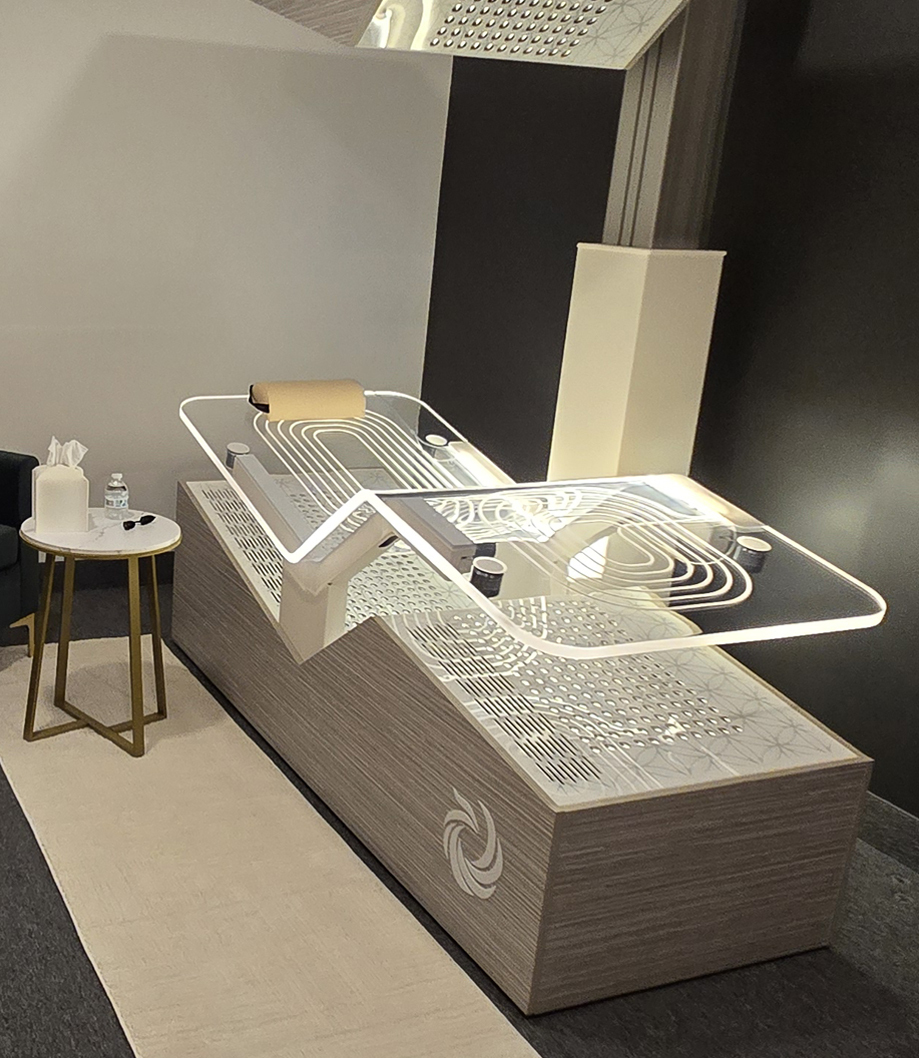
At 6 ft (180cm) long, Ammortal would take up a treatment room. From the side, the NASA-inspired design looks like a lightning bolt, but its neutral colouring and silvery finish make it less intimidating.

After making sure everything’s clear, I’m left to de-robe, put on the cannula and press start. The session begins with a detailed explanation of what will happen – a nice touch, which gave me a moment to acclimatise. Bright lights come on below and above me (I’m grateful goggles are provided) and the top section slowly lowers while embedded speakers surround me with sound. 

I find it’s fairly comfortable and not claustrophobic, although I did have some awkwardness trying to position my elbows. 

I kept waiting for the surfaces to warm, but they never did (although they weren’t cold either).  

I’ve chosen the 25-minute ‘Expand’ journey, which promises a combination of calming and awakening effects and is described as using “ancient and futuristic elements to rejuvenate the spirit”. 

Some of the journeys include spoken meditation, but this one didn’t. I did, however, enjoy the music and the very gentle vibrations made me feel as though I was floating. 

It’s definitely a relaxing experience and in both cases, I just got dressed and headed to reception when the lights went off and the top raised itself. 

Pricing for sessions vary widely based on location and business type. At Revive Hive, a 50-minute session costs US$90 (€77, £67), while Fairmont Austin charges US$200 (€172, £150) for the same time and at Modern Behavioral it goes up to US$250 (€212, £184).  

Revive Hive, which offered a range of other touchless modalities, such as lymphatic drainage boots, a sauna, a cold plunge and an LED pod, sold Ammortal as a standalone treatment rather than in a package. 

At Modern Behavioral, Ammortal is available on its own as well, as with Ketamine therapy, on the basis that the combination promotes deeper emotional processing, enhances neuroplasticity, and accelerates recovery.

Fairmont Austin is cross-selling Ammortal with massage and lymphatic compression services, while the experience can also be added to thermal circuit access. 

The operator expects to sell six to 12 sessions a week, with an ROI of between 12 and 18 months.

Both my Ammortal experiences were enjoyable and although I didn’t immediately feel different, later in the day, I definitely had a great mood and lots of energy. 

Stacking all these technologies together has the potential to confuse consumers, but there’s so much detail to share about each modality, there’s an argument for outlining overall goals, rather than getting too technical. 

I can see the Ammortal Chamber being better suited to regular use than one-off treatments and it could be a useful lure when selling memberships or series of programmes. 

Ultimately, it’s exciting to see such new developments, as consumers widen their search for interventions to help them keep healthier for longer. 

Lisa Starr
Lisa Starr / Spa China

"Stacking all of these technologies together could confuse consumers" – Lisa Starr

Sign up here to get Fit Tech's weekly ezine and every issue of Fit Tech magazine free on digital.
Gallery
More features
Editor's letter

Into the fitaverse

Fitness is already among the top three markets in the metaverse, with new technology and partnerships driving real growth and consumer engagement that looks likely to spill over into health clubs, gyms and studios
Fit Tech people

Ali Jawad

Paralympic powerlifter and founder, Accessercise
Users can easily identify which facilities in the UK are accessible to the disabled community
Fit Tech people

Hannes Sjöblad

MD, DSruptive
We want to give our users an implantable tool that allows them to collect their health data at any time and in any setting
Fit Tech people

Jamie Buck

Co-founder, Active in Time
We created a solution called AiT Voice, which turns digital data into a spoken audio timetable that connects to phone systems
Profile

Fahad Alhagbani: reinventing fitness

Let’s live in the future to improve today
Opinion

Building on the blockchain

For small sports teams looking to compete with giants, blockchain can be a secret weapon explains Lars Rensing, CEO of Protokol
Innovation

Bold move

We ended up raising US$7m in venture capital from incredible investors, including Andreessen Horowitz, Khosla Ventures, Primetime Partners, and GingerBread Capital
App analysis

Check your form

Sency’s motion analysis technology is allowing users to check their technique as they exercise. Co-founder and CEO Gal Rotman explains how
Profile

New reality

Sam Cole, CEO of FitXR, talks to Fit Tech about taking digital workouts to the next level, with an immersive, virtual reality fitness club
Profile

Sohail Rashid

My vision was to create a platform that could improve the sport for lifters at all levels and attract more people, similar to how Strava, Peloton and Zwift have in other sports
Ageing

Reverse Ageing

Many apps help people track their health, but Humanity founders Peter Ward and Michael Geer have put the focus on ageing, to help users to see the direct repercussions of their habits. They talk to Steph Eaves
App analysis

Going hybrid

Workout Anytime created its app in partnership with Virtuagym. Workout Anytime’s Greg Maurer and Virtuagym’s Hugo Braam explain the process behind its creation
Research

Physical activity monitors boost activity levels

Researchers at the University of Copenhagen have conducted a meta analysis of all relevant research and found that the body of evidence shows an impact
Editor's letter

Two-way coaching

Content providers have been hugely active in the fit tech market since the start of the pandemic. We expect the industry to move on from delivering these services on a ‘broadcast-only’ basis as two-way coaching becomes the new USP
Fit Tech People

Laurent Petit

Co-founder, Active Giving
The future of sports and fitness are dependent on the climate. Our goal is to positively influence the future of our planet by instilling a global vision of wellbeing and a sense of collective action
Fit Tech People

Adam Zeitsiff

CEO, Intelivideo
We don’t just create the technology and bail – we support our clients’ ongoing hybridisation efforts
Fit Tech People

Anantharaman Pattabiraman

CEO and co-founder, Auro
When you’re undertaking fitness activities, unless you’re on a stationary bike, in most cases it’s not safe or necessary to be tied to a screen, especially a small screen
Fit Tech People

Mike Hansen

Managing partner, Endorphinz
We noticed a big gap in the market – customers needed better insights but also recommendations on what to do, whether that be customer acquisition, content creation, marketing and more
More features
Perfect Gym, part of the Sport Alliance group, is a global software provider specialising in ...
Founded nearly 50 years ago, Balanced Body works with the highest quality materials, and pride ...
22-23 Sep 2026
Four Seasons Hotel Bangkok at Chao Phraya River, Bangkok , Thailand
Perfect Gym, part of the Sport Alliance group, is a global software provider specialising in ...
Founded nearly 50 years ago, Balanced Body works with the highest quality materials, and pride ...
Get Fit Tech
Sign up for the free Fit Tech ezine and breaking news alerts
Sign up
22-23 Sep 2026
Four Seasons Hotel Bangkok at Chao Phraya River, Bangkok , Thailand

latest fit tech news

Preventive healthcare company Neko Health has added body composition analysis to its full-body health scan and launched a new mobile ...
news • 24 Jun 2026

A new brain clinic has opened in London, which uses non-invasive brain stimulation to treat chronic pain, anxiety and burnout ...
news • 22 Jun 2026

Samsung has unveiled a suite of AI-powered health features for its Galaxy Watch range, as the technology giant ...

news • 22 Jun 2026

Elevate Arena is underway at London's Excel and the hot topic of AI was the first point of discussion on ...
news • 18 Jun 2026
Peloton has made the strategic acquisition of Pilates start-up, Skōp, to support the expansion of its strength ecosystem. As demand ...
news • 09 Jun 2026

Longevitix, a clinical platform for preventive and longevity medicine, has launched its AI-powered intelligence system to help physicians deliver continuous, ...
news • 08 Jun 2026

Fitness First UK is integrating red light therapy into its yoga and Pilates classes through a partnership with Bon Charge. ...
news • 08 Jun 2026
PureGym is encouraging people to step away from their screens and go for a walk, in a new initiative timed ...
news • 29 May 2026
Active people app, Strava, has overhauled its strength training experience, allowing gym-goers to automatically log and share their lifts from ...
news • 27 May 2026

Fitness First UK is embracing digital wellness technology by installing Kip’s tap-to-activate phone controls across its UK estate. Kip tags ...
news • 22 May 2026
More fit tech news
features

First person: Stacked for impact

Lisa Starr tries the Ammortal Chamber to see whether layering 10 modalities into one experience really delivers more

Published in Health Club Management 2026 issue 6

With the current focus on longevity and healthspan, the market is being bombarded with equipment that promises rejuvenation. 

Ammortal Chamber, available in more than 40 locations across the US – and with a European rollout planned later this year – claims to deliver 10 proven, non-invasive technologies in one go. 

It’s been designed to “deliver hours of restorative modalities in just one session”, with the layered offering combining near-infrared and red light therapy, PEMF, molecular hydrogen inhalation, vibroacoustic sound, oxygen and ozone therapy, with voice-guided breathwork and meditation to deliver a greater effect than they would individually. 

As it’s been billed as “the ultimate mind-body experience”, I was keen to see if it could make a difference in such a short amount of time – and if it’s worth the US$159,500 (€137,426, £121,234) price tag. 

I experienced Ammortal Chamber at very different facilities in Pennsylvania: firstly, Modern Behaviour, a psychiatrist-owned health centre and then Revive Hive, a touchless wellness business.

A receptionist shows me how to operate the chamber, which is quite simple, with a touch screen for use before and during the treatment. There’s a range of seven pre-programmed calming and awakening ‘journeys’ and a printout detailing what they entail to help me choose. 

Ammortal recommends wearing underwear or a swimsuit so skin is exposed to the LED lights and there’s a nasal cannula to deliver the molecular hydrogen.

Users can pick from two male or female voices to guide the experience, which can last 15-, 20- or 25-minutes. 

At 6 ft (180cm) long, Ammortal would take up a treatment room. From the side, the NASA-inspired design looks like a lightning bolt, but its neutral colouring and silvery finish make it less intimidating.

After making sure everything’s clear, I’m left to de-robe, put on the cannula and press start. The session begins with a detailed explanation of what will happen – a nice touch, which gave me a moment to acclimatise. Bright lights come on below and above me (I’m grateful goggles are provided) and the top section slowly lowers while embedded speakers surround me with sound. 

I find it’s fairly comfortable and not claustrophobic, although I did have some awkwardness trying to position my elbows. 

I kept waiting for the surfaces to warm, but they never did (although they weren’t cold either).  

I’ve chosen the 25-minute ‘Expand’ journey, which promises a combination of calming and awakening effects and is described as using “ancient and futuristic elements to rejuvenate the spirit”. 

Some of the journeys include spoken meditation, but this one didn’t. I did, however, enjoy the music and the very gentle vibrations made me feel as though I was floating. 

It’s definitely a relaxing experience and in both cases, I just got dressed and headed to reception when the lights went off and the top raised itself. 

Pricing for sessions vary widely based on location and business type. At Revive Hive, a 50-minute session costs US$90 (€77, £67), while Fairmont Austin charges US$200 (€172, £150) for the same time and at Modern Behavioral it goes up to US$250 (€212, £184).  

Revive Hive, which offered a range of other touchless modalities, such as lymphatic drainage boots, a sauna, a cold plunge and an LED pod, sold Ammortal as a standalone treatment rather than in a package. 

At Modern Behavioral, Ammortal is available on its own as well, as with Ketamine therapy, on the basis that the combination promotes deeper emotional processing, enhances neuroplasticity, and accelerates recovery.

Fairmont Austin is cross-selling Ammortal with massage and lymphatic compression services, while the experience can also be added to thermal circuit access. 

The operator expects to sell six to 12 sessions a week, with an ROI of between 12 and 18 months.

Both my Ammortal experiences were enjoyable and although I didn’t immediately feel different, later in the day, I definitely had a great mood and lots of energy. 

Stacking all these technologies together has the potential to confuse consumers, but there’s so much detail to share about each modality, there’s an argument for outlining overall goals, rather than getting too technical. 

I can see the Ammortal Chamber being better suited to regular use than one-off treatments and it could be a useful lure when selling memberships or series of programmes. 

Ultimately, it’s exciting to see such new developments, as consumers widen their search for interventions to help them keep healthier for longer. 
Lisa Starr
Lisa Starr / Spa China

"Stacking all of these technologies together could confuse consumers" – Lisa Starr

Sign up here to get Fit Tech's weekly ezine and every issue of Fit Tech magazine free on digital.
Gallery
More features
Editor's letter

Into the fitaverse

Fitness is already among the top three markets in the metaverse, with new technology and partnerships driving real growth and consumer engagement that looks likely to spill over into health clubs, gyms and studios
Fit Tech people

Ali Jawad

Paralympic powerlifter and founder, Accessercise
Users can easily identify which facilities in the UK are accessible to the disabled community
Fit Tech people

Hannes Sjöblad

MD, DSruptive
We want to give our users an implantable tool that allows them to collect their health data at any time and in any setting
Fit Tech people

Jamie Buck

Co-founder, Active in Time
We created a solution called AiT Voice, which turns digital data into a spoken audio timetable that connects to phone systems
Profile

Fahad Alhagbani: reinventing fitness

Let’s live in the future to improve today
Opinion

Building on the blockchain

For small sports teams looking to compete with giants, blockchain can be a secret weapon explains Lars Rensing, CEO of Protokol
Innovation

Bold move

We ended up raising US$7m in venture capital from incredible investors, including Andreessen Horowitz, Khosla Ventures, Primetime Partners, and GingerBread Capital
App analysis

Check your form

Sency’s motion analysis technology is allowing users to check their technique as they exercise. Co-founder and CEO Gal Rotman explains how
Profile

New reality

Sam Cole, CEO of FitXR, talks to Fit Tech about taking digital workouts to the next level, with an immersive, virtual reality fitness club
Profile

Sohail Rashid

My vision was to create a platform that could improve the sport for lifters at all levels and attract more people, similar to how Strava, Peloton and Zwift have in other sports
Ageing

Reverse Ageing

Many apps help people track their health, but Humanity founders Peter Ward and Michael Geer have put the focus on ageing, to help users to see the direct repercussions of their habits. They talk to Steph Eaves
App analysis

Going hybrid

Workout Anytime created its app in partnership with Virtuagym. Workout Anytime’s Greg Maurer and Virtuagym’s Hugo Braam explain the process behind its creation
Research

Physical activity monitors boost activity levels

Researchers at the University of Copenhagen have conducted a meta analysis of all relevant research and found that the body of evidence shows an impact
Editor's letter

Two-way coaching

Content providers have been hugely active in the fit tech market since the start of the pandemic. We expect the industry to move on from delivering these services on a ‘broadcast-only’ basis as two-way coaching becomes the new USP
Fit Tech People

Laurent Petit

Co-founder, Active Giving
The future of sports and fitness are dependent on the climate. Our goal is to positively influence the future of our planet by instilling a global vision of wellbeing and a sense of collective action
Fit Tech People

Adam Zeitsiff

CEO, Intelivideo
We don’t just create the technology and bail – we support our clients’ ongoing hybridisation efforts
Fit Tech People

Anantharaman Pattabiraman

CEO and co-founder, Auro
When you’re undertaking fitness activities, unless you’re on a stationary bike, in most cases it’s not safe or necessary to be tied to a screen, especially a small screen
Fit Tech People

Mike Hansen

Managing partner, Endorphinz
We noticed a big gap in the market – customers needed better insights but also recommendations on what to do, whether that be customer acquisition, content creation, marketing and more
More features